

Tenzin Nyidon
DHARAMSHALA, May 5: The Central Tibetan Administration’s Election Commission (EC) has once again reversed its stance on the participation of voters from the Choejor Tibetan settlement in Nepal, ultimately announcing that election there is not possible despite earlier assurances that the final election would proceed.
The latest development follows a prior directive in which the Commission had rolled back its initial decision to withdraw the final round of voting in the Choejor settlement, including polling stations in Boudha and Jorpati, and confirmed that the final round of the election would proceed.
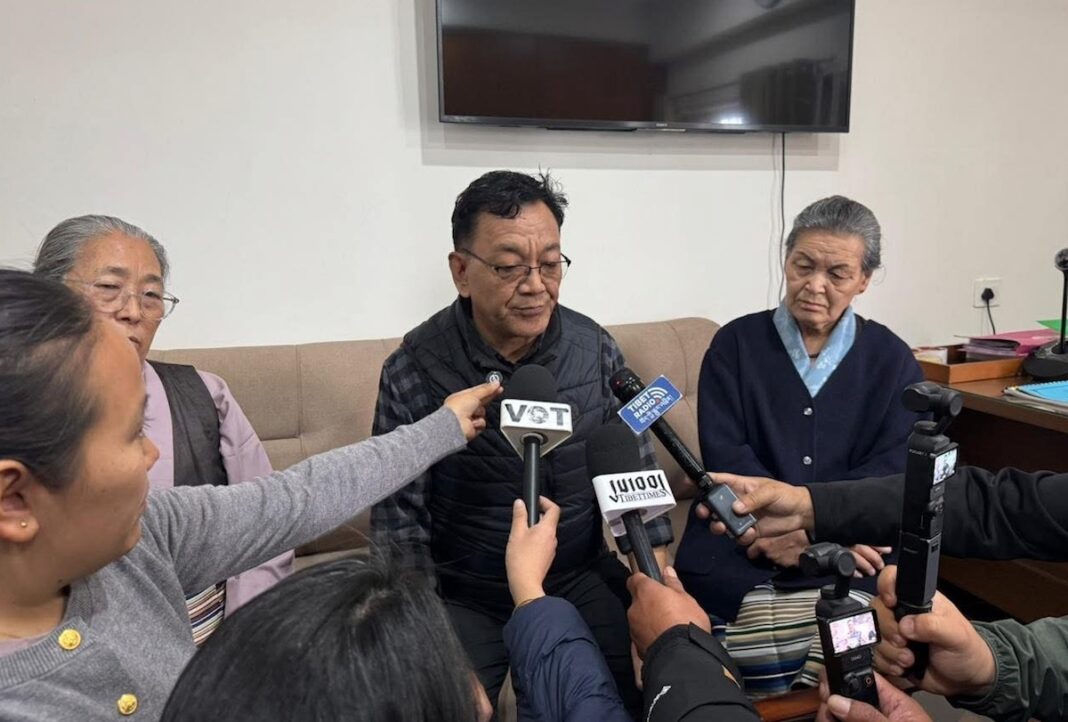
Chief Election Commissioner Lobsang Yeshi, speaking to media representatives on Tuesday, acknowledged the sequence of decisions. He explained that the Commission had initially approved the continuation of the final election following internal deliberations. However, he noted that communication with the Local Election Officer in Nepal proved decisive in altering the course.
According to him, the Local Election Officer cited “prevailing circumstances and logistical difficulties” as key impediments to conducting the election in Choejor. This assessment ultimately led the Commission to halt the voting process, overriding its earlier directive to proceed.
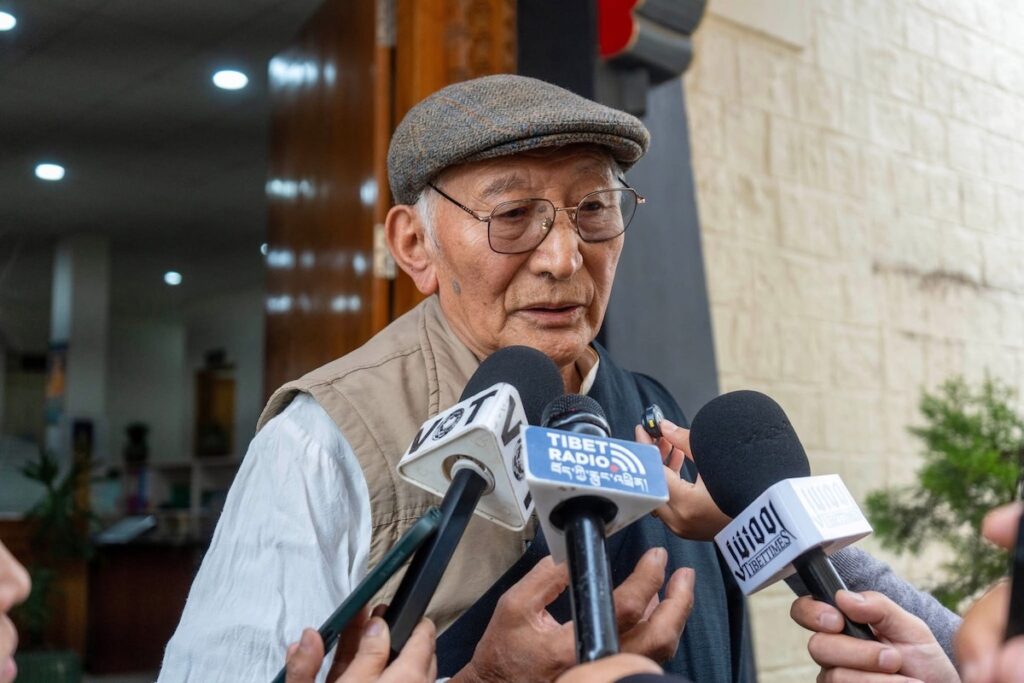
The decision has triggered immediate legal action. Lobsang Tsering, a resident of the Choejor Tibetan settlement who arrived from Nepal on Tuesday, confirmed that he has filed a petition before the Supreme Justice Commission, the apex court of the Central Tibetan Administration, challenging the Election Commission’s decision. He contended that the revocation of voting rights amounts to a violation of fundamental democratic guarantees enshrined in the Tibetan Charter.
The case is being backed by the Dharamshala-based Tibetan Legal Association (TLA). Its president, Tenzin Dolkar, told the media that the organization has taken up the matter as part of its mandate to provide legal assistance to Tibetans. “In this case, we are representing Lobsang Tsering in connection with the denial of voting rights, and the petition has been formally submitted today,” she said.
Legal representatives involved in the case noted that the petition includes detailed documentation outlining the grievances of the Choejor community. “All demands of the Choejor Tibetans in Nepal have been compiled and submitted in written form. It may take some time for the court to determine whether the case will be admitted,” one of the lawyers said. The petition is reportedly supported by endorsements from six monasteries in the settlement, along with over 300 members of the Tibetan community.
Responding to the legal challenge, Lobsang Yeshi defended the Commission’s actions, asserting that its decisions were grounded in established electoral laws and regulations. “There are provisions within the election rules and the Charter that guide such matters. If there is any dispute, it is not for us to act arbitrarily—the Supreme Justice Commission is there to adjudicate,” he said.
He further stated that the Commission will issue a detailed written clarification on May 13, coinciding with the official announcement of the final, comprehensive results for the 18th Tibetan Parliament-in-Exile by the apex election regulation body of the Tibetan government in exile.


Democracy is meaningful only when every eligible voter can participate equally and fairly. In this case, the Election Commission’s repeated reversals have created confusion and raised serious concerns about transparency, accountability, and the protection of voting rights.
Pa Lobsang Tsering la’s decision to file a case is therefore not merely a personal action; it represents the voice of the Choejor Tibetan community in Nepal, whose members were first assured that they could vote and then later denied that right. Logistical difficulties may be real, but they should not become a reason to disenfranchise an entire settlement without clear, timely, and convincing justification.
The support of over 300 community members and six monasteries shows that this is a collective concern. Seeking legal review before the Supreme Justice Commission is the proper democratic path, and it deserves respect. A fair ruling can help clarify the law, restore public trust, and ensure that no Tibetan voter is left unheard in the future.