

By Kalsang Rinchen
As the countdown begins for the North America GCMGC at the Randall Islands in New York in May 2026, the familiar thrill of “Cup season” is beginning to ripple through the diaspora. For those of us who grew up in the Tibetan Children’s Villages School, the venue of the tournament the GCMGC wasn’t just a date on a calendar; it was the atmosphere we breathed. I remember the electric tension in the mountain air, the roar of the crowds echoing against the Dhauladhar mountains and the way the entire community stood still when that gold-plated trophy was lifted. We lived and breathed that prestige.
Now, as “the North America GCMGC” prepares to kickoff this May, seeing that same name on posters stirs a complex mix of emotions. It is a testament to how far our community has traveled, yet it forces a difficult reflection. Can the spirit of a tradition born in Dharamsala, the virtual capital of the Tibetan Diaspora truly be replicated in the West? Or, by expanding the brand, are we inadvertently softening the edges of a legacy that many players and fans have guarded since 1980?
As we prepare for the 2026 matches, I want to look back at the original “Gold Standard” from the perspective of someone who saw it from the sidelines of Dharamsala—and why I believe the prestige of the GCMGC is a flame that might be flickering too thin.
The Gyalyum Chenmo Memorial Gold Cup (GCMGC) is not just a football tournament; it is a cultural heartbeat. Founded in 1980 (with the inaugural kickoff in 1981) to honor the late mother of His Holiness the 14th Dalai Lama, it has served for decades as the premier stage for Tibetan excellence, resilience, and unity in exile. However, the recent extension of “International” GCMGC versions in North America and Europe—while well-intentioned—threatens to dilute the very prestige that made the original cup “the gold standard” of Tibetan sports.
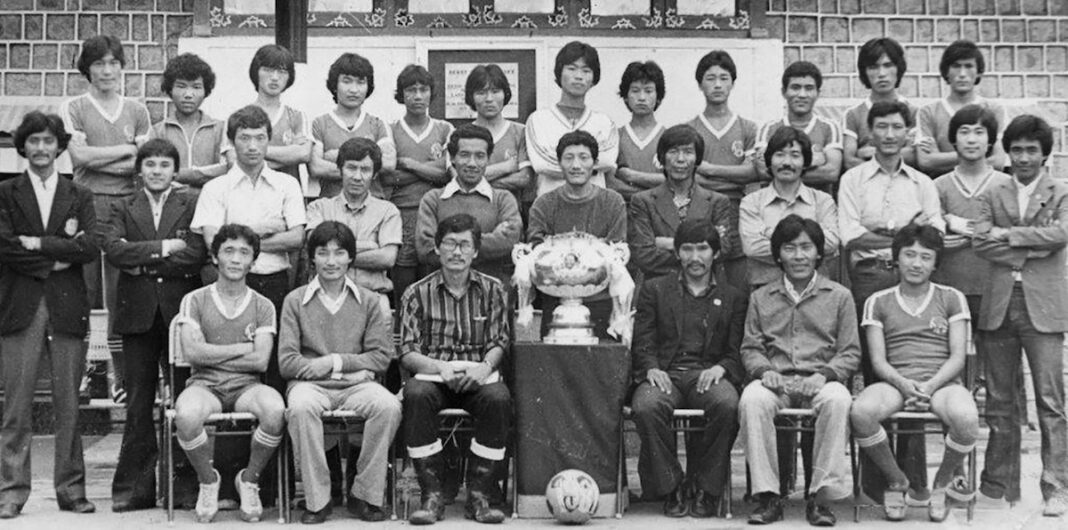
To understand why the expansion feels like a step backward for the brand, one must look at the roots of the original tournament. The GCMGC wasn’t just “another league.” It was built on a foundation of scarcity and immense effort. Crafted by Master Pema Dorjee with gold-plated detailing and precious jewels donated by the Private Office of His Holiness, the Original Trophy itself is a relic of immense spiritual and community value. It was so precious that even a winner cannot take it home.
For decades, the tournament in Dharamsala, Clement Town, Paonta Sahib or one of the south Indian settlements acted as a pilgrimage. Teams from across India and Nepal sacrificed time and resources to converge on a single point to crown a true champion.

When we create “local” versions in Toronto, San Francisco, New York or Zurich we trade that pilgrimage for convenience. If a “Gold Cup” can be won in three different continents in the same year, does winning it still carry the same weight?
In the world of sports, prestige is often synonymous with exclusivity. By branding regional diaspora tournaments with the same name as the historic 1981 event, the historical narrative becomes muddled. Many of the international versions feel more like community festivals than the high-stakes, national-team-selecting event that the original GCMGC represents. The original GCMGC was the filter through which the Tibetan National Team was forged. By spreading the name across multiple smaller tournaments, we risk turning a “National Cup” into a “Regional Series.”
The desire to engage the diaspora in the West is noble, and the Tibetan National Sports Association (TNSA) is right to look toward Europe and North America. However, rather than calling these events “The GCMGC,” they could be branded as Qualifiers or Regional Shields. There’s already a precedent for this kind of thinking within Tibetan football — regional tournaments like the Dalai Lama Cup in New York or the S. Nijalingappa Cup in South India have their own identity without trying to be the Gold Cup. That model works. It respects both the local and the national.
The TNSA has done a lot of good work keeping Tibetan sports alive across the world, and this critique isn’t about dismissing that effort, it’s about making sure the Gold Cup stays what it was always meant to be, not a local weekend tournament, but the one true crown of Tibetan football.
The GCMGC should remain the pinnacle—a single, annual event where the best from the West earn the right to fly to India and compete against the titans of the Tibetan settlements in India and Nepal.
True prestige isn’t found in how many places a cup can be held, but in how hard one must prepare and play to hold it just once.
By protecting the exclusivity of the GCMGC, we ensure that the legacy started in 1980 remains a high-reaching goal for the next generation. Let the Gold Cup remain what it was always meant to be: the one true crown of Tibetan football.
(Views expressed are his own)
The author is a US based independent filmmaker and former editor of Phayul.

