

Tenzin Nyidon
DHARAMSHALA, May 29: Lobsang Tsering, a resident of the Choejor Tibetan settlement in Kathmandu, Nepal, along with his legal representatives from the Dharamshala-based Tibetan Legal Association (TLA), on Friday sought interim relief from the Supreme Justice Commission (SJC), the apex court of the Central Tibetan Administration (CTA), ahead of the scheduled oath-taking ceremony of the members of the 18th Tibetan Parliament-in-Exile on Sunday.
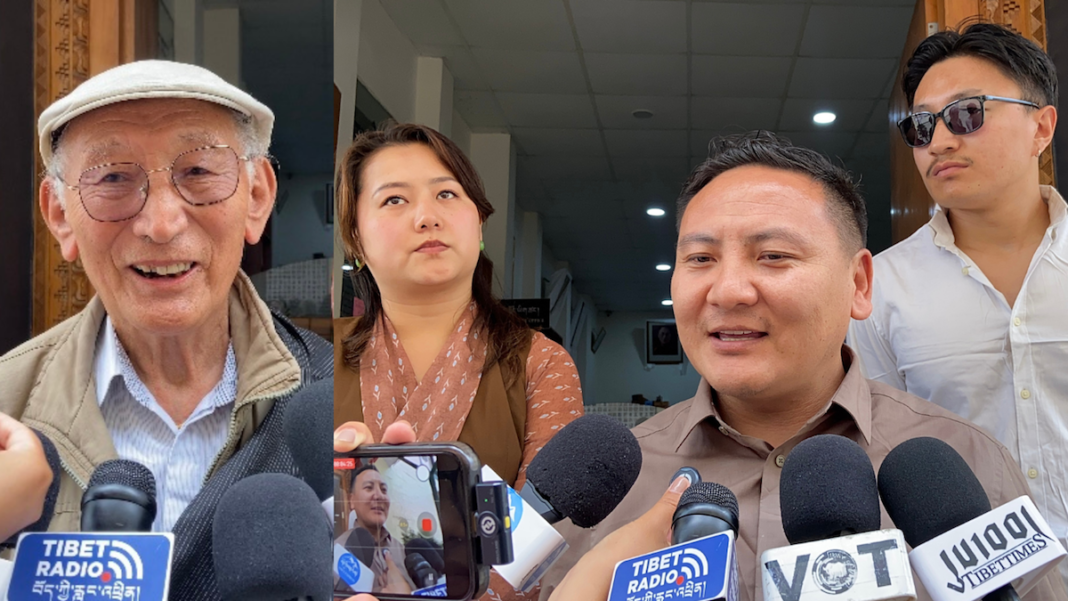
Addressing media representatives, Rigchen Wangyal, legal counsel at TLA representing petitioner Lobsang Tsering in Case No. 22, said the legal team had filed a petition seeking an interim order under Article 76, Sub-Clause 3 of the Rules of Civil Procedure. The provision, he explained, empowers the court to issue temporary injunctions or restraining orders when an action or omission risks causing harm to a concerned party before a final verdict is delivered.
Invoking the provision, the petitioner requested the SJC to temporarily postpone the oath-taking ceremony of the interim Speaker until the issues raised in Case No. 22 are properly adjudicated.
Rigchen argued that proceeding with the ceremony before resolving the pending legal dispute could prejudice the case and further undermine the voting rights concerns raised by members of the Choejor community.
He further stated that the petition also cited Article 80 of the Rules of Civil Procedure concerning investigative officers. The provision authorizes the court to appoint qualified investigators to conduct inquiries, examine facts on the ground, question witnesses, inspect financial matters, or undertake other relevant investigations whenever necessary.
Based on this provision, the petitioner formally requested the establishment of a special investigative committee to examine the circumstances surrounding the alleged disenfranchisement of Tibetan voters in the Choejor settlement. According to Rigchen, the court acknowledged receipt of the petition and stated that it would review the matter before issuing its decision.
The legal counsel also revealed that three legal representatives connected to the case travelled to the Choejor settlement between May 17 and May 27 to conduct an on-site investigation. During the ten-day inquiry, the team interviewed local residents and concerned individuals regarding election arrangements and voting procedures.
According to the legal team, the investigation uncovered what they described as a “significant discrepancy” between statements issued by the Central Election Commissioner and accounts provided by local residents.
The controversy stems from the CTA Election Commission’s repeated reversals regarding the participation of voters from Nepal’s Choejor Tibetan settlement in the 2026 Tibetan General Election. Although the Commission had earlier withdrawn its decision to suspend the final round of voting in Choejor, including polling stations in Boudha and Jorpati, and assured that the election would proceed under the direct supervision of the Kathmandu Local Election Commissioner, it later announced that the election could not be conducted due to the inability of local authorities to make the necessary arrangements. The decision ultimately prevented residents of the Choejor community from participating in the final electoral process.
Despite the pending petition before the SJC, the CTA’s Department of Information and International Relations issued an official announcement confirming the oath-taking schedule for members of the 18th Tibetan Parliament-in-Exile. Invitations for the ceremony, scheduled for Sunday, have also been circulated to exile media outlets.
Additionally, the apex court of the CTA on Wednesday was approached with two separate lawsuits alleging denial of voting rights in the 2026 Tibetan general elections. In one of the cases, Sherab Sengey, representing two monasteries in Nepal — Sengey Dhaknge Dechen Osel Ling Monastery and Sengey Dhak Shar Bakhang Dhondupling Monastery.
Speaking to media representatives, Jampa Wangchuk, legal officer at TLA, said the two monasteries represented by petitioner Sherab Sengey are located in the Choejor region. Although they were not among the six monasteries in the Choejor jurisdiction whose voting rights during the final election round had been suspended by the Election Commission, monks and nuns from the two institutions nevertheless encountered difficulties in exercising their franchise. Jampa further stated that during a field investigation conducted in the area between May 17 and May 27, the legal team found what they described as clear indications of political pressure behind the denial of voting rights to members of the monasteries.
Another legal petition was filed by Canadian Tibetan Tenzin Khedrub, against the Election Commission over the alleged denial of voting rights. The Canadian citizen residing in Bylakuppe Tibetan settlement in South India claimed that he was denied the right to vote for members of parliament during the preliminary election round.

