

Tenzin Nyidon
DHARAMSHALA, Feb. 21: China on Wednesday strongly criticised the United States following Washington’s announcement of a new United States Special Coordinator for Tibetan Issues, accusing the US of “interfering in China’s internal affairs.”
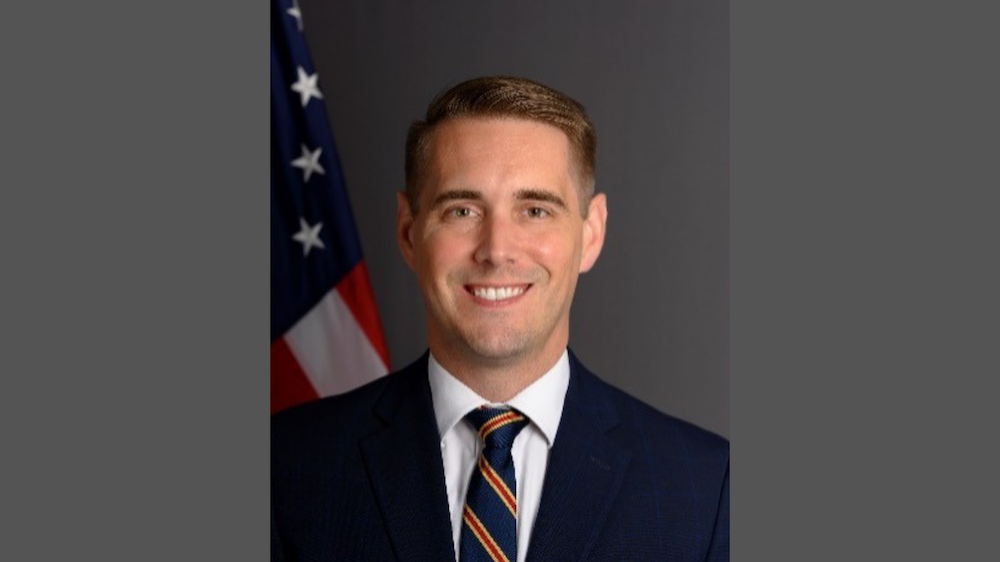
US Secretary of State Marco Rubio announced on Tuesday that Riley M. Barnes, the current Assistant Secretary of State for Democracy, Human Rights, and Labor, has been designated to serve as the new Special Coordinator for Tibetan Issues. The position, mandated under US law, is responsible for coordinating American efforts to promote and protect the human rights, cultural identity, religious freedom, and linguistic heritage of the Tibetan people.
Rubio made the announcement in a statement marking Losar, the Tibetan New Year, reiterating Washington’s commitment to safeguarding Tibetan rights and preserving their distinct cultural and religious traditions.
“I extend my warmest wishes to all those celebrating Losar, the Tibetan New Year. On this first day of the Year of the Fire Horse, we celebrate the fortitude and resilience of Tibetans around the world. The United States remains committed to supporting the unalienable rights of Tibetans and their distinct linguistic, cultural, and religious heritage. I wish Tibetans everywhere a healthy and prosperous year ahead. Losar Tashi Delek and Happy New Year!” the statement read.
Rubio further added, “On this auspicious occasion, I am also pleased to announce that I have designated Assistant Secretary of State for Democracy, Human Rights, and Labor (DRL) Riley M. Barnes to serve as the United States Special Coordinator for Tibetan Issues.”
Beijing responded sharply to the announcement. China’s Ministry of Foreign Affairs accused Washington of “using Tibet-related issues to interfere in China’s internal affairs.” In an official statement issued on Wednesday, the ministry said that the United States’ establishment of the “so-called ‘special coordinator for Tibetan issues’” constituted interference in domestic matters and reiterated that China has never recognised the position.
“Tibet affairs are China’s internal affairs and tolerate no interference from any external forces,” the statement added, reaffirming Beijing’s long-standing stance that issues concerning Tibet fall strictly within China’s sovereign domain.
The position of the U.S. Special Coordinator for Tibetan Issues was formally established by the Tibetan Policy Act, which was enacted as part of the Foreign Relations Authorization Act for Fiscal Year 2003 and signed into law in 2002. The Tibetan Policy Act of 2002 (TPA) codified U.S. policy toward Tibet for the first time in statute. It required the Secretary of State to designate, within the State Department, a Special Coordinator for Tibetan Issues.
The law mandated that the Special Coordinator to promote substantive dialogue between Chinese authorities and the Dalai Lama or his representatives, protect and advance the human rights, religious freedom, and cultural identity of the Tibetan people, support the preservation of Tibetan language, religion, and heritage, facilitate humanitarian assistance to Tibetan refugees in South Asia, and coordinate U.S. government policies on Tibet across agencies.
Since 2002, multiple U.S. administrations have appointed senior officials to serve concurrently as Special Coordinator, typically holding another high-ranking State Department portfolio. The Special Coordinator does not function as a diplomatic envoy to Beijing but rather as a policy coordinator within the U.S. government, signalling Washington’s continued engagement on Tibet-related human rights, religious freedom, and dialogue initiatives.
Beijing has consistently rejected the legitimacy of this role, arguing that Tibet-related matters are China’s “internal affairs.” However, under U.S. law, the position remains a statutory requirement, reflecting bipartisan congressional support for Tibet since the early 2000s.

