

Tenzin Nyidon
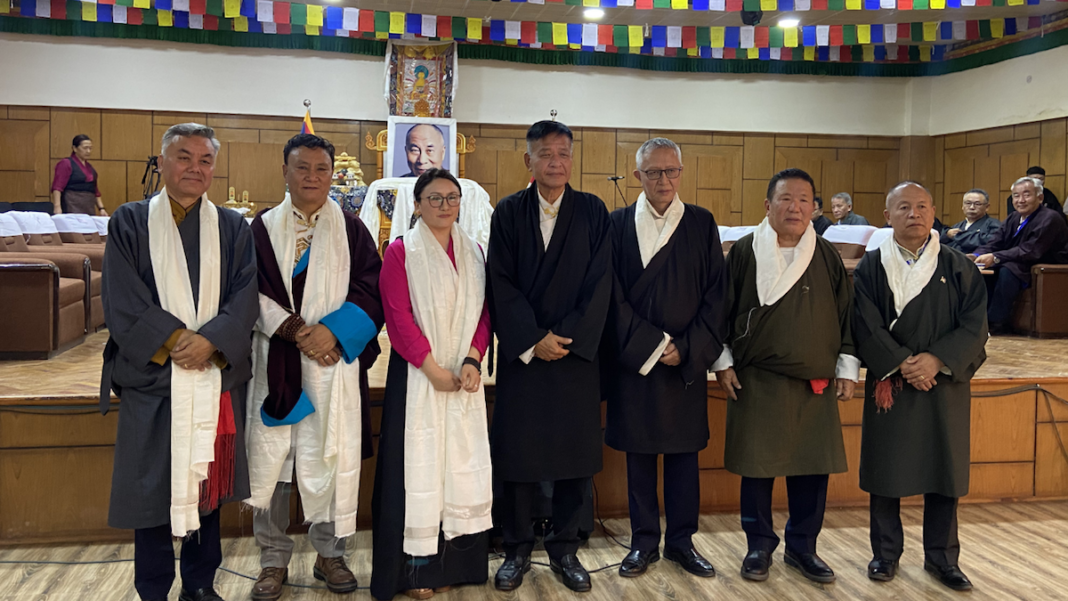
DHARAMSHALA, June 3: The six newly elected ministers of the 17th Cabinet of the Central Tibetan Administration (CTA) were sworn into office on Wednesday during a ceremony held at the Sikyong Hall in Dharamshala, the seat of the Tibetan government-in-exile.
The ministers took their oath of office before Chief Justice Commissioner Yeshi Wangmo, formally assuming their responsibilities as members of CTA President Penpa Tsering’s newly constituted executive body.
The six ministers—Tsegyal Chukya Dranyi, Palden Dhondup, Tsering Dhondup, Ugyen Tenzin, Kunga Tashi, and Pema Tso—were elected through a secret ballot during the first session of the 18th Tibetan Parliament-in-Exile on Tuesday after successfully passing the floor test.
Following the swearing-in ceremony, departmental portfolios were formally assigned. Tsegyal Chukya Dranyi was appointed Minister of the Department of Religion and Culture; Palden Dhondup as Minister of the Department of Home; Tsering Dhondup as Minister of the Department of Finance; Ugyen Tenzin as Minister of the Department of Education; Kunga Tashi as Minister of the Department of Security; and Pema Tso as Minister of the Department of Health.
CTA President Penpa Tsering will meanwhile hold additional charge of the Department of Information and International Relations, serving as its interim minister.
Under Article 20 of the Charter of the Tibetans in Exile, the Cabinet is composed of the President and no more than seven Cabinet Ministers. President Tsering nominated six ministers for the CTA’s seven departments, leaving the Department of Information and International Relations under his direct charge on an interim basis. A ministerial nominee for the department is expected to be presented for parliamentary approval during the next general session of the 18th Tibetan Parliament-in-Exile in September.
The swearing-in ceremony marks the formal commencement of the new Cabinet’s tenure, with the ministers set to oversee their respective departments and implement the administration’s policy agenda for the coming term.
Following the swearing-in ceremony, the second and final day of the first session of the 18th Tibetan Parliament-in-Exile concluded with the unanimous adoption of an official solidarity resolution on the critical situation inside Tibet.
The six-point resolution paid tribute to the courage and sacrifices of Tibetans who have dedicated and, in some cases, lost their lives for the Tibetan cause. It called for the protection of the fundamental rights of the Tibetan people and condemned the Chinese government’s policy of forcibly enrolling Tibetan children in colonial-style boarding schools.
The resolution also demanded the immediate release of Tibetan political prisoners, including the 11th Panchen Lama, and reaffirmed Tibet’s historical status as an independent nation. It further endorsed the Middle Way Approach as the most practical and peaceful path toward resolving the Sino-Tibetan conflict through meaningful dialogue.
Expressing gratitude to governments, organizations, and individuals supporting the Tibetan cause, the resolution urged Tibetans in exile to remain united in their pursuit of justice for Tibet and in their efforts to preserve and promote Tibetan religion, culture, and language.
The solidarity resolution was passed unanimously following deliberations by members of Parliament.

