

Tenzin Nyidon
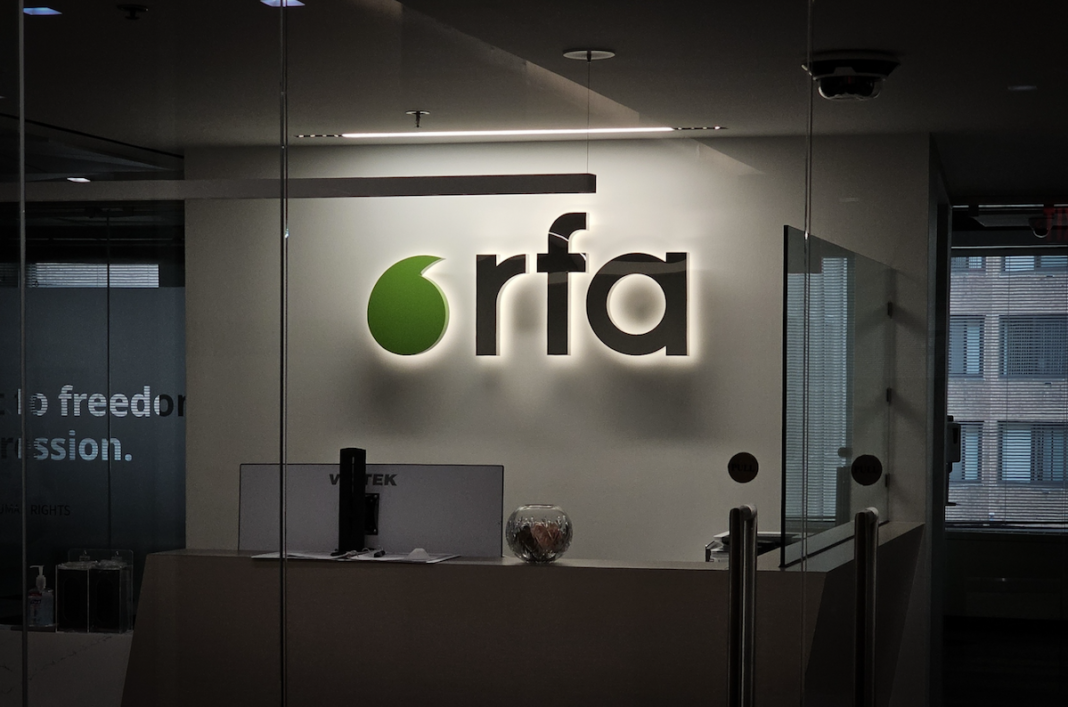
DHARAMSHALA, Feb. 21: Radio Free Asia (RFA), the U.S. funded news outlet that had largely suspended its China-focused operations, has officially resumed its Tibetan, Uyghur, and Mandarin broadcasts after months of disruption caused by sweeping budget cuts in 2025.
Established in 1996 under the auspices of the U.S. Agency for Global Media (USAGM), RFA has long provided uncensored news and in-depth analysis in several Asian languages, including Tibetan, Uyghur, and Mandarin. Its core mission is to deliver accurate and independent reporting to audiences living under governments where press freedom is severely restricted.
The broadcaster faced an abrupt financial crisis in 2025 when Kari Lake, then acting head of USAGM, terminated federal grants allocated to RFA and its sister networks. She justified the decision by citing alleged “waste of taxpayer money” and claims of ideological bias. The move led to widespread layoffs, the closure of multiple language services, and ultimately the suspension of RFA’s news operations in October 2025.
The funding cuts sparked bipartisan criticism from U.S. lawmakers, press freedom advocates, and human rights organizations, who warned that dismantling RFA’s operations would weaken a critical platform for independent journalism at a time when China’s global media influence continues to expand.
A reversal came in February 2026, when a bipartisan U.S. spending bill approved approximately $653 million in funding for USAGM. Although the allocation remains below the levels seen in previous years, it represents a significant increase compared to the sharply reduced budget proposed earlier and signals a clear political repudiation of the prior funding rollback. The restored funding enabled the partial revival of RFA’s operations, including the reinstatement of its Tibetan, Uyghur, and Mandarin services.
RFA President and CEO Bay Fang confirmed the resumption of broadcasts, noting that the three language services have returned to the airwaves through private transmission contracts. She underscored that these broadcasts constitute some of the few remaining sources of independent reporting accessible to audiences in regions where local media are subject to strict state control.
For Tibetan and Uyghur communities, RFA’s return carries both symbolic and practical importance. The services provide independent coverage of local developments, human rights conditions, cultural affairs, and political issues—topics frequently absent or tightly censored in state-run media. In the context of China’s extensive censorship infrastructure, including stringent internet controls and restrictions on foreign media access, these broadcasts continue to serve as vital conduits for uncensored information.

