

Tenzin Nyidon
DHARAMSHALA, April 22: US Assistant Secretary of State for South and Central Asian Affairs, Samir Paul Kapur, drew attention to the challenges faced by Tibetan refugees in Nepal during his April 20–22 visit to Kathmandu, urging the Nepalese government to strengthen support measures amid ongoing humanitarian concerns.
During his three-day trip, the senior US diplomat met with members of the Tibetan community in Kathmandu. Members of the refugee community highlighted persistent challenges, including barriers to running businesses, opening bank accounts, accessing nursing education, and engaging in broader economic activities.
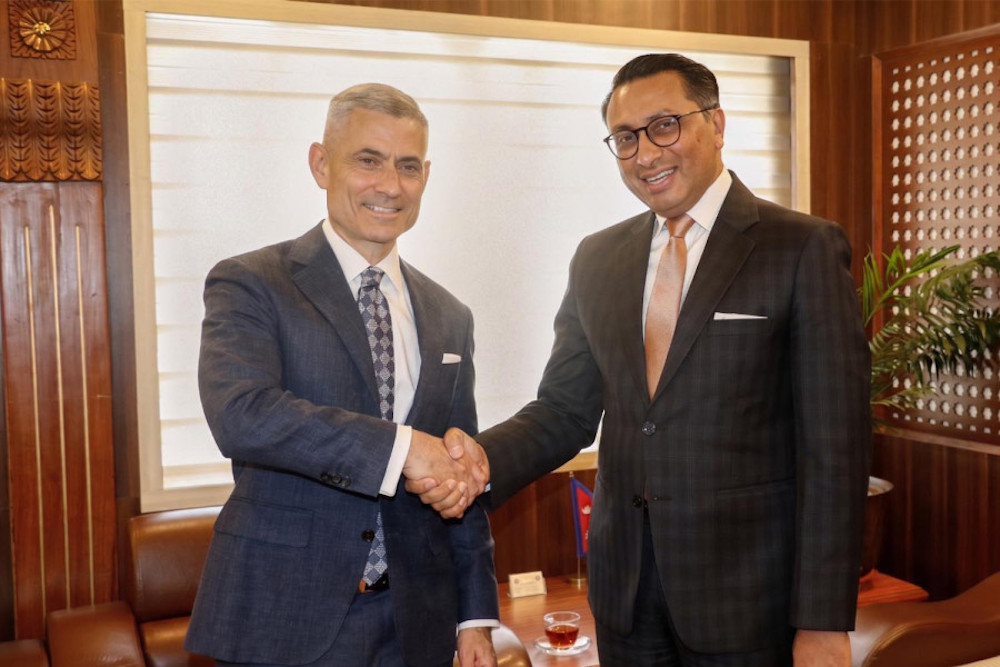
In discussions with Foreign Minister Shisir Khanal, Kapur raised the issue directly, calling for increased assistance for the estimated 10,000 Tibetan refugees residing in the country. He also emphasized the importance of issuing identity cards to refugees, noting that formal documentation would enable them to enter the tax system and participate more fully in the economy.
Nepali authorities acknowledged the sensitivity of the matter, particularly in light of Kathmandu’s diplomatic ties with China. Minister Khanal reportedly reaffirmed Nepal’s commitment to supporting Tibetan refugees on humanitarian grounds while noting the broader geopolitical considerations. “We are hosting them on humanitarian grounds and will continue to do so,” he stated.
Kapur’s remarks come shortly after Zhang Maoming, China’s ambassador to Nepal, urged tighter restrictions on Tibetan and Taiwanese activities during an April 13 meeting with Home Minister Sudan Gurung. Beijing has consistently pressed Kathmandu to prevent its territory from being used for activities it deems politically sensitive.
The visit also unfolded amid broader diplomatic engagement with Nepal’s new government under Prime Minister Balen Shah, with discussions centered on regional stability and managing China’s expanding influence—factors that have, in recent years, contributed to increased surveillance and movement restrictions on Tibetan refugees.
Separately, Kapur held talks with Finance Minister Swarnim Wagle and Foreign Minister Khanal to explore avenues for strengthening economic ties. Discussions focused on boosting US investment in sectors such as tourism, clean energy, and information technology, with Nepali officials pledging reforms to improve the country’s business environment.
Following the meetings, Kapur noted on the social media platform X that closer economic cooperation could enhance Nepal’s infrastructure and drive mutual growth. He also highlighted discussions on expanding bilateral trade and addressing issues such as illegal immigration and human trafficking, reaffirming Washington’s commitment to deepening its partnership with Nepal.

