

Tenzin Nyidon
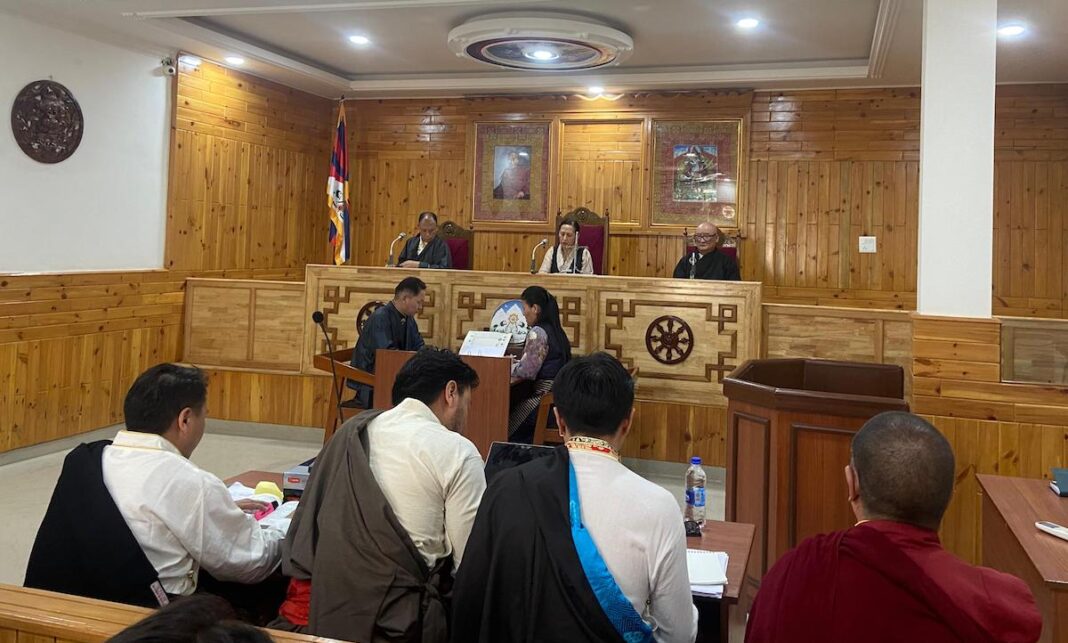
DHARAMSHALA, June 12: The Tibetan Supreme Justice Commission (TSJC), the apex court of the Central Tibetan Administration (CTA), on Friday rejected the writ petition challenging the Central Election Commission’s decision that allegedly disenfranchised two monasteries in Nepal, ruling that the petitioners may instead join the already pending Case No. 22 to pursue the claims through further legal proceedings before the court.
The petition, filed with legal representation from the Dharamshala-based Tibetan Legal Association (TLA), challenged the Election Commission’s April 23, 2026, decision to withdraw final-round voting in the Choejor constituency following an investigation into alleged voting irregularities during the preliminary election.
During a preliminary hearing on Tuesday, legal counsel for the petitioners argued that the Election Commission’s decision violated Article 11 of Chapter Two of the Charter of Tibetans in Exile, which guarantees the right to vote. The petitioners contended that the Commission had restricted a fundamental right based on allegations that had not been conclusively established and questioned whether several of the Commission’s findings were adequately substantiated.
The TSJC, in its verdict, found that the petition filed by Sherab Sengey on behalf of the two Nepal-based monasteries was substantially similar to Case No. 22 in its nature, underlying cause of action, and relief sought. The court noted that Case No. 22, which challenges the Election Commission’s handling of the Choejor voting dispute, is already pending before the court.
The court cited Article 19(A) of the Civil Procedure Code, which permits one or more petitioners to join the same case when they share a common cause of action and have a legal right to seek the relief requested. The TSJC ruled that the petitioners may join Case No. 22 as additional petitioners in order to safeguard their right to seek legal remedy.
The court further held that allowing multiple cases arising from the same issue could lead to procedural irregularities. Citing Article 88 of the Civil Procedure Code, which grants the TSJC inherent powers to issue orders necessary to ensure the ends of justice and prevent abuse of the judicial process, the court declined to register the separate writ petition.
According to the verdict, the TSJC found, after reviewing the petition and supporting documents, that the petitioners fell within the jurisdiction of the Choejor Tibetan settlement and were among more than 2,000 registered voters in the constituency for the 2026 Tibetan general elections.
The court noted that the documentary evidence submitted by the petitioners was identical to evidence already presented in Case No. 22, a separate legal challenge against the Election Commission’s decision to suspend voting in the constituency.
Speaking to media representatives after the ruling, the petitioner’s legal counsel, Rigchen Wangyal, said he disagreed with the TSJC’s decision in a case concerning the alleged violation of the fundamental rights of two Nepal-based monasteries. He argued that under Article 69(B) of the Civil Procedure Code, a petition may be dismissed at the preliminary hearing stage only if the court finds that no fundamental right has been violated or deprived, or if the petition lacks sufficient evidentiary support. Since the court’s decision was not based on either of those grounds, he contended that the ruling was inconsistent with the applicable rules of civil procedure.
He also challenged the court’s finding that the monasteries could join the already pending Case No. 22 as additional petitioners under Article 19(A) of the Civil Procedure Code, arguing that such an interpretation is not legally sustainable. He said the petitioners intend to continue pursuing the matter through further legal proceedings.
Attempts by the media representatives to obtain a comment from Lhadruk, Registrar General of the Tibetan Supreme Justice Commission, were unsuccessful, as he declined to be interviewed.

