

Tenzin Nyidon
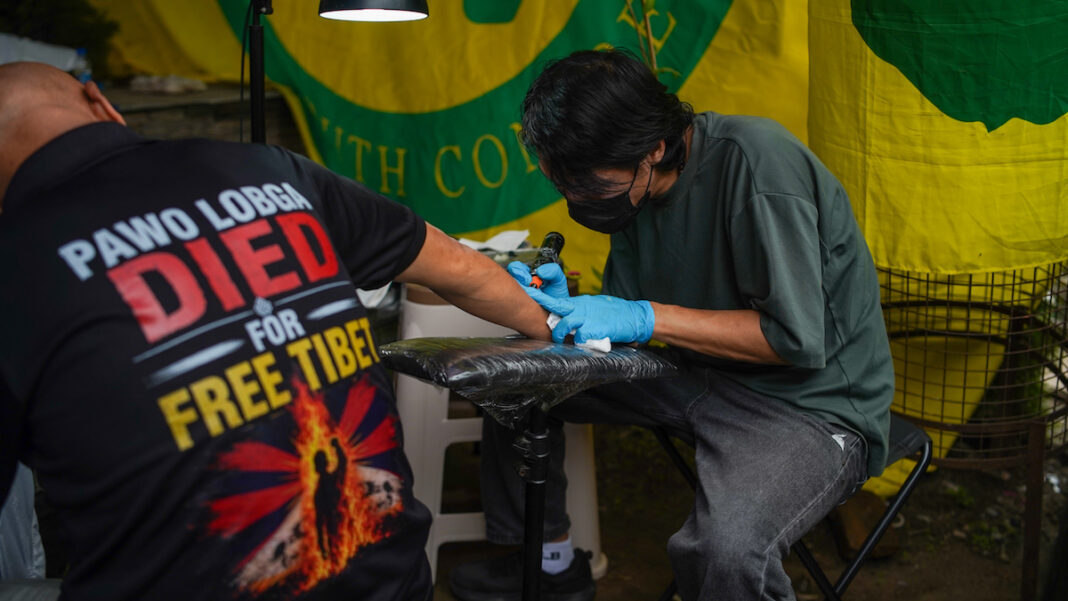
DHARAMSHALA, Aug. 13: The Tibetan Youth Congress (TYC), the largest pro-independence organisation in exile, on August 13 marked the 42nd day since the passing of late Tibetan independence activist Lobga Rangzen by launching a free tattoo campaign in Dharamshala. The campaign was organised in collaboration with two independent tattoo artists, Sonam, also known as Mo Ink, and Tenzin Kalsang.
Tibetans began arriving at the campaign one after another, choosing to carry the Tibetan cause on their skin. Many had བོད་རང་བཙན (Tibetan Independence) inked onto their bodies, while others chose the words རེ་བ (Hope)—each inscription reflecting a different expression of aspirations and belonging.
Tashi Targyal, Vice President of the Tibetan Youth Congress (TYC), said the campaign was intended to make these messages lasting: “Once we have these words permanently inked on our bodies, we will carry them with us until we die.” He described the tattoos as “something permanently inscribed on us about the Tibetan cause.”
Among those who took part were Rangzen Dhondup, president of the Regional Tibetan Youth Congress in Dharamshala and Dr. Sonam Tobgyal, a researcher at Tibet Watch, who chose to have བོད་རང་བཙན (Tibetan Independence) tattooed on their hands. Speaking to Phayul, they explained why they chose to place the words on their hand and what the inscription represents to them.
Rangzen Dhondup told Phayul that Tibet is a country still without independence, its people living through difficult circumstances, and that reality is not something to be remembered only on certain occasions—it is a commitment to be carried every day. “That is why keeping the aspiration for independence alive in the hearts of Tibetans, across generations, is so important.”
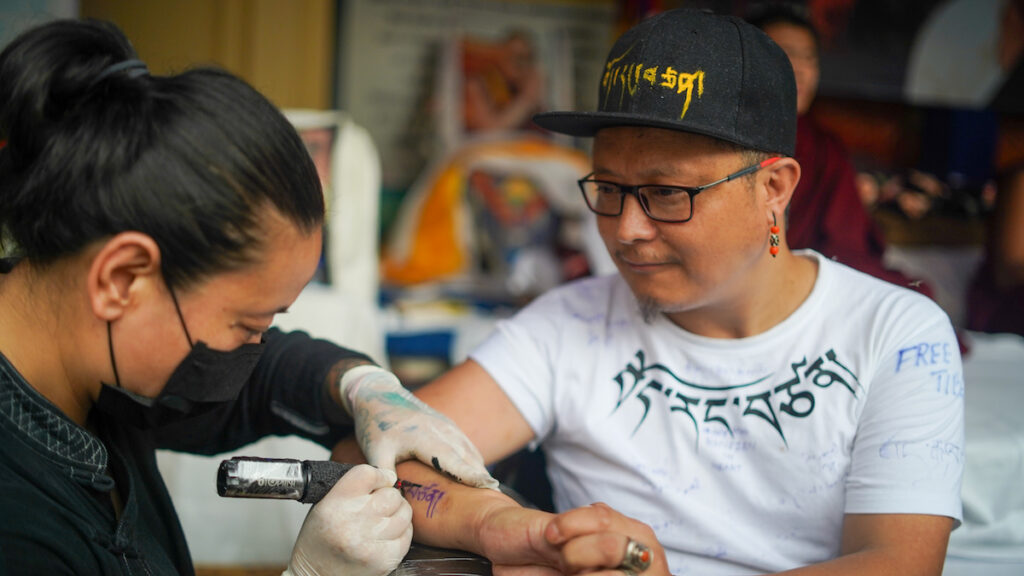
For him, the aspiration is not simply an idea but a lifelong pledge. He said the struggle must continue until the goal is achieved, a commitment he has chosen to make visible by having བོད་རང་བཙན (Tibetan Independence) permanently inked on his hand. “I have made this vow to myself. I will continue to strive for Tibetan independence for as long as I live. Until Tibet gains independence, I will carry this commitment with me. It is a promise I have made to myself and I will not abandon it.”
Dr. Sonam Tobgyal said when you look at the question of Tibetan independence not simply as a political demand, but as something rooted in the values you believe should define a society—freedom, justice, and equality. He said these principles are inseparable from the idea of independence.
“Freedom and justice are deeply rooted in our collective character as a people. When we speak about independence, we also have to speak about our culture, because culture provides the philosophical foundation behind it.” He said this foundation is not fixed or predetermined. It is something that societies develop through their political and historical experience. Across history, he said, you see societies moving forward by establishing freedom where it was absent and justice where it was lacking.
“If we look at different countries and their histories, we can see that societies have progressed by bringing freedom where there was none and establishing justice where it was lacking.” That is why, he stated, he believes Tibetans, too, must move in the same direction. Independence, in his view, is ultimately about creating a society in which people can live with dignity, freedom, and equality.
“We need to move in that same direction. Because, to put it simply, no one can truly live in a society where there is no freedom, justice, or equality. That is the reality.”
For those who took part in the campaign, the tattoos carried a meaning beyond personal conviction. Each inscription became a small, deliberate act of remembrance and resistance—a way of keeping alive a political aspiration that participants believe has been suppressed in their homeland. What appeared on their hands as ink was, for them, a quiet refusal to let that aspiration disappear. In that sense, the campaign transformed the body into a canvas of resistance and quiet acts of defiance against what participants described as the continuing colonial occupation of their homeland.

