

By Tenam
In January of this year, I spoke before a panel in Luxembourg about digital repression and the shrinking of civic space. I made the case that Tibetans, Uyghurs, and Hongkongers should not only be cited as case studies in these conversations — they should be recognised as early witnesses whose experiences must shape how the world responds now.
We Tibetans have been living inside this reality for more than two decades since the internet became a worldwide phenomenon. As early as 2009, researchers uncovered GhostNet — a large-scale cyberespionage network that had compromised computers used by the Tibetan government in exile and Tibet-related organisations around the world. Since then, our community has been targeted repeatedly through email hacks, malware, and coordinated disinformation. When Tibetans warned that digital tools could be weaponised against us, those warnings were often dismissed.
The world is catching up. But we cannot afford to wait for it.
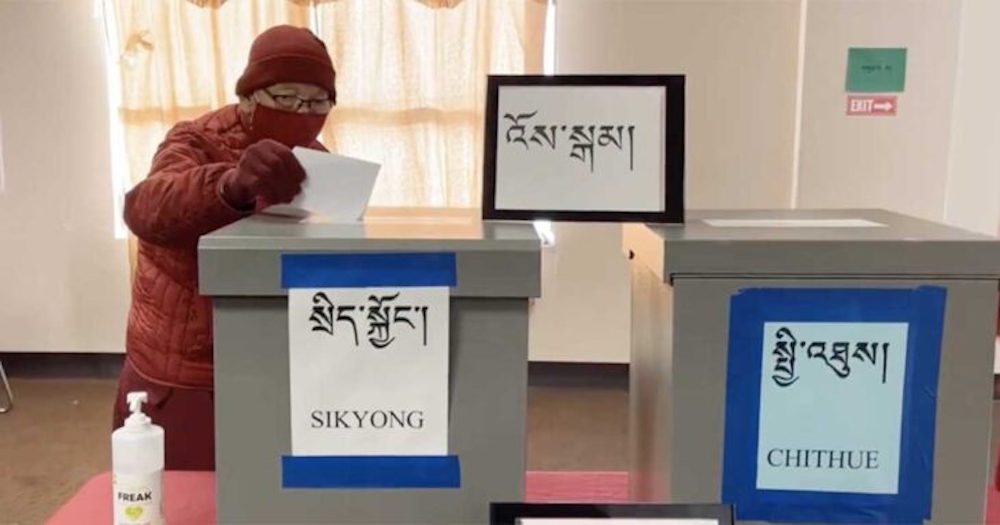
In February 2026, the research organisation Graphika documented what we already knew was coming: a coordinated Chinese state-linked influence operation targeting our own democratic elections — AI-generated articles in Tibetan and English, coordinated fake accounts, and direct attacks on the credibility of our Election Commission. And in April, China’s state mouthpiece Global Times published a lengthy attack on the same election, calling it “an election without a land” and “an institutional illusion created by separatist groups.”
These two operations — one covert, one brazen are not separate phenomena. They are the public and hidden faces of the same campaign. And that campaign has been running, in different forms, for decades. This is not a new war. It is a new phase of an old one.
The campaign against the Tibetan cause is not a collection of random attacks. It is a doctrine with distinct tracks, each targeting a different pillar of our struggle.
The historical track attacks the legal foundation: Tibet was always part of China and that there was no independent Tibetan state.
The moral track attacks the ethical foundation: Tibet was a feudal theocracy built on slavery, Beijing’s arrival was liberation.
The personal track targets the Dalai Lama, not with a goal to win an argument, but to make solidarity with him politically uncomfortable.
The institutional track: The newest and most dangerous method targets not individuals but our democratic structures themselves – the Tibetan parliament in exile, the Election Commission, the process. When people distrust institutions, they disengage. Disengagement is the goal.
Two Faces of the Same Operation: Spamouflage and Global Times
During the February 2026 CTA elections, Spamouflage, which is a Chinese state-linked influence network documented by Graphika — published AI-generated articles simultaneously in English and Tibetan targeting specific candidates. On X (twitter), 103 coordinated accounts uploaded AI-generated cartoons using identical hashtags. The Election Commission itself was framed as having failed to investigate legitimate complaints. The goal was not to change the result. It was to make the entire process appear illegitimate before a single final vote was cast.
Two months later, Global Times made the same argument openly. It cited the 56% preliminary voter turnout as evidence of a lack of credibility without mentioning that citizens in China do not have the right to directly elect their top leadership. It pointed to US funding of the CTA as proof of external dependency. It quoted what it described as critical commentary from Tibetan bloggers on Medium as evidence of internal discontent without acknowledging that Spamouflage had been producing coordinated content in Tibetan targeting this very election just weeks earlier.
That last detail deserves to be named plainly. Those Medium posts were manufactured. A researcher has confirmed it. Global Times was amplifying what Spamouflage had planted. The overt propaganda and the covert operation pointing at the same material, toward the same conclusion.
The CTA spokesperson Tenzin Lekshay in an interview to Tibet Times few days back responded with notable composure. He reframed the entire exchange. Sixty-six years of democratic practice in exile, he noted, might itself be worth studying if China were ever to choose a path of peace over hostility. Simply repeating the label “separatist organisation,” he concluded, resolves nothing. It never has.
What Beijing’s unusual attention to the diaspora election ultimately reveals is the depth of its discomfort. The Global Times piece is a behaviour of a government that finds a functioning democracy, however small, genuinely threatening. What piques China most is the glaring contrast with its own electoral void.
The Real Target: The Right to Be Believed
What connects digital surveillance inside Tibet and disinformation outside it is the same destination: self-censorship.
Inside Tibet, when people know their phones can be scanned, their messages read, their contacts scrutinised and leads to behavioural changes. People stop sending messages. They avoid certain topics.
Outside Tibet, the mechanism is different but the endpoint is the same. Disinformation does not only attack truth but it attacks solidarity. It makes allies hesitant. It turns clear cases of repression into endless debates. When people no longer know what is true, they stop caring. And when our own community is flooded with manufactured divisions, coordinated attacks on our candidates, and artificial doubt about our institutions, the same quiet withdrawal follows.
We Are Not Starting From Zero
The good news is that Tibetans are not unprepared.
For example, Tibet Action Institute runs TibCert, a dedicated digital security initiative built specifically for our community. Their mission is to build long-term collaboration between community stakeholders on digital security, to provide regular and accessible guidance on threats we face, and to help Tibetans inside Tibet circumvent censorship and surveillance.
TibCert has been doing this work for years, long before Spamouflage turned its attention to our elections. They carry accumulated knowledge about the specific ways this community is targeted. Supporting them, sharing their resources, and treating digital security as a democratic responsibility is one of the most direct things we can do.
What Each of Us Can Do
The final election for the 18th Tibetan Parliament-in-Exile takes place on 26 April 2026. The same infrastructure that targeted the preliminary round is still active. What you do in the next two weeks and beyond matters.
You do not need to be a cybersecurity expert. You need three habits.
Before sharing content that attacks a candidate, an institution, or deepens a division in our community — pause. Ask: who published this? How old is this account? Is this trying to inform me, or provoke me? These questions take thirty seconds. They are the difference between participating in our democracy and amplifying someone else’s operation.
If you see content that looks coordinated, with the same attack from multiple new accounts, articles in Tibetan that feel off, waves of identical cartoons — report it. Name it publicly when you can. Silence is how it spreads.
And talk about this. In your family groups, in your local associations, with the younger generation who live on these platforms far more than we do. The most powerful defence against an information operation is a community that knows it is being targeted and refuses to be used against itself.
The Chief Election Commissioner has already called for stronger civic engagement, particularly from Tibetan students and young people who could not vote in February. That call and this one are the same call: show up, stay clear-eyed, and do not let manufactured noise drown out your own voice.
A Direct Appeal
We are a people who have survived occupation, exile, and decades of systematic erasure. We built democratic institutions under conditions no political science textbook anticipated. Imperfectly — our recent governance crises remind us of that. But genuinely, with real commitment, across 27 countries, across generations born far from the land that remains the reason for all of it.
That commitment is precisely why we are targeted. Beijing does not spend resources on movements it considers irrelevant.
For decades, we warned that digital tools could become instruments of repression. For decades, those warnings were treated as the concerns of a small, marginal community. Now that the world is beginning to understand what we understood first, we have an obligation to ourselves and to every community that will face what we have faced to lead from that knowledge, not retreat from it.
When you see a narrative designed to make Tibet seem complicated, or the Dalai Lama seem compromised, or our institutions seem corrupt — ask who benefits from that story spreading. The answer is rarely your neighbor or a fellow Tibetan.
Refusing to share unverified content is not censorship. It is democratic discipline. Questioning the origin of an article that attacks our institutions is not paranoia. It is the basic literacy required to live in the information environment we actually inhabit.
We were the early witnesses. That is not a burden. It is standing.
Civic space does not collapse dramatically. It contracts quietly — unless we refuse to let it.
(Views expressed are his own)
The author is a former editor of Tibetan Bulletin, a member of SFT France and a board member International Tibet Network. He live in Paris, France.


Why users still use to read news papers when in this technological world the whole thing is presented on net?
Keep on working, great job!