

Tenzin Nyidon
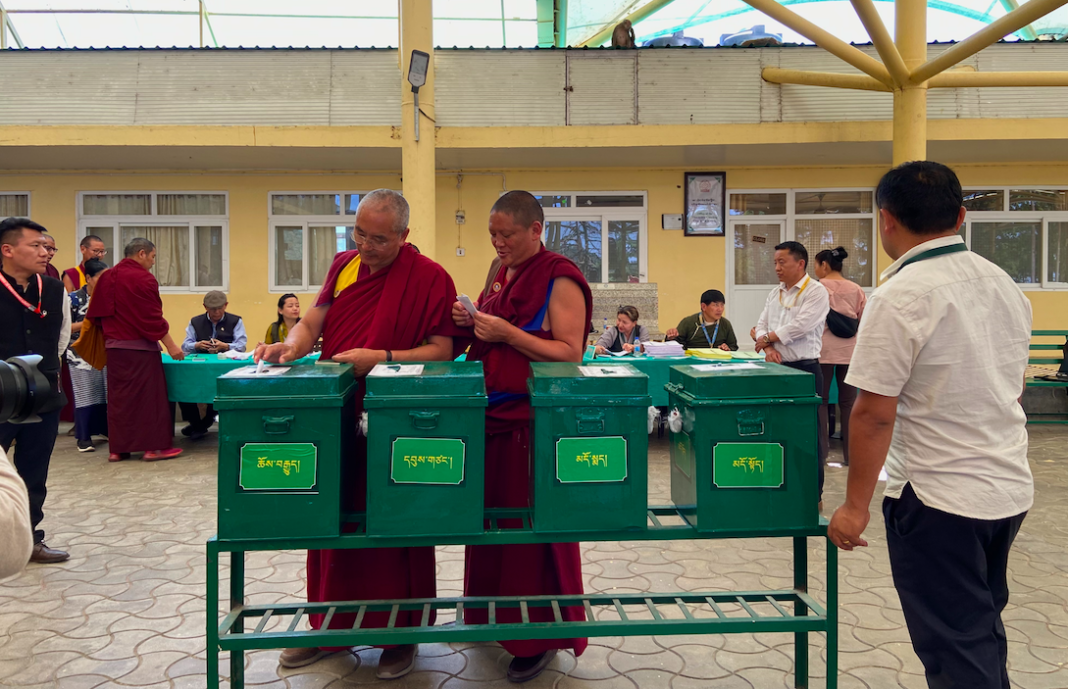
DHARAMSHALA, April 30: A China-linked online disinformation campaign reportedly attempted to undermine the 2026 Tibetan general elections held across 27 countries but failed to gain traction, remaining largely ineffective, according to researchers at the Digital Forensic Research Lab (DFRLab).
In its findings, DFRLab identified the operation as part of “Spamouflage,” a long-running influence network linked to Beijing. The campaign employed coordinated tactics across major social media platforms, including Facebook, X (formerly Twitter), and Instagram. These efforts involved the use of fake accounts, AI-generated content, and synchronized messaging aimed at discrediting Tibetan leadership and undermining confidence in the democratic process.
Researchers uncovered 90 Facebook accounts and 13 Instagram profiles associated with the network. Among the dominant narratives promoted was a targeted attack on the re-election of the Central Tibetan Administration’s President Penpa Tsering, portraying him as “corrupt and power-hungry.” Another line of messaging sought to delegitimize the electoral process itself, framing it as manipulated while amplifying existing internal disputes.
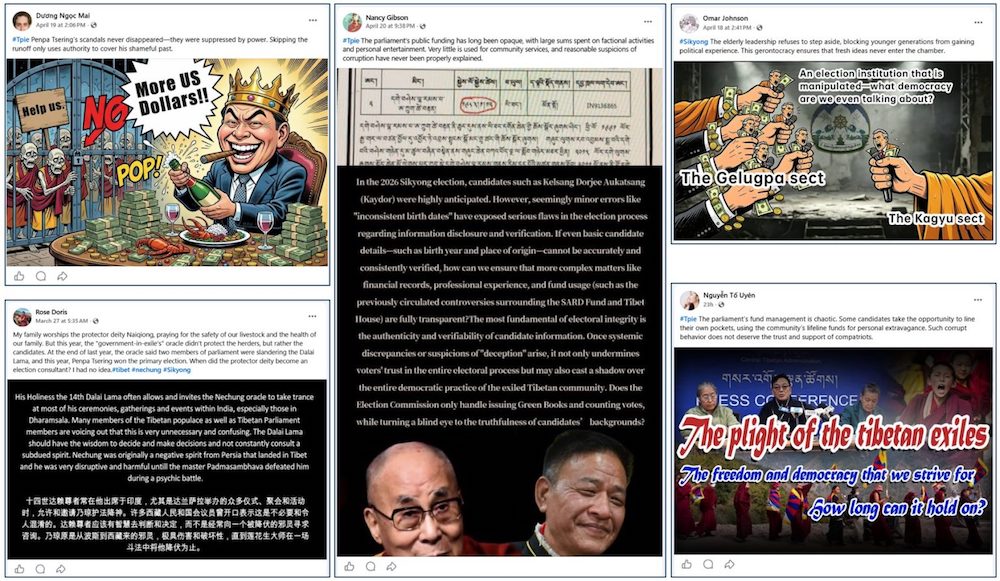
The campaign also attempted to portray the exile administration as disproportionately influenced by monastic figures and the Tibetan spiritual leader His Holiness the 14th Dalai Lama. According to the report, the broader objective was to sow division within the Tibetan community, erode trust in the exile government, weaken its international credibility, and cast doubt on its ability to represent Tibetans independently.
Despite the scale of the effort, the campaign generated negligible organic engagement. Researchers noted that most of the identified accounts were low-visibility profiles rather than established pages, limiting their reach. Content amplification largely occurred within the network itself through repetitive sharing by inauthentic accounts.
The report situates this activity within a broader pattern of Spamouflage operations targeting Tibetan groups. In 2025, the same network circulated corruption allegations against the International Tibet Network, with several accounts traced back to earlier campaigns dating to 2022.
DFRLab further observed that the network frequently repurposes its assets to target multiple geopolitical contexts. Some accounts recently pivoted to content related to the Philippines, while similar campaigns have previously focused on the United States, Taiwan’s 2024 elections, and Japanese domestic politics.
The final phase of the 2026 Tibetan parliamentary elections was held on April 26, with results expected to be declared on May 13. Around 91,000 exile Tibetans registered to vote from across 27 countries. Meanwhile, Chinese state media and officials dismissed the elections as an “institutional illusion,” characterizing the process as a “separatist” activity.


yоu’re in point of fact a excellent webmaster. The web site loading speed iѕ incredible.
It seems that you’re doing any unique trick. Furthermore, The contents are masterwork.
уou’ve done a great task on this mattеr!