

Tenzin Nyidon
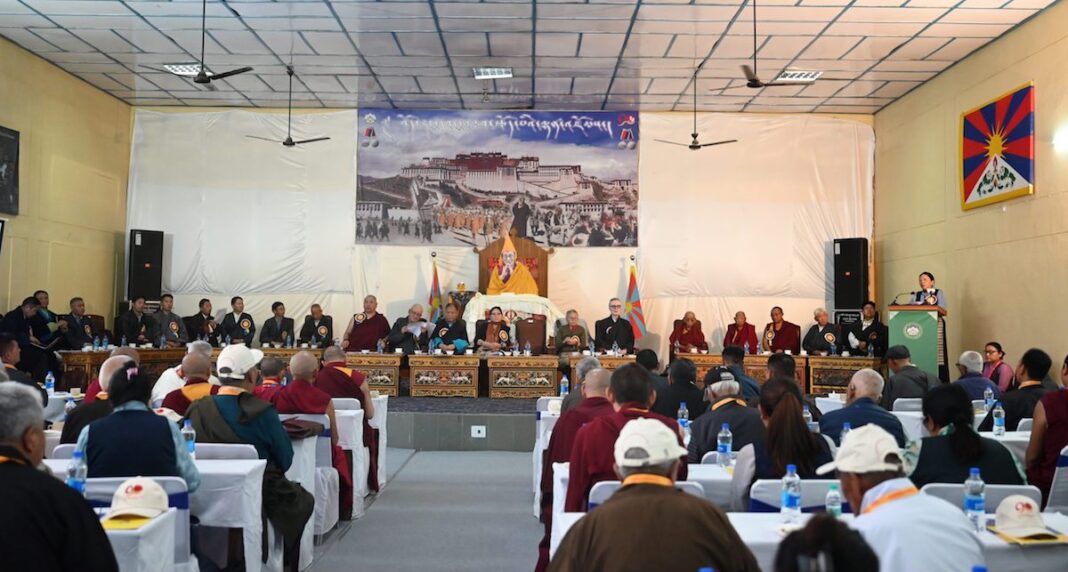
DHARAMSHALA, April 27: The Department of Security of the exile Tibetan government, officially known as the Central Tibetan Administration (CTA), convened its first-ever two-day “Tibet Freedom Fighters’ Conclave” from April 24 to 25 in Dharamshala.
A total of 89 veterans attended the conclave, representing a wide spectrum of Tibet’s resistance history. Participants included former political prisoners, veterans of an independent Tibet, members of the Chushi Gangdruk (“Four Rivers, Six Ranges”), former fighters of Lodrik (an organisation established in 1960 by Tibetan guerrilla fighters), ex-servicemen of the Special Frontier Force (SFF), also known as Establishment 22 (“Two Two”), former bodyguards of His Holiness the Dalai Lama, and officials from the Department of Security.
The conclave concluded with a formal ceremony on Monday at the Main Tibetan Temple, where the CTA honoured all 89 participants with medallions as a national tribute to their lifelong service to the Tibetan cause, through both armed resistance and political resilience.
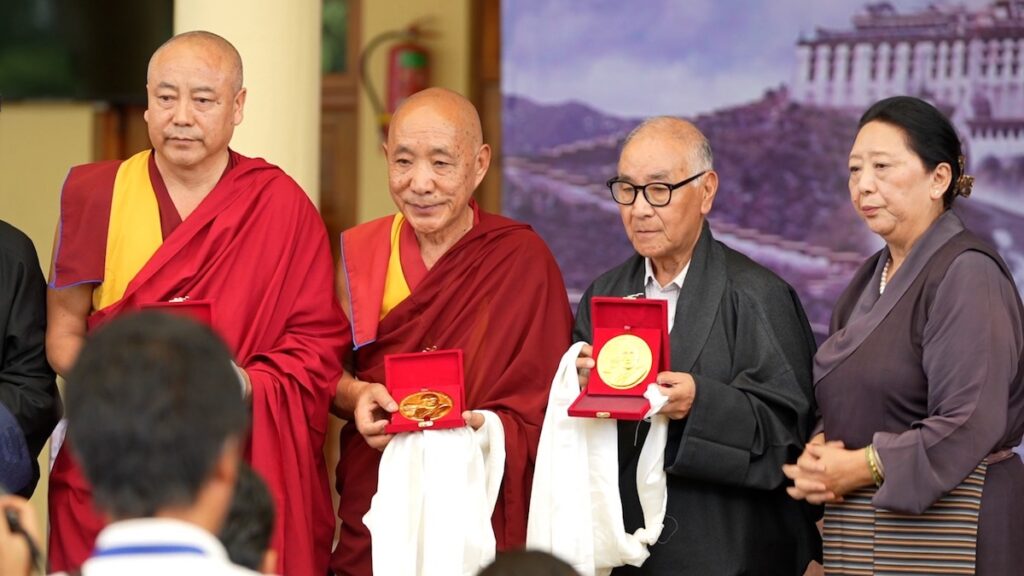
Addressing the ceremony, Security Minister Gyari Dolma stated that a total of 28 resolutions had been adopted during the conclave. She noted that participants unanimously expressed gratitude to individuals associated with the Gaden Phodrang, the private office of His Holiness the Dalai Lama. According to a press statement issued by the Department of Security, discussions focused on ensuring the successful fulfilment of His Holiness’s vision and aspirations. Deliberations drew upon historical experiences, the current geopolitical context, and the lived realities of Tibetan patriots, while also examining the strategic direction of the Department of Security.
Department of Security Secretary Karma Rinchen told Phayul that the resolutions encompassed a wide range of issues, some of which may be made public, while others may remain confidential. “If I were to summarize the essence of these points,” he said, “the most important aspect of the resolution was how to effectively carry out and fulfill the vision and guidance of His Holiness the Dalai Lama.”
He further highlighted that participants stressed the importance of recognising both the challenges and opportunities facing Tibetan society today, as well as identifying their sources. Several attendees emphasised the need for the Department of Security to enhance public awareness regarding potential threats, particularly pointing to efforts by the Chinese government to create divisions and influence public sentiment within the Tibetan community.
Following the ceremony, Phayul spoke with a few former veterans to learn about the suggestions they put forward during the two-day conclave. Phayul learned that among the most prominent recommendations was the call for the establishment of a dedicated Tibetan military force and a designated training camp, which they argued is vital for national security. Participants also voiced concern over the declining number of Tibetans joining the SFF, attributing the trend to increasing migration to Western countries within the exile community.
Dawa, an SFF veteran and recipient of the prestigious Shaurya Chakra for gallantry, noted that under the current arrangement with the Indian government, Tibetans serving in the SFF receive stable salaries, without financial burden on the exile administration. He added that SFF personnel contribute significantly in taxes to the Tibetan administration and that recruitment into the force could help support families economically, potentially curbing migration and encouraging Tibetans to remain in refugee settlements in India. The 91-year-old veteran said that if he were given the choice between sending his children abroad or into the army, he would undoubtedly choose the latter.
Responding to questions about the relevance of a military institution in the future—particularly in light of the exile government’s policy of non-violence and its pursuit of a resolution within the framework of China, the 88-year-old veteran Kalden Choesang reflected that Tibet lost its land despite having an army, as it lacked sufficient strength, proper infrastructure, and institutional support, with families themselves bearing the burden of sustaining it.


We have come a long way in our struggle for Tibet’s independence. Obviously, the peaceful way to struggle for Tibet’s freedom is the best way. I think every one can agree with it especially so since the Dalai Lama has advocated it and Mahatma Gandhi has shown the way for India’s independence! The recent gathering in Dharamsala of the “Tibetan Freedom Fighter’s Conclave” was not expected because until now, any military training or armed struggle was unthinkable because of the Dalai Lama’s insistence on non-violence. Even the great freedom fighters who died for Tibet were not spoken of or glorified like other countries do. We sought to bury them under the carpet as something of no consequence. Only after the death of Special Frontier Force soldier Nyima Tenzin, there was acknowledgement of the existence of Tibetan Special Frontier Force (SFF) by the Indian Government and with it the Tibetan community. Tibetan leaders paid homage to Nyima Tenzin’s memorial bust. Many Tibetans felt a sense of joy that our boys have died for India not only in Galwan but in Kargil with dare devil mastery in climbing icy mountains to hoodwink the enemy forces. More than Kargil, 47 heroic Tibetan lives were lost during the Liberation of Bangla Desh in 1971. The Tibetans earned true respect for their valour during this war. Tibet was a mighty empire and we were a war like people but pacified when Buddhism came to Tibet. It was a good thing but the trouble is our neighbours were not as peaceful as we were since Tibet renounced war and lived peacefully. The imperialist Mongols and Manchus that ruled China and the Gurkhas in the south have waged war on us! The doves and deers are peaceful animals but they are the victims of cats and wolves. Likewise, we were a peaceful country but communist China invaded and illegally occupied our country. We have continued to resist peacefully but the Chinese communists have only intensified their ruthless policies of forced assimilation and with the enactment of so called “ethnic unity law”, IT IS NOW CHINESE NATIONAL LAW TO DESTROY TIBETAN LANGUAGE, WHICH IS THE SOUL OF THE TIBETAN PEOPLE! Therefore, it is time to defend our language, culture, religion and identity. Every nation, all peoples of the world and every individual has the RIGHT TO DEFEND THEMSELVES! The introduction of military training for young Tibetans in future is only to defend ourselves. It is NOT DESIGNED AGAINST ANYONE BUT IS ONLY TO DEFEND OURSELVES AS A UNIQUE PEOPLE WITH A UNIQUE CIVILISATION THAT IS ENTIRELY DIFFERENT FROM CHINA! There will be many hurdles on our way since we are exiles to establish a training ground for future preparations. The Indians know that they made a huge blunder for not standing up for Tibet when communist China invaded Tibet. In fact, the Indian leaders have never stood up for any victim of aggression, be it China’s aggression on Tibet, Russia’s aggression on Ukraine or America and Israel’s aggression on Iran! This moral weakness has caused India to be left in the cold without allies and any moral standing. However, they are also aware that as Vijay Gokhale, former Indian Foreign Secretary has admitted that, “INDIA AND CHINA WILL REMAIN IN A STATE OF ARMED CO-EXISTENCE UNTIL MISTRUST GOES”. The mistrust will never go! For India, it has by now realised the Himalayan blunder that was made in the 1954 Panch-sheel Treaty which was born in sin as Jaya Pradesh Narayan put it! It was meant to be peace treaty but it was in fact a ruse which the Indians didn’t realise until it was too late! The Chinese kept quiet about Arunachal Pradesh until an appropriate occasion. But now they are continuing to irritate India by calling names to Indian territory as a means of legitimising their claim and undermining India’s claims. There is no meeting point between the two. It is unlikely, China will attack India before it attacks or deals with the Taiwan. In the event of attack on Taiwan, it is certain that the US will get involved. Just like it is attempting regime change in Iran and Venezuela, the US will do the same with communist China. It will call upon the people of China to rise against the communist dictatorship. In the aftermath of a US-China military confrontation, communist China will be considerably weakened and it is unlikely the regime will survive. During this period, America will likely open a third front just like it sought help from the Kurds to invade Iran on behalf of America. Such scenario is likely to be repeated. If the Tibetans have an army, it can assist in the US mission and America in return will help the Tibetans for our goal. That is why, we need to be prepared for any eventuality. If ever, Tibetans are able to establish a training ground for military exercises, it must be seen by our adversary as only a contingency plan and nothing more nothing less!