

Tenzin Nyidon
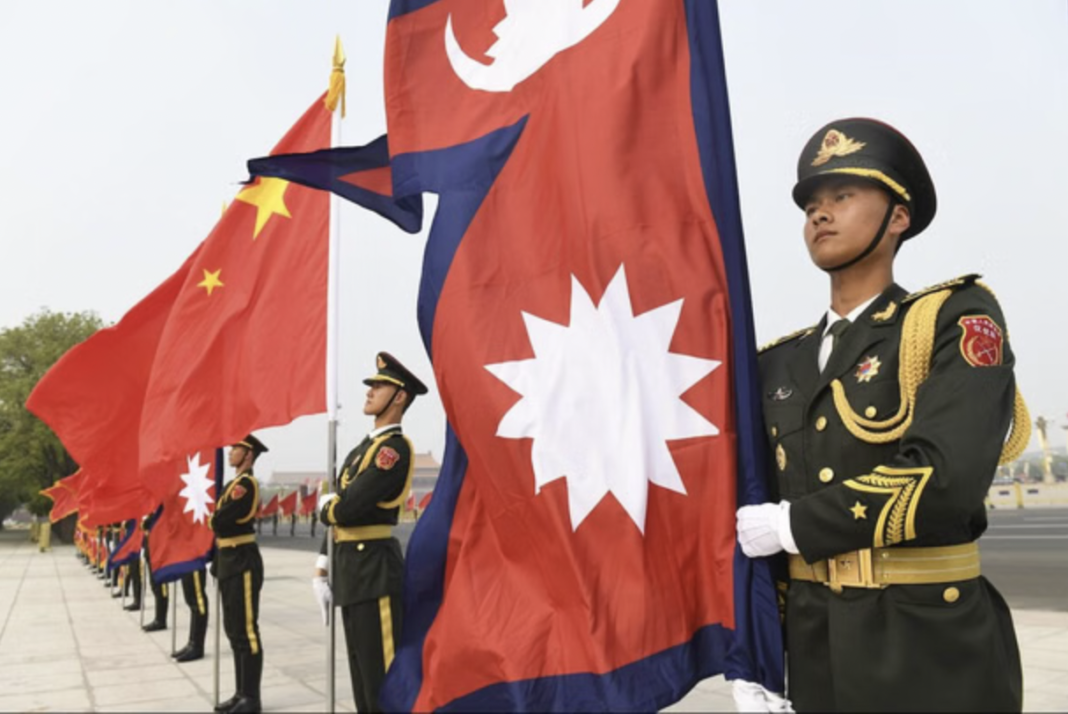
DHARAMSHALA, March 4: In a development that has captured domestic and regional attention, the Government of Nepal has formally accepted a US $4 million grant from the Government of the People’s Republic of China to support the nation’s House of Representatives election scheduled for 5th March 2026. The announcement followed a Cabinet meeting, where senior ministers reviewed and endorsed the proposal.
According to an official diplomatic note from the Chinese Embassy to Nepal’s Ministry of Foreign Affairs, the $4 million will be disbursed under the framework of the Economic and Technical Cooperation Agreement of 2017 between the two governments.
The note specifies that the funds must be used exclusively for election-related support, including mobilizing temporary election police personnel, providing uniforms for the temporary election police, logistical support for these election security forces, and monitoring and oversight activities by the Armed Police Force.
In line with Chinese protocols, a dedicated account at Nepal’s central bank will hold the funds, and each withdrawal will require diplomatic approval via the Ministry of Finance and the Chinese Embassy.
Nepal is on the cusp of one of its most consequential electoral exercises, with nearly 19 million registered voters set to cast their ballots in a snap election to form a new House of Representatives. The vote comes in the aftermath of widespread public unrest and the resignation of the former prime minister.
China’s growing political and economic influence in Nepal has already affected how Tibetan refugees are treated. Beijing has long regarded Tibet and its diaspora as a sensitive political issue, and its ties with Kathmandu have influenced Nepal’s policies toward Tibetans. As China’s footprint in Nepal expands, there’s concern that the environment for Tibetan refugees could become more restrictive and surveilled.
A Tibetan resident in Kathmandu, who requested anonymity, told Phayul that the Tibetan community in Nepal shares a deepening sense of anxiety over Beijing’s expanding influence in the country, fearing that it could lead to even more restrictive policies targeting Tibetans. “Although Tibetan refugees in Nepal have no voice or participation in the forthcoming elections, since the youth-led revolution, many remain cautiously hopeful for a more positive and inclusive environment,”
A netizen on X (formerly Twitter) described the development as far more than routine election assistance and wrote, “This is bigger than an election. It is about sovereignty and repression. Nepal taking a $4M election grant from China comes with strings that threaten democracy and deepen foreign control over security forces. This is how influence becomes obedience under the shadow of the Chinese Communist Party.”
“For Tibetan refugees in Nepal, this is especially dangerous. Beijing has long pressured Kathmandu to harass, silence, and persecute Tibetans, restrict protests, block religious freedom, and deny refugees their basic rights. More Chinese leverage means more fear for Tibetans who fled repression in Tibet seeking safety. The people of Nepal must stand up before democracy is sold piece by piece. And India should treat this as a clear warning sign. What begins in Kathmandu will echo across the region,” the same user added.

