

Tenzin Nyidon
DHARAMSHALA, June 15: India’s Ambassador to China, Vikram Doraiswami, has made an official visit to Tibet, a move that analysts say reflects a gradual warming of relations between New Delhi and Beijing.
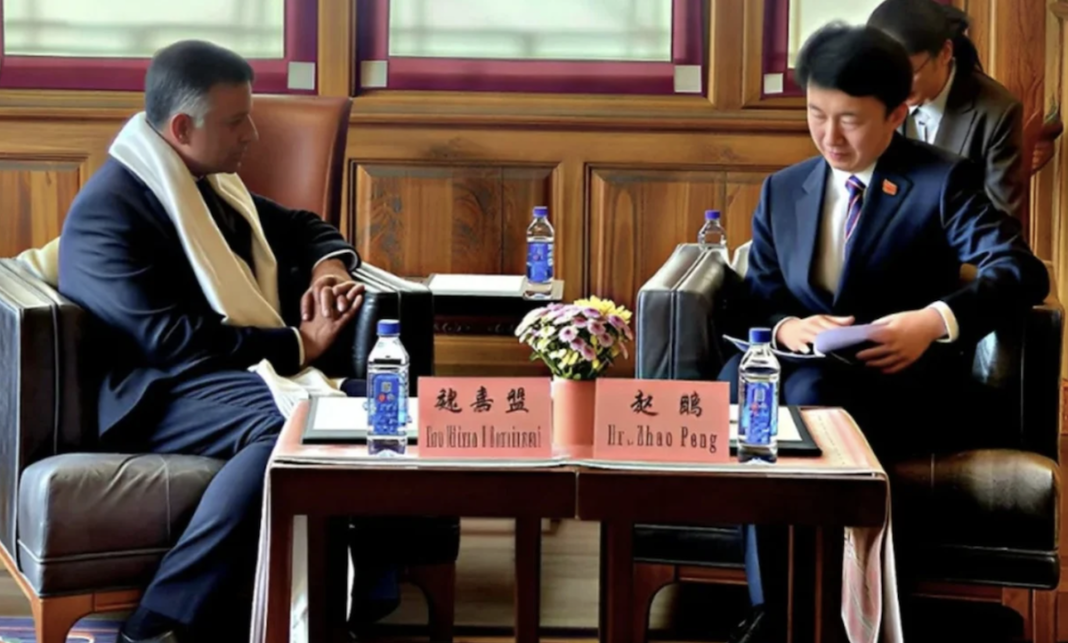
Doraiswami arrived in Lhasa on June 11, becoming one of the most senior Indian diplomats to visit Tibet in recent years. During the visit, he met regional officials and reviewed arrangements related to the resumption of the Kailash Manasarovar pilgrimage, according to statements released by the Indian Embassy in Beijing.
Zhao Peng, vice-chairman of the so-called Tibet Autonomous Region, briefed Doraiswami on the arrangements and facilities being put in place for Indian pilgrims and hosted the visiting delegation at a dinner reception on Thursday.
While the trip was officially linked to pilgrimage-related matters, its broader diplomatic significance has drawn attention amid efforts by the two Asian powers to stabilise ties following years of tensions along the Indo-Tibetan border.
China tightly regulates access to Tibet for foreign diplomats, journalists, and researchers, making visits by senior foreign officials relatively uncommon and often politically significant. Observers note that Beijing’s willingness to facilitate and publicise the ambassador’s trip may indicate a greater level of confidence in its current engagement with India following a series of recent diplomatic exchanges between the two countries.
Relations between India and China deteriorated sharply after the deadly Galwan Valley clashes in June 2020, the most serious border confrontation between the two countries in decades. Since then, both sides have engaged in multiple rounds of military and diplomatic talks aimed at reducing tensions along the Line of Actual Control at the Indo-Tibetan border.
The ambassador’s visit comes as the two governments seek to expand cooperation in selected areas despite unresolved border disputes. The recent resumption of the Kailash Manasarovar Yatra, suspended for several years, has been viewed as one of the most visible signs of the improving atmosphere.
For Tibet observers, the visit also highlights the region’s enduring strategic and political relevance in India-China relations. Although neither government has linked the visit to Tibet-related political issues, analysts say Beijing may also be seeking to project an image of openness and stability in Tibet at a time when international scrutiny of human rights and religious freedom in the region remains high.
The visit is unlikely to alter the longstanding positions of either side on Tibet. However, it offers a notable indication that both Beijing and New Delhi are willing to pursue confidence-building measures even as deeper strategic differences persist.
As India and China continue efforts to rebuild trust after years of strained relations, Tibet once again appears to be serving as an important, if often understated, arena for diplomatic engagement between the two neighbours.


This would not be popular with our Indian hosts but the reality is, India has used Tibet as a bargaining chip ever since Chinese invasion and occupation of Tibet. The British Indian Government never recognised Chinese sovereignity over Tibet! The British Government recognised Chinese sovereignity over Tibet only in 2008 before the Sino-Tibet talks by then Foreign Secretary David Miliband! THIS IS A HISTORICAL FACT! DURING THE SIMLA CONVENTION BETWEEN TIBET, BRITAIN AND CHINA, TIBET CEDED ARUNACHAL PRADESH TO BRITISH INDIA IN RETURN FOR BRITAINS RECOGNITION OF THE WHOLE OF EASTERN TIBET COMPRISING AMDO AND KHAM AS PART OF TIBET! NOT WITHSTANDING THIS FACT, INDIA SIGNED THE 1954 PANCHSHEEL WITH COMMUNIST CHINA AND ENDORSED “TIBET PART OF CHINA” IN THE DOCUMENT! It endorsed baseless Chinese claims over Tibet and brought the Chinese right at its doorstep! TODAY, IT HAS BECOME THE GREATEST NIGHTMARE FOR INDIA’S NATIONAL SECURITY WITH COMMUNIST CHINA AND ARCH RIVAL PAKISTAN FORMING AS A FORMIDABLE ALLIANCE AGAINST INDIA TO SCUTTLE ANY INDIAN AMBITION TO BECOME A WORLD POWER! INDIA IS HEMMED IN BY TWO NUCLEAR POWERS WITH HOSTILE INTENTION TO NOT ONLY KEEP INDIA FIRMLY CONFINED IN SOUTH ASIA BUT ALSO ATTEMPT TO DISMEMBER IT IN ANY WAY IT CAN BY SUPPORTING INSURGENTS IN THE NORTH EAST AND KASHMIR! As if endorsing of Chinese claims over Tibet was not enough, India “recognised” Tibet as part of the People’s Republic of China (PRC) by PM Atal Behari Bajpai when he visited China in June 2003 in return for China’s “incremental recognition of Sikkim as part of India”. It has consistently used Tibet as its bargaining chip without ANY THOUGHT FOR THE PLIGHT OF THE TIBETAN PEOPLE! CHINA’S ONLY LEGITIMACY IN OCCUPYING TIBET IS DERIVED FROM INDIA’S IMMORAL ACT OF BARTERING THE COUNTRY OF OPPRESSED AND SUBJUGATED PEOPLE OF TIBET FOR ITS SELFISH VESTED INTEREST! WESTERN CRITICS HAVE ACCUSED INDIA OF HYCOMPLICITY IN THE BRUTAL OCCUPATION OF TIBET BY COMMUNIST CHINA! The recent visit by the Indian ambassador is another signal to sell out the last remnant of Tibetan resistance to communist China’s illegal occupation of Tibet! India may be considering to agree to Chinese demands to keep clear of the Dalai Lama’s reincarnation and instead recognise the Chinese counterfeit in return for the recognition of Arunachal as part of India!