

Tenzin Nyidon
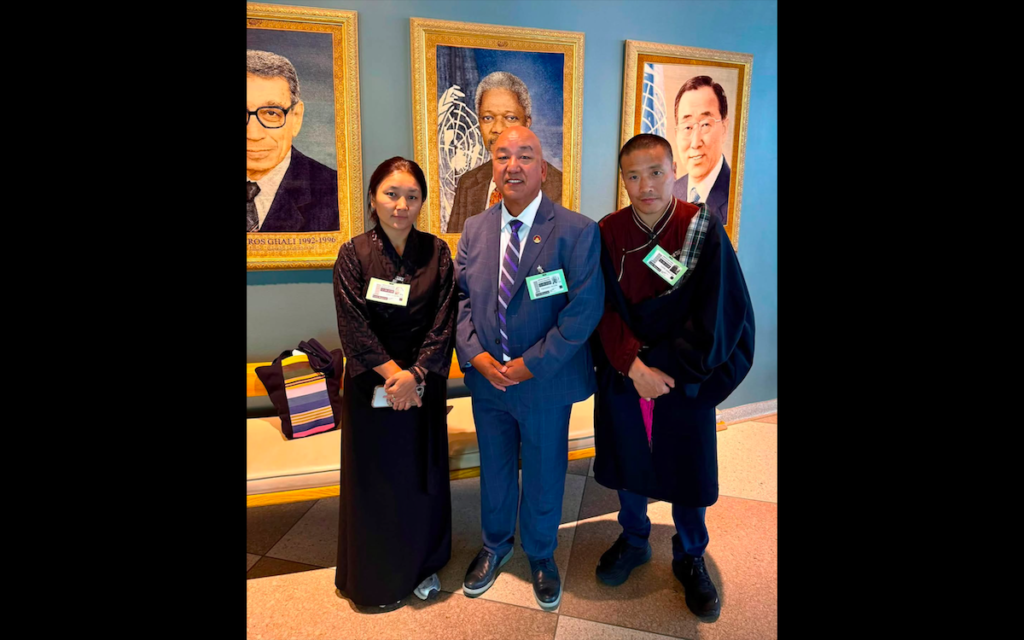
DHARAMSHALA, Aug. 14: A Tibetan delegation, accompanied by two family members of late Tibetan independence activist Lobga Rangzen, met with United Nations Human Rights Council Special Representative Anne Siyota at the United Nations on Wednesday, urging the international rights body to take more decisive action over the deteriorating human rights situation in Tibet.
The delegation, led by former 13th and 14th Tibetan Youth Congress (TYC) Centrex President and former Tibetan Parliament-in-Exile member Tsewang Rigzin, held discussions with Siyota for nearly an hour. Speaking to Phayul following the meeting, he said the delegation submitted six demands that addressed what it described as “continuing violations”of Tibetan rights and the erosion of Tibet’s cultural and national identity.
The delegation’s first demand was for the United Nations to implement its earlier resolutions on Tibet adopted in 1959, 1961 and 1965. These resolutions had raised concerns over violations of the fundamental rights and freedoms of the Tibetan people and called for an end to policies undermining their rights, including their right to self-determination.
The delegation also urged the UN to dispatch an independent fact-finding mission to Tibet and recognise Tibet as an independent country, with sovereignty vested in the Tibetan people.
A significant portion of the discussion focused on China’s education policies in Tibet, particularly the expansion of state-run residential boarding schools for Tibetan children. Rigzen told Phayul that the delegation called on the UN to exert pressure on Beijing to dismantle the boarding-school system, which they allege is designed to accelerate the assimilation of Tibetan children into Chinese society by distancing them from their families, language, and cultural traditions.
The delegation further urged the United Nations to publicly oppose China’s recently implemented Law on Promoting Ethnic Unity and Progress, calling for the legislation to be withdrawn immediately.
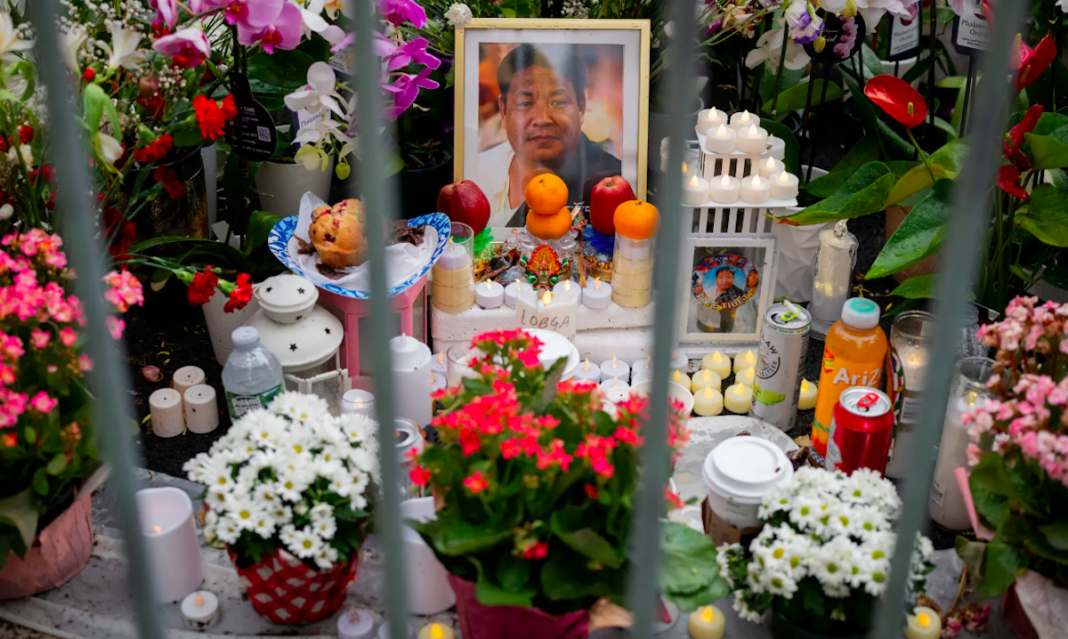
The sixth demand centred on what Rigzen described as the need for the United Nations to show greater solidarity with and sympathy for the Tibetan people. As part of this appeal, the delegation asked a UN representative to visit the site outside the UN Headquarters in New York where the late martyr carried out self-immolation on July 2, 2026. The Tibetan activist later died from his injuries.
The delegation also called on the UN to acknowledge and honour the thousands of Tibetan men and women who, according to the delegation, have sacrificed their lives for the Tibetan cause over the years.
He said the six demands were ultimately aimed at pressing the UN to move beyond expressions of concern and take more tangible steps on the Tibet issue. These, he said, should include enforcing its earlier resolutions, facilitating an independent investigation into conditions in Tibet, challenging policies viewed as threatening Tibetan identity, and giving greater recognition to the rights and grievances of the Tibetan people.


The UN has lost all its legitimacy after it did nothing to stop the genocide in Gaza! The Tibetan people have been completely ignored ever since Chinese invasion and atrocities were committed upon the Tibetans for the last 70 years! The Tibetans have been deserted by the UN since 1961 when the last resolution was tabled in the UN Assembly about the crimes committed by communist China! Under the present US incumbent, the US withdrew its contribution for the UN and communist China filled up the vacuum to give money to buy influence in the UN set up! Many of the important positions are said to be held by the Chinese which allowed them to even ban Taiwanese reporters from UN precincts! The Chinese regime buys off high level officials in the UN outfit by offering them money, business ventures and support as a permanent member! One of the most stark example is how the US press is infiltrated by the Chinese regime whereby a moron who calls himself/herself a journalist viciously attacked TIBETAN INDEPENDENCE HERO PAWO LOGA RANGZEN with vile word coming STRAIGHT FROM THE MOUTH OF THE CCP! That vicious word is a vocabulary specifically chosen by the CCP to discredit Tibetan self-self-immolators for years! The UN is a hostage to the CCP money and the vote for the General Secretary when the tenure is over of the incumbent! None of those UN Secretaries in the past from Koffe Annan to Bunki Moon have ever mentioned the name of Tibet during their tenure. Andreas Guteress is the same! It is an institution that is only a conduit for the big powers to use their weight to invade, suppress and deny justice to innocent countries and peoples! It ONLY SERVES THE PURPOSE OF THE PERPETRATORS AND NOT THE VICTIMS! It has lost its credibility and is nothing but a tool for evil regimes like communist China to legitimise their evil deeds against hapless people like the Tibetans! With such callous disregard for the legitimate grievances of crimes against humanity committed by communist Chins in occupied Tibet and by Israel in occupied Gaza, IT IS ONLY DIGGING ITS GRAVE!!!!