

Tsering Dhundup
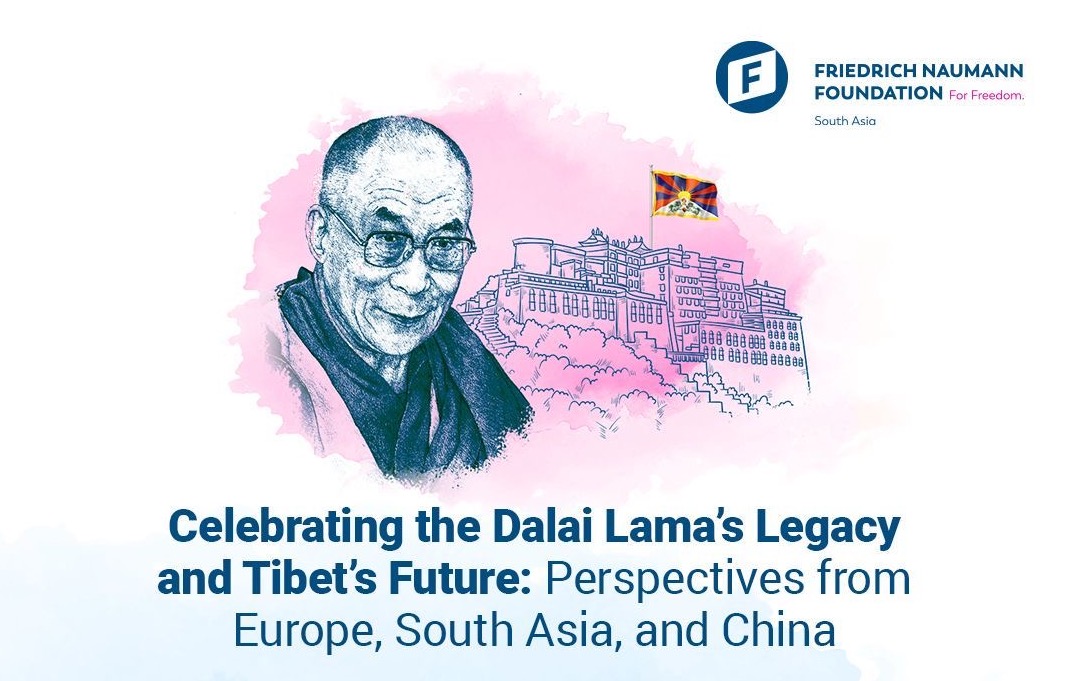
DHARAMSHALA, April 6: Ahead of Tibetan leader His Holiness the 14th Dalai Lama’s 90th birthday, the Friedrich Naumann Foundation for Freedom (FNF) convened an international webinar titled “Celebrating the Dalai Lama’s Legacy and Tibet’s Future: Perspectives from Europe, South Asia, and China.” Hosted by FNF’s South Asia Regional Office in New Delhi, the event brought together leading voices from the Tibetan diaspora, policymakers, scholars, and activists to honour the life and legacy of the Dalai Lama and to reflect on the road ahead for the Tibetan freedom movement.
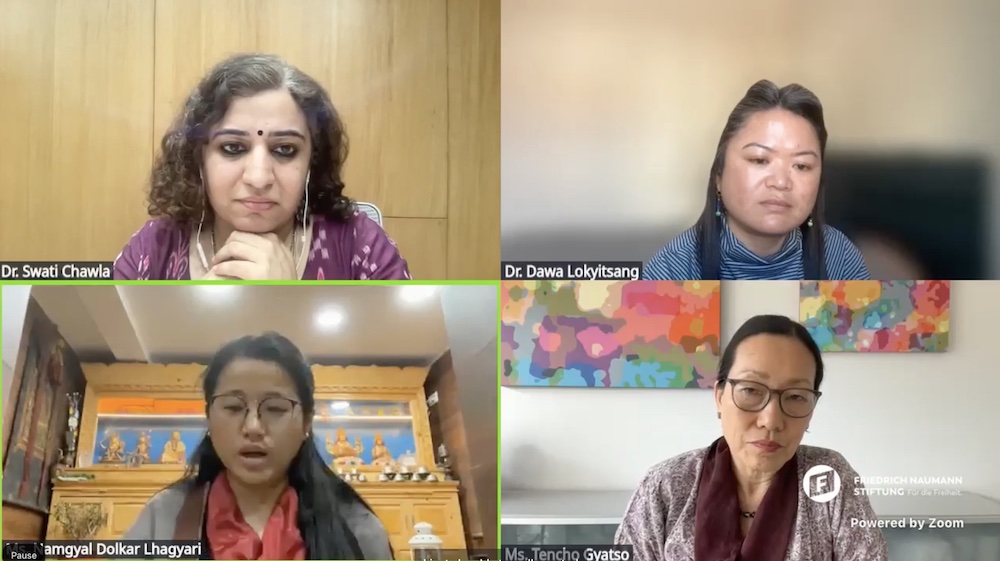
The webinar, held on April 4, featured a distinguished panel including Tencho Gyatso, President of the International Campaign for Tibet, Dr Dawa Lokitsang, a Tibetan-American anthropologist and Namgyal Dolkar Lhagyari, Member of the Tibetan Parliament in Exile. The session was moderated by historian and Tibet scholar Dr Swati Chawla. Dolma Gyari, Minister of Security of the Central Tibetan Administration (CTA), gave a keynote address to the webinar.
Opening the session, Nupur Hasija, Senior Programme Manager at FNF South Asia, underscored the symbolic weight of the gathering as Tibetans prepare to mark His Holiness’s 90th birthday in July. She highlighted FNF’s partnership with the CTA since 1991, supporting programmes in democratic governance and civic engagement.
Delivering the keynote address, Dolma Gyari, Minister of Security of the Central Tibetan Administration—underscored the grave human cost of China’s occupation of Tibet, including the loss of over 1.2 million Tibetan lives and widespread cultural destruction. Yet, she noted, the Dalai Lama responded not with anger but with unwavering commitment to non-violence, political reform, and a call for global responsibility. Describing His Holiness as a “political reformer, spiritual guide, and environmental visionary”, Dolma praised his efforts to decentralise authority and establish resilient institutions in exile that have nurtured Tibetan identity across generations.
She also informed that 2025–2026 would be observed as the Year of Compassion, a global Tibetan initiative to honour His Holiness’s teachings and celebrate his moral and spiritual legacy.
Tencho Gyatso, President of the International Campaign for Tibet, reflected on how the Dalai Lama’s personal diplomacy has profoundly shaped international support for Tibet. “Who are the Chinese going to talk to, if not to this man of peace?” she asked, quoting Archbishop Desmond Tutu. Drawing from her experience working in Washington, D.C., Gyatso underscored how His Holiness’s charisma, humility, and universal message of compassion have consistently united people across political, religious, and cultural divides.
She cited several successful Tibet-related legislations in the U.S. as direct outcomes of the goodwill and respect generated by the Dalai Lama over decades. “He brought Democrats and Republicans to the same table—something almost unheard of in polarised political climates,” she noted. Gyatso also revealed plans by the International Campaign for Tibet to take the Dalai Lama’s message on a global tour throughout the year, sharing his teachings and life story through books, films, and events to ensure that his voice continues to inspire even as he reduces public appearances.
Dr Dawa Lokitsang, a Tibetan-American anthropologist, placed the Dalai Lama’s legacy in the context of contemporary geopolitical unrest and the rise of authoritarian regimes. She praised him for modelling a rare form of selfless leadership—voluntarily devolving political power to establish a democratic framework for the Tibetan people.
“While the world sees power-hungry leaders, we had one who gave it up to empower his people,” she said, describing him as the architect of Tibetan political, cultural, and religious institutions in exile. Drawing parallels between Tibet and Indigenous communities in North America, she highlighted how the Dalai Lama’s foresight in building educational institutions like the Tibetan Children’s Village (TCV) and Central School for Tibetans (CST) immediately after fleeing into exile provided a cultural lifeline for future generations.
Lokitsang emphasised that while other colonised communities are only now reclaiming their languages and identities, Tibetans benefitted from a leadership that prioritised these efforts from the very beginning. “His Holiness envisioned a future centred on children. That vision is why I’m here and why so many of us are here today.”
Namgyal Dolkar Lhagyari, Member of the Tibetan Parliament in Exile, underscored the importance of embracing political debate as a democratic value rooted in the Dalai Lama’s vision. Reflecting on His Holiness’s early visit to the Indian Parliament in 1956, Lhagyari contrasted it with his experience in the Chinese People’s Congress, noting how the vibrancy and freedom of expression in Indian democracy left a lasting impression on the young leader.
“He realised then that this is what we Tibetans need—a system where disagreement is not feared but encouraged as part of democratic growth,” she said. Lhagyari stressed that Tibetan democracy, both political and spiritual, thrives on questioning and discussion—principles that His Holiness himself champions, even in the context of Buddhism.
Calling the CTA “the sole legitimate representative of the Tibetan people”, she emphasised that for the institution to remain strong and relevant, Tibetans must actively participate, challenge, and enrich it with diverse perspectives.
Moderator Dr. Swati Chawla highlighted the Dalai Lama’s place in India’s moral and philosophical traditions, calling on the Indian government to award him the Bharat Ratna, the country’s highest civilian honour. “India should claim him not only as a guest but as one of its own,” she said, quoting the Dalai Lama’s fond remark that he is “fed by dal-bhat and nourished by Nalanda masters.”
Closing the event, Dr Karsten Klein, Regional Director of FNF South Asia, reaffirmed the global stakes of the Tibetan issue. “Tibet is not just a geographic concern—it’s a mirror reflecting our collective responsibilities toward minority rights, environmental protection, and human dignity,” he said. Dr Klein urged sustained international advocacy to ensure that the values championed by His Holiness continue to inspire action.
As the world prepares to celebrate the 90th year of the Dalai Lama’s birth, the webinar stood as both a tribute and a renewed call to action. The speakers echoed a common sentiment: that His Holiness’s legacy is not a thing of the past but a living, breathing force—anchored in democratic values, spiritual wisdom, and a global ethic of compassion.


Long live, His Holiness the Dalai Lama of Tibet. For Tibetans His Holiness is more than our parents. For the world His Holiness is the Light of Truth. All of us has the responsibility to practice and promote His Holiness’s legacy