

Tenzin Nyidon
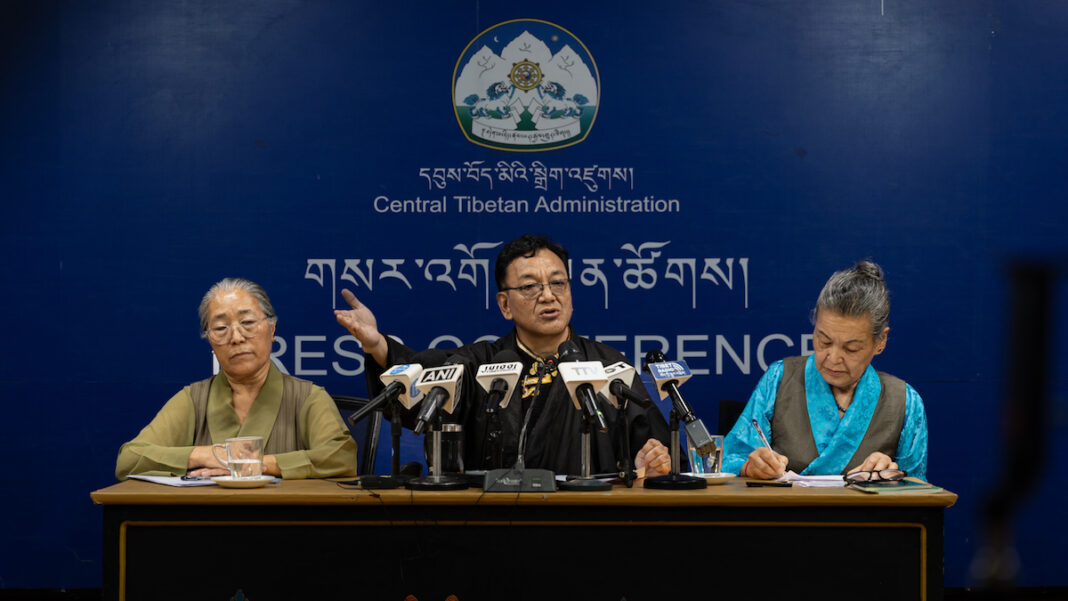
DHARAMSHALA, May 13: The Central Election Commission (CEC) of the Central Tibetan Administration announced the results of the final election for the 18th Tibetan Parliament in Exile on Wednesday. Out of 91,073 registered voters, 41,638 Tibetans cast their ballots worldwide, resulting in a voter turnout of only 45.71%.
The turnout marked a decline of 10.44% from the preliminary elections, in which 51,140 voters cast their ballots out of the same 91,073 registered voters, reflecting a participation rate of 56.15%.
The Election Commission stated that while 20 candidates are shortlisted across the three traditional provinces and four candidates each for the four schools of Tibetan Buddhism, it faced a shortage of candidates in several constituencies. According to the Commission, there was a shortfall of three candidates in the Domey constituency and one candidate each in the Sakya and Gelug constituencies, prompting the Commission to personally reach out to eligible individuals to secure their participation in the shortlist. The Commission also expressed its gratitude to those candidates who agreed to be included in the shortlist.
The Commission also stated that it had made efforts to engage with senior officials, including the General and Colonel of the Special Frontier Force (SFF), a force composed primarily of thousands of Tibetans who currently do not participate in the electoral process. According to the Commission, SFF officials advised the Commission to coordinate with the CTA’s Department of Security on the matter. However, the effort remained unresolved. The Commission expressed hope that future Election Commissioners would continue efforts to facilitate the participation of SFF personnel in the electoral process.
The Commission stated that elections were conducted for the first time in countries such as South Korea during this electoral cycle. It also noted that branches of the Men-Tsee-Khang across India participated in the electoral process. The Commission additionally highlighted participation from Tibetan communities in Russia, including the regions of Kalmykia, Tuva, and Buryatia. While hundreds of Tibetans reside in these areas, 34 voters participated in the elections after the Commission facilitated the required logistical arrangements.
The Commission declined to comment on questions raised by several media personnel regarding the controversy surrounding Nepal’s Choejor Tibetan Settlement. The queries included why allegedly rigged votes from the settlement were counted during the preliminary elections, whether the exclusion of those votes would affect incumbent Sikyong Penpa Tsering’s majority of 61.025% of the vote, and whether any appeals on re-poll had been filed concerning the matter. The Commission stated that it could not comment on the issue due to an ongoing legal challenge filed by Lobsang Tsering, a resident of the Choejor Tibetan Settlement, which is supported by six monasteries in the settlement and more than 300 members of the Tibetan community.
All three commissioners of the apex electoral body of the Tibetan government in exile remained tight lipped over all the queries fielded by the members of the press, citing the ongoing case no 22.
The final results of the 18th Tibetan Parliament in Exile comprise 10 representatives each from the three traditional provinces of Tibet — U-Tsang, Dhotoe, and Domey; two representatives each from the four schools of Tibetan Buddhism and the pre-Buddhist Bon tradition; two representatives each from North America and Europe; and one representative from Australasia and Asia excluding India, Nepal, and Bhutan.
The elected representatives from the U-Tsang constituency are Dolma Tsering, Rigzin Lhundup, Tenzin Choezin, Dawa Tsering, Lobsang Gyatso Sither, Mingyur Dorjee, Lhamo Tsering Kongtsa, Ngodup Dorjee, Lhakpa Tsering, and Gonpo Lhundup.
From the Dhotoe constituency, the elected candidates are Juchen Kunchok Choedon, Gyaltsen Choekyi, Serta Tsultrim, Kunchok Yarphel, Choephel Thupten, Wangdu Dorjee, Dawa Tsering, Ngawang Lodoe, Kunchok Rinche, and Sangay Dorjee.
The elected representatives from the Domey constituency are Tenzin Palmo, Yeshi Dolma, Lharong, Ratsa Sonam Norbu, Karma Gelek, Lobsang Thupten, Lhamo Kyab, Ugyen Kyab, Choedak Gyatso, and Pema Tso.
Among the religious constituencies, the Nyingma school elected Khenpo Sonam Tenphel and Khenpo Jamphel Tenzin, while the Kagyu school elected Tenpa Yarphel and Kunga Soetop. The Sakya school elected Lopon Thupten Gyaltsen and Khenpo Kada Ngedup Sonam, while the Gelug school elected Geshe Lobsang Tenphel and Geshe Atuk Tseten. Representing the Bon tradition are Geshe Atong Rinchen Gyaltsen and Tsewang Tashi.
For the regional constituencies, North America elected Godruk Kalsang Phuntsok and Tseten Phuntsok, while Europe elected Tenzin Yangkar and Thupten Gyatso. Kalsang Tsering was elected as the representative for Australasia and Asia excluding India, Nepal, and Bhutan.

