

Tenzin Nyidon
DHARAMSHALA, Feb. 27: Chinese authorities have intensified restrictions on Tibetan digital expression, with mounting evidence that users inside Tibet face strict monitoring and punitive measures for sharing content related to Tibetan language, culture, religion, and identity on the social media platform Kuaishou, according to a report by Tibet Times, a Tibetan language media outlet based in Dharamshala.
Sources inside Tibet report that posts featuring Tibetan script, spoken Tibetan language, traditional attire, religious teachings, and images of revered spiritual leaders are increasingly subject to censorship, warnings, temporary suspensions, or permanent account deletions.
According to the report, users who post short videos of themselves wearing traditional Tibetan dress and speaking in Tibetan have been subjected to intensified scrutiny. In some cases, live-stream broadcasts are restricted by limiting the number of viewers abruptly terminated.
A source explained that even visible Tibetan script in the background of a live broadcast, such as wall hangings, banners, or decorative inscriptions, can trigger platform intervention. Tibetan text written directly in live-stream captions fails to display altogether.
Another source reported that the phrase “བོད་ཀྱི་རྒྱལ་ས་ལྷ་ས་” (Lhasa, the capital of Tibet) cannot appear onscreen when written normally in Tibetan script. To circumvent automated filters, users are compelled to insert symbols between the letters — for example, writing it as “@བོད@ཀྱི@རྒྱལ@ས@ལྷ@ས།.” Without such modifications, the phrase reportedly fails to display on the platform’s interface.
Sources further state that social media platforms operating in Tibet strictly prohibit the dissemination of religious teachings, prayer recitations, and images of prominent Tibetan Buddhist leaders, including His Holiness the Dalai Lama. Even the inadvertent appearance of such imagery during video calls can trigger automated alerts.
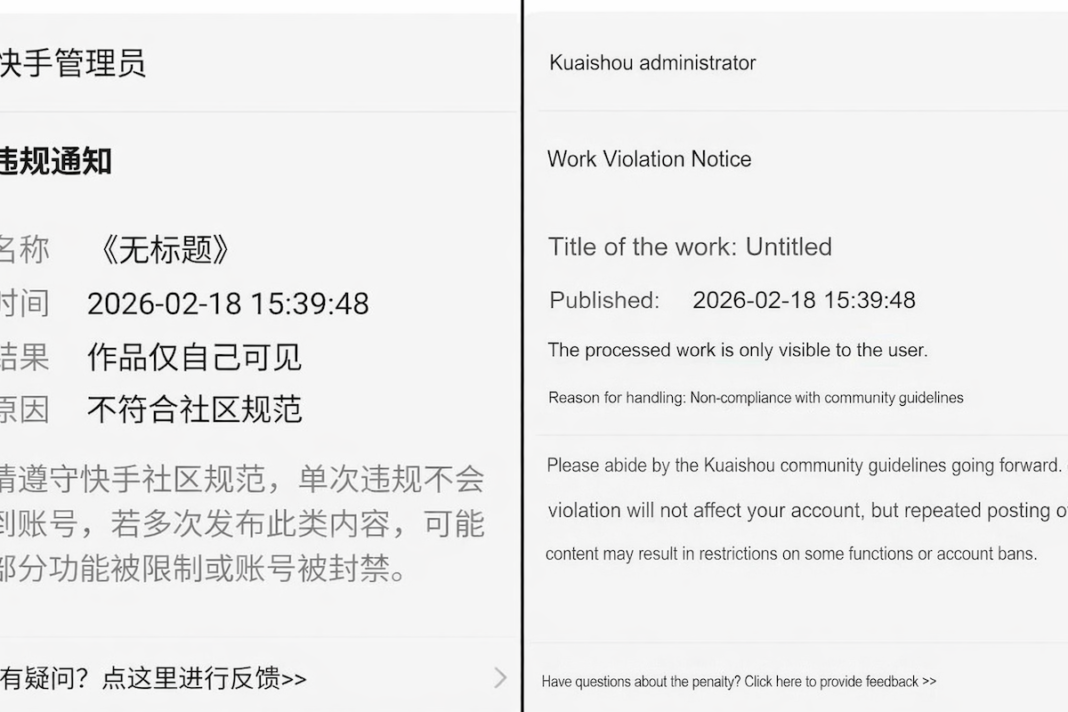
Violation notices issued by Kuaishou generally indicate that a single infraction may not immediately impact an account. However, repeatedly posting similar content can result in restrictions, temporary suspensions lasting days or months, or even the permanent deletion of the account.
On January 22, a Tibetan Kuaishou user reported that authorities have also imposed controls on writers who publish literary works portraying the authentic lives of Tibetan nomads. These works are allegedly criticized for “negatively influencing society” or for depicting meat consumption, accusations that observers believe serve as pretexts for censorship.
Authorities have deleted the former Kuaishou accounts of several Tibetans who previously faced imprisonment. These include Golog Palden, who served a three-year prison sentence, and singer Tsugte, also known as Ah Sang. Both reportedly had their pre-detention accounts permanently removed. Additionally, two other accounts previously operated by environmental activist Tsongon Tsering have been deleted. The account of blogger Aga Gelek, also known as Sonam Choedrup, whose current whereabouts remain unknown, has also been removed from the platform.
Chinese authorities justify these measures under broadly defined internet governance regulations. Citing the need to ensure “community development” and “security” of online communities, the government has implemented provisions governing digital information services. Since June 2017, the Cyberspace Administration of China has enforced two key regulations: the “Regulations on the Management of Internet Forum Services” and the “Regulations on the Management of Internet Group Information Services.” These regulations prohibit posting content involving political issues, sharing confidential internal documents, disseminating military-related materials, spreading rumours, or transmitting information related to state secrets. Furthermore, individuals who create messaging groups, discussion forums, or financial transaction groups are legally responsible for all content shared within those groups — a clause that significantly increases the risk of collective liability and encourages self-censorship.

