

Tenzin Nyidon
DHARAMSHALA, JUNE 27: The Tibetan Supreme Justice Commission (TSJC), the highest judicial authority of the Central Tibetan Administration (CTA), has declined to admit a six-point counterclaim filed by the Central Election Commission (CEC) in connection with the ongoing legal dispute over the suspension of voting rights for Tibetans in Nepal’s Choejor Tibetan settlement, ruling that the counterclaim has become ineffective as the matter now falls under the jurisdiction of Indian law.
The ruling was made during a preliminary hearing of Case No. 22, held on Friday, to determine the admissibility of the counterclaim and the responses submitted by both parties.
The counterclaim was filed by the Central Election Commission on June 12, with the Tibetan Legal Association (TLA) receiving formal notice on June 16. It levelled six allegations against the petitioner’s legal counsel, Rigchen Wangyal, including claims that he had contacted a section of the newly elected members of the 18th Tibetan Parliament in Exile with the intention of obstructing their oath-taking ceremony and annihilating the Central Tibetan Administration. The filing also alleged that a protest involving around 350 people outside the Office of Tibet in Nepal against the Central Election Commission during the pendency of the case had brought the CTA disrepute.
During the hearing, Chief Justice Commissioner Yeshi Wangmo noted that the counterclaim had been filed under Article 30 of Chapter 5 of the Rules of Civil Procedure, alleging unlawful conduct by the petitioner and his legal counsel.
She observed, however, that after the counterclaim was filed, the petitioner’s counsel initiated legal proceedings before an Indian court and served a legal notice on the Central Election Commission. As the issues raised in the counterclaim now fall within the jurisdiction of the Indian legal system, she ruled that the Tibetan Supreme Justice Commission no longer has jurisdiction over that aspect of the dispute, rendering the counterclaim ineffective by operation of law.
She further stated that the written undertaking previously signed by both parties upon filing Case No. 22—committing themselves to abide by the Commission’s legal procedures and authority—had likewise become ineffective. She also confirmed that the Commission had not admitted the counterclaim filed by the Central Election Commission.
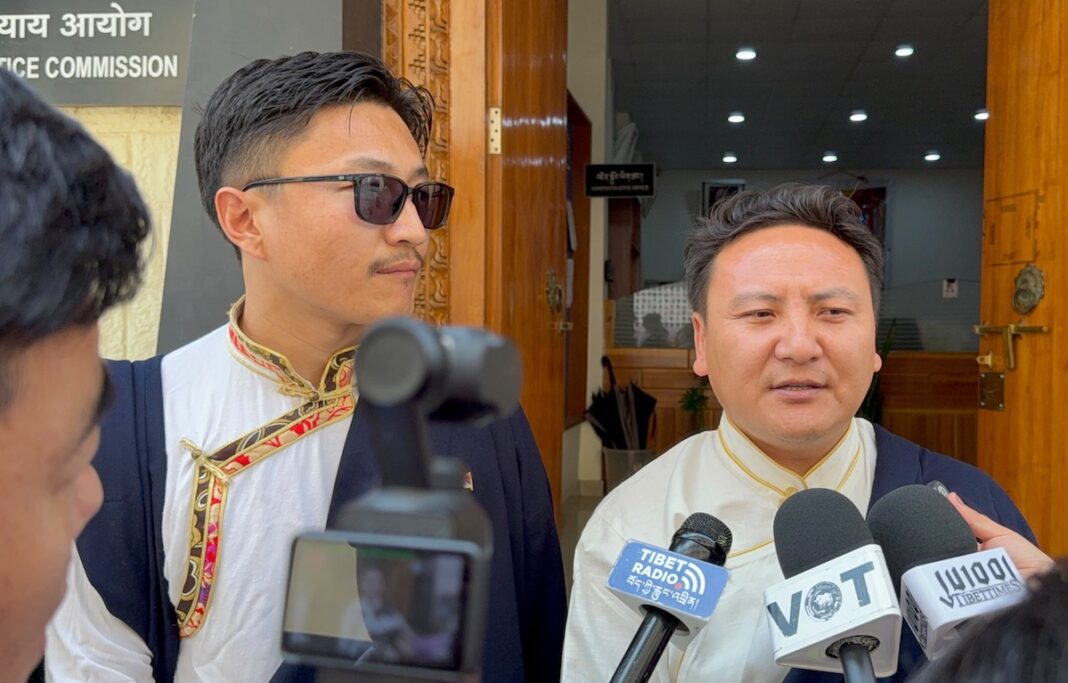
Speaking to media personnel after the hearing, Rigchen Wangyal argued that the six allegations contained in the counterclaim, particularly the accusation of bringing the CTA into disrepute, amounted to criminal defamation. He maintained that criminal defamation falls under Indian criminal law and is therefore outside the jurisdiction of the Tibetan Supreme Justice Commission.
He clarified that Friday’s ruling pertained solely to the counterclaim and did not affect the substantive proceedings in Case No. 22, which remains pending before the Tibetan court.
He further contended that Articles 30(b) and 33(b) of the Rules of Civil Procedure empower the Tibetan court to either reject or decline to admit a counterclaim. Nevertheless, despite more than ten days having elapsed since the counterclaim was filed, the Tibetan court had not formally dismissed nor rejected it, he said.
Multiple attempts by media personnel to obtain a response from Chief Election Commissioner Lobsang Yeshi regarding the Commission’s counterclaim were unsuccessful, as he declined to comment, citing the ongoing Case No. 22.

