

Tenzin Nyidon
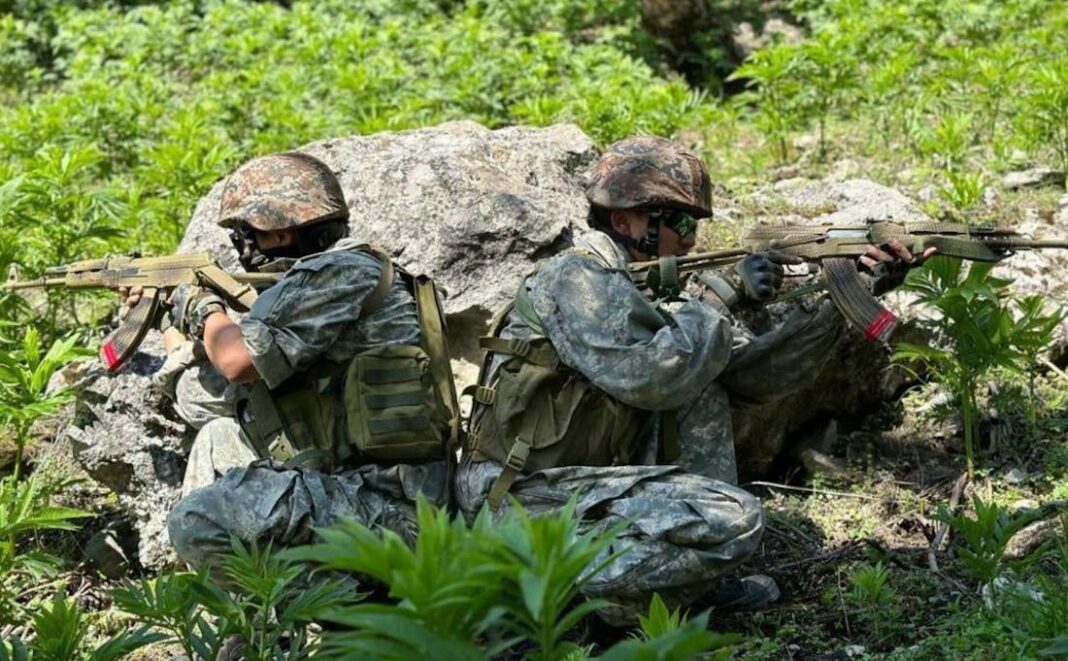
DHARAMSHALA, June 24: The Indian government has reportedly deployed personnel from the elite Special Frontier Force (SFF), often called “Establishment 22”— a covert unit primarily consisting largely of Tibetan refugees, as part of the extensive security apparatus for this year’s Amarnath Yatra in Union Territory of Jammu and Kashmir beginning July 1.
According to Indian media reports, SFF personnel have been stationed along strategic high-altitude ridgelines and vulnerable mountain stretches overlooking the pilgrimage routes to strengthen surveillance and counter potential security threats during the annual Hindu pilgrimage.
The decision follows heightened security concerns after last year’s deadly militant attack in Pahalgam and intelligence inputs regarding suspected militant activity in the Pir Panjal mountain range.
The deployment was reportedly finalised during a comprehensive security review chaired by Northern Army Commander Lieutenant General Upendra Dwivedi, who visited and assessed preparedness along both pilgrimage routes — the Baltal route in Ganderbal district and the Pahalgam route in Anantnag district.
During the review, Lt Gen Dwivedi was briefed on an extensive, multi-tier security framework that incorporates SFF detachments, snipers, drone surveillance systems, bomb disposal squads, dog squads, counter-improvised explosive device (IED) equipment, and specialised vehicle repair and recovery teams to ensure the safe movement of pilgrims and security convoys.
Military officials also outlined plans for enhanced night-time domination of vulnerable stretches using advanced night-vision devices, alongside increased surveillance and coordination with civil agencies.
Technology has been integrated into the security architecture on an unprecedented scale. More than 400 CCTV cameras equipped with facial-recognition systems have been installed along the pilgrimage routes and key transit points, supported by drones and a real-time integrated surveillance network.
Authorities have also introduced a QR code-based verification system known as the “Pehchan App” to facilitate instant authentication of service providers, even in areas affected by internet disruptions. In addition, Radio Frequency Identification (RFID) cards have been made mandatory for all pilgrims, enabling authorities to monitor movement along the routes, improve crowd management, and expedite assistance during emergencies.
Lt Gen Dwivedi reviewed logistical and operational arrangements put in place by the Border Roads Organisation (BRO), the Indian Air Force, and teams from the High Altitude Warfare School (HAWS), highlighting the scale of preparations undertaken for one of India’s largest annual religious pilgrimages.
The deployment of the Special Frontier Force (SFF) is particularly significant given the unit’s unique history, which was established in the aftermath of the 1962 Sino-Indian War. Known informally as “Establishment 22,” the SFF earned a reputation for covert operations, reconnaissance missions, and high-altitude warfare. Unlike conventional military formations, its personnel are specially trained to operate in some of the world’s most inhospitable environments, often at elevations exceeding 17,000 feet.
Operating under the Cabinet Secretariat, the force has traditionally remained shrouded in secrecy despite participating in several significant military operations over the decades in various campaigns. Public awareness of the unit increased during the 2020 India-China military standoff in eastern Ladakh following the death of Tibetan SFF soldier Nyima Tenzin during an operational deployment.

