

Tenzin Nyidon
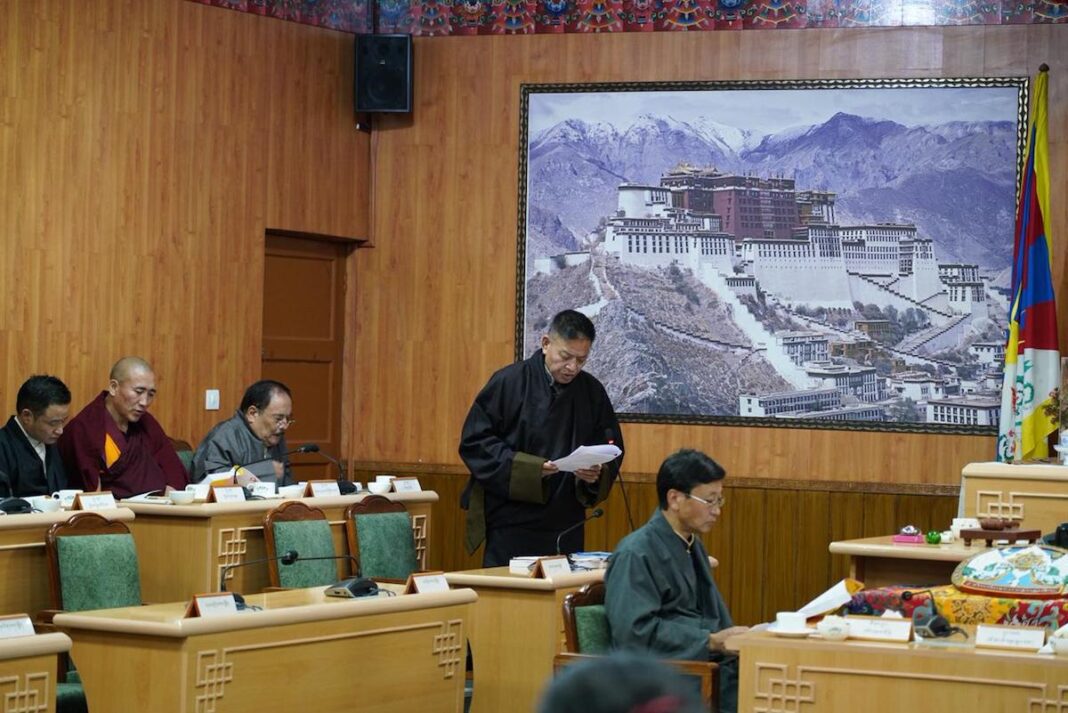
DHARAMSHALA, March 16: The executive branch of the exile Tibetan government, officially known as the Central Tibetan Administration (CTA), led by President Penpa Tsering proposed a budget of ₹3,407.42 million (₹340.74 crore INR) for the upcoming fiscal year during the opening day of the 11th session of the 17th Tibetan Parliament-in-Exile on Monday. The 13-day parliamentary session scheduled to run from March 16 to March 30, 2026, will be the last session of the 17th Tibetan Parliament in Exile.
The budget proposal by CTA President Penpa Tsering, who currently holds the portfolio of Finance Minister, seeks an increase of ₹103.4 million compared to last year’s approved budget of ₹3,304.02 million, representing an overall increase of 3.13 percent.
According to the budget proposal, ₹2,255.23 million, or 66.19 percent of the total allocation, has been earmarked for social sector expenditures. Political-related expenses account for ₹796.69 million, or 23.38 percent of the budget, while ₹355.50 million, representing 10.43 percent, has been allocated for administrative costs.
In the previous fiscal year, the administration initially proposed a budget of ₹3,675.30 million. However, the Tibetan Parliament ultimately approved a reduced allocation of ₹3,304.02 million for 2025–26. The reduction followed the termination of financial assistance from the United States government, which the CTA had anticipated when drafting its earlier proposal of approximately ₹368 crore. With nearly 90 percent of its funding dependent on external assistance, the administration was compelled to revise its fiscal planning in response to the funding shortfall.
During the opening session, Speaker Khenpo Sonam Tenphel acknowledged the continued support of the Government and people of India, as well as numerous countries and international supporters. He noted that such assistance has enabled Tibetans in exile to preserve and promote their distinct language, culture, and religious traditions for over six decades, while also strengthening international awareness of the Tibetan cause.
The Speaker also referred to recent legislative developments in the National People’s Congress of the People’s Republic of China, highlighting the passage of policies aimed at promoting “ethnic unity” and advancing the broader policy of Sinicization. He warned that such measures seek to tighten state control over minority nationalities and religious practices. Expressing concern over the implications for the Tibetan language and identity, he urged Tibetans living in the free world to remain vigilant and to continue safeguarding and strengthening Tibetan linguistic and cultural traditions.
The ongoing parliamentary session will primarily deliberate on the approval of the administration’s proposed budget. Lawmakers will also review the final report of a special committee tasked with standardizing the design, colors, and specifications of the Tibetan national flag and national emblem.

