

Tenzin Nyidon
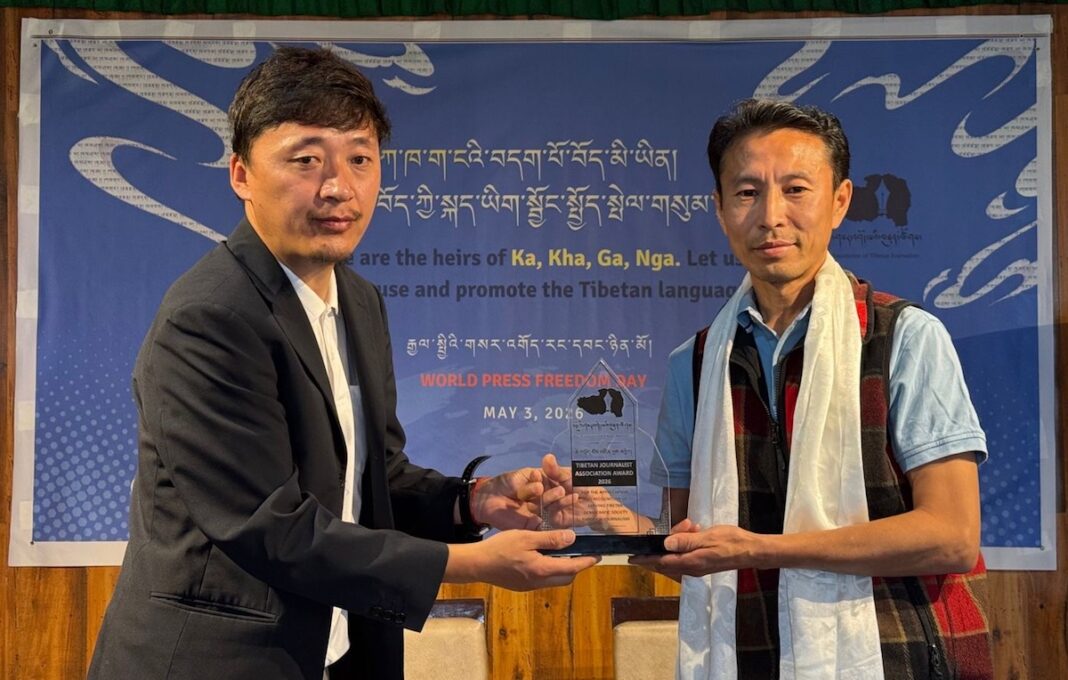
DHARAMSHALA, May 2: The Association of Tibetan Journalists (ATJ), a collective of Tibetan journalists in exile, commemorated World Press Freedom Day on Saturday under the banner, “We are the custodians of our language. Let us learn, use, and promote the Tibetan language.” The event, held in the capital of the Tibetan diaspora, brought together journalists and media professionals.
The theme drew inspiration from recent calls by Tibetan spiritual leader His Holiness the Dalai Lama to safeguard the Tibetan language, urging Tibetans to intensify efforts to preserve it. It also reflected growing concerns over developments in Tibet, including China’s newly adopted law on “ethnic unity and progress,” and the system of so-called boarding schools, which are increasingly producing a generation of young Tibetans unable to learn and speak their native language.
An award ceremony was also held during the program to honour Tenzin Woeser, a video journalist with Voice of Tibet, an independent radio station based in Dharamshala. He was recognised for his 21 years of dedicated service to the Tibetan community through journalism. Woeser began his career with Bhod Gyalo in 2004, where he produced one of the earliest video news reports, and later worked with Radio Free Asia (RFA) from 2007 until its suspension in October 2025
In his address, ATJ President Kelsang Jinpa said that although Tibetans in exile observe World Press Freedom Day under conditions of displacement, they continue with determination to uphold and defend freedom, equality, justice, and human rights. He added that their efforts are also contributing to building the foundation for a democratic future for Tibet, making the observance of the day a source of pride and dignity.
The press statement set out four key demands directed at the Chinese government. These included the immediate and unconditional release of all Tibetan political prisoners, including 11th Panchen Lama, along with full disclosure of their whereabouts and condition; granting international and exile Tibetan journalists unrestricted access to Tibet to report freely and transparently on the situation on the ground; the unconditional resumption of dialogue between Tibet and China to resolve the longstanding issue; and an end to the assimilation policy of placing young Tibetan children in boarding schools, with a guarantee of their right to learn and preserve their own language and culture.
The statement also strongly objected to what it described as the “Chinese Ethnic Unity and Progress Law,” characterising it as a policy aimed at eroding Tibetan religion, culture, and language.
The event also gathered views from participating journalists on a proposed journalists’ conclave to be held next March, in conjunction with the association’s 30th anniversary since its establishment.
The Association of Tibetan Journalists is an independent, non-profit organization established in 1997 in Dharamshala by a group of exile Tibetan journalists. Its mission is to promote the free, fair, and accurate dissemination of information concerning the Tibetan community, both inside Tibet and in exile. The association also serves as a watchdog of the Central Tibetan Administration, monitoring its democratic processes, while working to safeguard the welfare and professional rights of Tibetan journalists within their field of work.

