

By Tenzin Nyidon
DHARAMSHALA, July 31: China has sparked a row after issuing ‘stapled visas’ instead of ‘stamped visas’ to three Arunachal Pradesh players who were expected to travel to China for the World University Games 2023. India has condemned Beijing’s move, calling it “unacceptable” and responded by putting off the team’s departure to Chengdu, China to compete in the Games.
A ‘stapled visa’ is a form of a visa where the visa document is physically attached to the passport of the visa holder, typically with a staple or clip, rather than being stamped directly onto the passport pages. This practice is not common and is usually employed when there are political or territorial disputes between countries.
The issuance of such visas has raised both concerns and controversies over territorial claims, diplomatic relations, and the implications it may have on sports and cultural exchanges between India and China. The three women athletes were from Arunachal Pradesh which has been a longstanding point of contention between India and China which the latter refers to as “Zangma” and claims the region as a part of South Tibet. By issuing ‘stapled visas,’ China appears to signal that it does not fully recognise the sovereignty of the territory from which the visa holders originate. The Indian government has reacted strongly to this move, viewing it as a direct challenge to its sovereignty over the region.
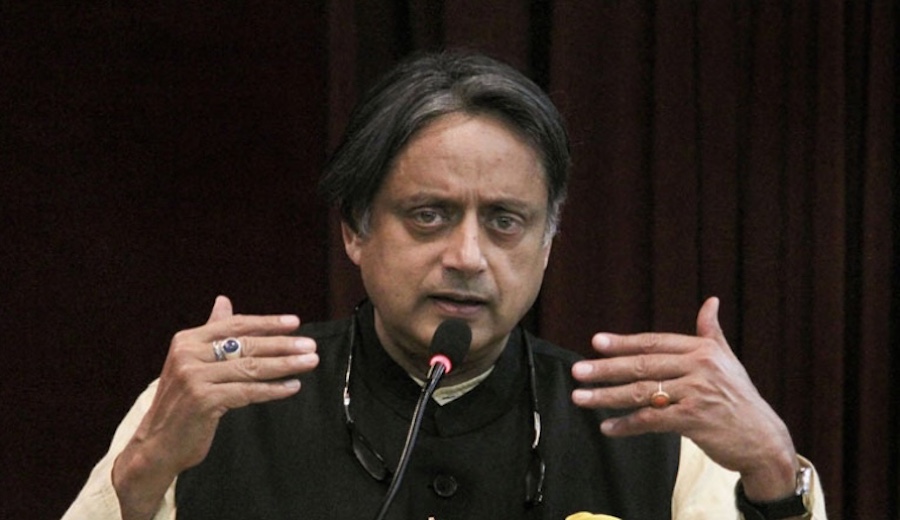
In response, Senior Congress leader Shashi Tharoor on Friday said that India should simply start issuing stapled visas to anyone applying for an Indian visa from Tibet amid China’s issuance of stapled visas to three athletes from Arunachal Pradesh. Tagging a media report on China not issuing ‘stamped visas’ to three athletes from Arunachal Pradesh, Tharoor tweeted, “Enough is enough. Instead of frustrating our sportsmen & every other Arunachali seeking a Chinese visa, we should simply start issuing stapled visas ourselves, to anyone applying for an Indian visa from Tibet. And say we will continue to do so until the disputed border between Tibet and India is settled.”
External Affairs Ministry Spokesperson Arindam Bagchi at a routine media briefing on Thursday reiterated that India has lodged its “strong protest” with the Chinese side on the matter adding, “India reserves the right to suitably respond to such actions” and that there should be no discrimination or differential treatment based on domicile and ethnicity in the visa regime for Indian citizens.
The distinctive practice of ‘stapled visas’ for Indian nationals specifically hailing from the regions of Arunachal Pradesh and Jammu and Kashmir began in the mid-2000s and in 2009, both regions over the years have been long-standing sources of tension between the two countries. The selective use of ‘stapled visas’ has been viewed by India as a deliberate and provocative act, undermining the question of India’s legitimacy and control over these regions.


While MP Shashi Tharoor’s statement should be applauded for its jingoism, there is not a shred of hope the Indian Government has the guts to apply such tactics against the Chinese communist regime. India has been in the so called socialist camp and we saw how it has maintained its pro-socialist mentality in the Russia-Ukraine war. We must remember that India did exactly the same to Tibet in the 1950s. It is in cahoots with the aggressor rather than the victim!!! Tibet was ditched in order to maintain cordial relations with communist China! The British had maintained a fictional suzerainty over Tibet in order to avoid Czarist Russia’s expansionism into Tibet but NEVER RECOGNISED CHINESE SOVEREIGNTY OVER TIBET!!!! (This was done only on 29th of October 2008 by the then British Foreign Secretary David Miliband before the last Sino-Tibet talks). Despite this FACT, India sacrificed Tibet on the alter of Sino-India detente and Tibet lost its independence!!! The Indian leaders believed in the Chinese communist rhetoric of friendship and solidarity with India. They learnt their first lesson in 1962 when China invaded India for the first time in history! Nehru, who was utterly confident of Chinese friendship felt hoodwinked and stabbed in the back!!! He himself acknowledged his Himalayan blunder and died a heart-broken man in 1965. Even so, India and its leaders believed their only choice was to befriend communist China at any cost because they had no other option, so they felt. The 1962 Sino-India war greatly traumatised the Indian leaders and psychologically scarred the nation just like the Americans after their defeat in Vietnam. India never had the guts to face their Chinese enemy and the Chinese took full advantage of India’s moral cowardice when it came to Tibet! . So, Mr Shashi Tharoor’s words are just hot air and the chances of such a scenario actually happening is as good as winning a hundred million dollar lotto!
Instead, if India is reeling under the incorrigible nature of Chinese intransigence, now is the time to tacitly recognise the Tibetan Government in exile as the legitimate Government of Tibet. This can be done just like what India is doing to Taiwan. It should give higher profile to the elected Leader (Sikyong) of the Tibetan exiles and meet the Dalai Lama IN PERSON just like Pandit Jawaharlal Nehru did during his Prime Ministership! India should seriously consider awarding the Bharatna to HH The Dalai Lama! These are practice things that can be done without much ado. Even though Pandit ji made unpardonable mistakes concerning Tibet, we have only love and gratitude to him and the people of India. Pandit Nehru’s guilt has been compensated by his deep personal concern for the Tibetan people. Nehru himself wrote to the various chief ministers of Indian states asking for spare tracts of land for the settlement of Tibetan refugees. The tacit recognition of the Exile Government should not be seen as a tit-for-tat exercise but rather for the long term goal of an independent Tibet which has historically served as a buffer State between India and China. India is now a growing world power that has the strength to chalk out its own interest without being shackled by historical alliances and historical claims. Just as it liberated Bangladesh in 1971, India MUST INCUBATE THE SAME AMBITION TO REINSTATE TIBET AS THE HISTORICAL BUFFER THAT SECURED INDIA’S NATIONAL SECURITY UNTIL THE ILLEGAL CHINESE OCCUPATION OF TIBET IN 1949/1950.
The first and most important reason for such a strategy is to legitimise Indian sovereignty over Arunachal Pradesh. Arunachal Pradesh was ceded to British India by independent Tibet during the Simla Convention of 1913-14 between British Representative Henry McMohan and Tibetan Representative Kalon Shatra Paljor Dorje. BRITAIN RECOGNISED TIBET’S SOVEREIGNTY. Here is the British Minister for China (1906-1920) Sir John Gordon said about British stand on Tibet when Imperial China amassed troops in Eastern frontier of Tibet. “HIS MAJESTY’S GOVERNMENT, WHILE THEY HAVE FORMALLY RECOGNISED THE “suzerain right” OF CHINA IN TIBET, HAVE NEVER RECOGNISED, AND NOT PREPARED TO RECOGNISE RIGHTS OF CHINA TO INTERVENE ACTIVELY IN THE ADMINISTRATION OF TIBET, WHICH SHOULD REMAIN, AS THE CONTEMPLATED BY THE TREATIES (imperialist treaty between Britain and Russia that entrapped Tibet in their effort to keep Britain and Russia having no foothold in Tibet by awarding China a so called suzerainty over Tibet) IN THE HANDS OF THE TIBETAN GOVERNMENT”. The British Government made recognition of Chinese suzerainty CONDITIONAL TO CHINESE RECOGNITION OF TIBETAN AUTONOMY citing “HIS MAJESTY’S GOVERNMENT HAS INTIMATE TREATY RELATIONS WITH TIBET”. Lastly, Sir John sums up with these words, “China should recognise Tibet as an autonomous dominion BEARING THE SAME RELATION TO CHINA AS A BRITISH DOMINION TO THE UNITED KINGDOM. (UNITED KINGDOM CONSISTS OF SOVEREIGN NATIONS COBBLED TOGETHER AS UK). BRITAIN THEREFORE NEVER ACCEPTED CHINESE OVERLORDSHIP OVER TIBET. The treaty that Sir John Jordan harks to is the Simla Convention in which Tibet ceded Arunachal to British India in recognition of British recognition of the entire Tibetan plateau as sovereign land of Tibet. Therefore, the only way, India can gain legitimacy over its territory of Arunachal Pradesh is recognise Tibet’s status as an independent country with TREATY MAKING POWERS!!! Only then, India will have bonafide legitimacy over Arunachal Pradesh. For this reason, India must engender the ultimate liberation of Tibet from Chinese communist imperialist oppression and serfdom!
The second reason for such a ambition is clear. India is pitted against two hostile nuclear powers who are hand in glove with each other. China is using Pakistan as a proxy to perennially confine India in South Asia by keeping the issue of Kashmir on the boil. China had the audacity to take the Kashmir issue to the UN at the behest of Pakistan even though nobody paid at any attention to the fracas. It doesn’t take rocket science to see that you are BETTER OFF with ONE ENEMY than two. If Tibetan independence is restored, that will save India from the existential threat communist China poses to India and Pakistan’s wing to support Kashmir will also be clipped. This should be the long term goal of India into the next century.