

Tenzin Nyidon
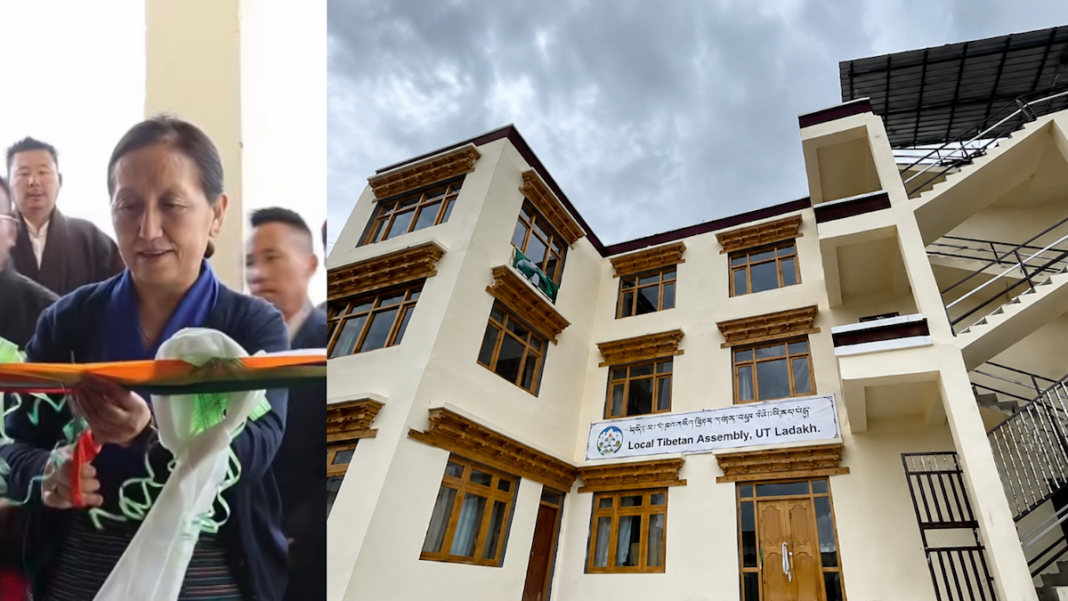
DHARAMSHALA, June 19: In a development to strengthen grassroots democracy in the Tibetan exile setup, the Chief Justice Commissioner Yeshi Wangmo of the Tibetan Supreme Justice Commission (TSJC), the highest judicial body of the Central Tibetan Administration (CTA), inaugurated the newly constructed Tibetan Local Justice Commission in Ladakh on Wednesday. The initiative is seen as highlighting the vital role of an independent judiciary within the Tibetan democratic system.
In her address as the chief guest, Chief Justice Commissioner Yeshi Wangmo emphasized the role of the judiciary as one of the three pillars of democracy and stressed that the Tibetan administration operates effectively through the full engagement of all three democratic institutions.
Reflecting on her tenure since assuming office in April 2025, she said the TSJC had consistently worked to strengthen judicial institutions despite limited resources. She noted that the judiciary’s primary responsibilities are to adjudicate disputes, uphold the rule of law, and promote legal awareness.
“The judiciary is entrusted with legal responsibilities and the resolution of disputes. Opportunities for raising funds are limited, and therefore support for judicial institutions must be provided through the governance system,” she said.
She recounted the efforts undertaken to establish the Local Justice Commission in Ladakh, describing a lengthy process involving consultations with local and central authorities. She said numerous attempts were made to secure support, including discussions with local committees, appeals to the central administration, and the involvement of former judges who were tasked with engaging local stakeholders and representatives.
Despite facing challenges, she said the TSJC pursued every possible avenue to ensure the project’s realization. The experience, she noted, highlighted the need for a greater understanding of the importance of the three pillars of democracy at the local level and the necessity for each institution to respect its distinct role and responsibilities. “The system of the three pillars of democracy was established with great foresight by His Holiness the Dalai Lama, who regarded it as essential to the governance of the Tibetan community,” she said.
Speaking about the significance of the new institution, she said the establishment of the Local Justice Commission reflected the value placed on the Tibetan community in Ladakh. She explained that among the more than 38 Tibetan settlements across India, Nepal, and Bhutan, only a handful, including the Dekyiling Tibetan settlement in Dehradun, Sonamling Tibetan Settlement in Ladakh, and Bylakuppe in southern India, host all three democratic institutions in one location.
She further revealed that the construction of the commission building became possible after local leaders and representatives agreed to allocate land for the project. Once approval was granted, the TSJC moved swiftly to complete the work, recognizing that delaying the opportunity could have jeopardized the project indefinitely.
“The establishment of this commission demonstrates how important the people of Ladakh are to us,” she said, expressing hope that the local community would recognize the significance of having all three pillars of Tibetan democracy represented within the settlement.

