

Tenzin Nyidon
DHARAMSHALA, Aug. 26: A catastrophic flash flood and mudslide swept through Nepal’s Rasuwa district along the Tibet border early Wednesday, killing at least 95 people and leaving hundreds missing, as torrents of water, mud, and debris inundated settlements, destroyed infrastructure and severed vital transport links.
According to reports, the disaster has also struck the Tibetan side of the border. A powerful mudslide hit the Kyirong (Ch. Gyirong) border area in Tibet, burying buildings and damaging roads, electricity and communications. Chinese state media reported at least three deaths and 265 people missing in Kyirong County, with large-scale search and rescue operations under way. Tibetans living along the border district are feared to be affected drastically, although exact numbers of casualty cannot be ascertained at the moment.
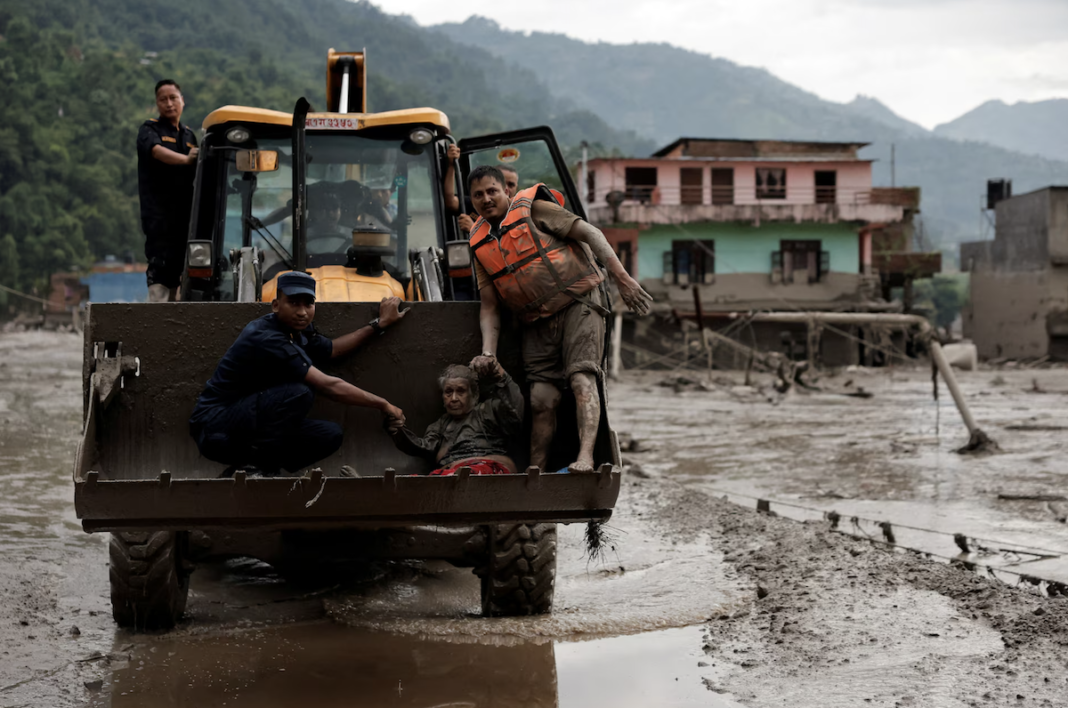
On the Nepali side, the Bhotekoshi River surged violently through Rasuwa and neighbouring areas, sweeping away homes, roads, bridges, vehicles and hydropower infrastructure. The border settlements of Timure and Syapru Besi were among the worst affected, while entire riverside communities were reportedly inundated. The destruction has left rescue teams facing severely damaged roads and disrupted communications, making it difficult to reach some of the worst-hit areas.
Nepal’s authorities have reported hundreds of people missing. The Nepal Tourism Board said hundreds of travellers, including foreign tourists and pilgrims, were unaccounted for in the affected region. Earlier figures put the number of missing foreign nationals at 341, while other reports have given a total of more than 380 people missing. The figures remain fluid as authorities attempt to reconcile reports from different locations.
The disaster has raised particular concern because the border region is a major route for travellers heading towards Tibet and Mount Kailash. Many of those reported missing were tourists and pilgrims travelling through the Himalayan corridor when the flood struck. Nationals from several countries, including India, the United States, Britain, Malaysia, South Africa, Australia, and the Netherlands, have been reported missing.
The exact sequence of events that triggered the disaster is still being examined. Preliminary reports indicate that an avalanche or large rock-and-ice landslide may have entered the Lhende Khola or Bhotekoshi river system, abruptly displacing a huge volume of water downstream. Reuters reported that an earthquake was detected before the disaster, while satellite analysis has also pointed to a snow-and-rock landslide near the Nepal-Tibet border as a possible trigger.
Authorities have also warned of the possibility of further flooding. A blockage remains upstream, and officials have cautioned communities along the Bhotekoshi and Trishuli river systems to move to safer ground and remain vigilant. The potential for a secondary surge has further complicated rescue and relief efforts.
Search and rescue operations are continuing on both sides of the border, involving security forces, emergency personnel and local authorities. However, the scale of the destruction, unstable terrain, heavy sediment and damaged infrastructure have hampered access to several affected areas. In parts of Nepal, high water levels have also prevented rescue helicopters from landing safely.
The death toll remains provisional and is expected to rise as rescuers reach areas that remain cut off and continue recovering bodies from the debris. With hundreds still unaccounted for and communications disrupted across parts of the border region, authorities have yet to establish the full scale of the human and material losses.
As rescue teams continue to scour the devastated borderlands for survivors and the missing, the scale of the tragedy is still unfolding, with officials warning that the final casualty figures could be considerably higher.

