

Tenzin Nyidon
DHARAMSHALA, Aug. 13: A three-judge bench of the Tibetan Supreme Justice Commission (TSJC), the highest judicial body of the Central Tibetan Administration (CTA), on Wednesday held a proceeding for the framing of the issues in Case No. 23, concerning the interpretation of the term “residing” in determining the plaintiff, Tenzin Khedup’s eligibility to contest election.
The case concerns the plaintiff’s eligibility to stand for election from the Dotoe constituency. Although Khedup holds Canadian citizenship, he possesses an Overseas Citizenship of India (OCI) card, which allows him to reside in India indefinitely. He has been living at Lugsam Tibetan Settlement in Bylakuppe, Karnataka, for approximately three years, during which he has paid his Green Book contributions in Indian rupees and completed his voter registration for the 2025-26 Tibetan General Election from Bylakuppe, South India.
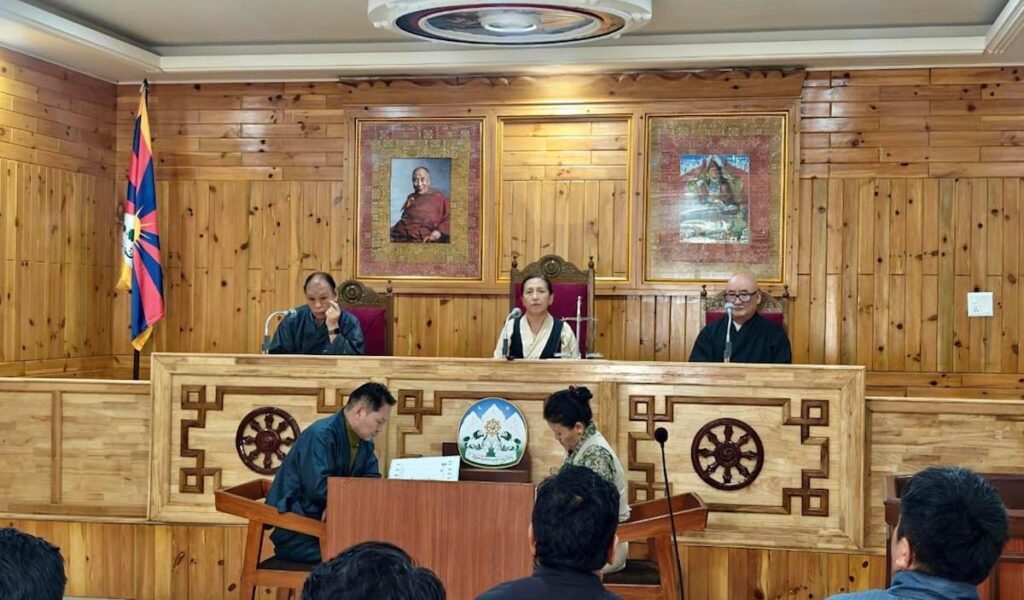
An initial hearing was held on August 5, 2026. During Wednesday’s proceedings, the TSJC framed two issues. The first issue concerns whether the decisions made by the Central Election Commission (CEC) regarding the plaintiff’s candidacy were inconsistent with the Charter of the Tibetans in Exile and the Election Rules and Regulations.
The second issue centres on the legal interpretation of “residing.” The commission directed the plaintiff to establish that, despite being a Canadian citizen and having his Green Book registered (prefix) in Canada, he does not qualify as a resident of Canada under the relevant legal provisions and is consequently eligible to contest a parliamentary seat representing one of the three traditional provinces of Tibet—U-Tsang, Kham, and Amdo.
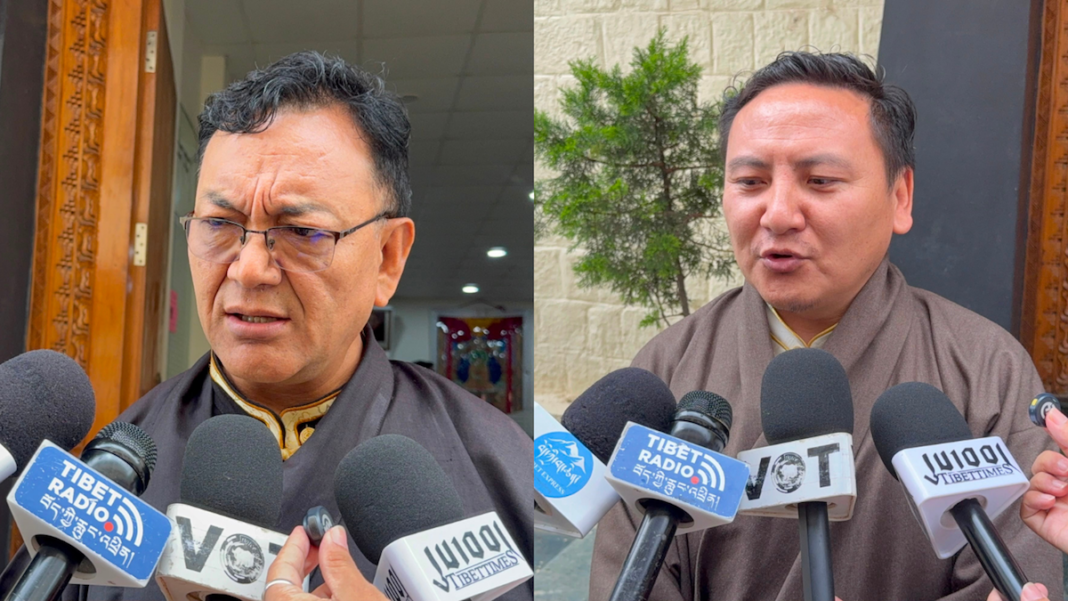
Speaking to media representatives after the hearing, respondent Mr. Lobsang Yeshi, who also serves as the Chief Election Commissioner of the Central Election Commission, said the issue-framing stage is intended to identify the core questions upon which the case will proceed.
The plaintiff’s legal counsel, Mr. Rigchen Wangyal, said the hearing had established both the factual and legal questions that will underpin the remainder of the proceedings. He said the legal team would seek to establish the proper legal interpretation of the term “residing.”
“The other issue is to establish, under the requirements of the law and regulations, whether the plaintiff is legally entitled to contest the election,” he said.
He also placed the case within the broader context of the electoral rights of Tibetans who have lived abroad before returning to India. Many Tibetans, he noted, have spent periods overseas before subsequently returning to India, raising questions about their eligibility to vote or stand for election under the existing legal framework.
From the perspective of Tibetans engaged in the Tibetan national struggle, he said, participation in the democratic process carries a responsibility towards the cause. He argued that Tibetans who fulfil the requisite legal conditions should be entitled to exercise both their right to vote and their right to contest elections.
The case will now proceed based on the two issues framed by the commission. The TSJC has yet to issue a final ruling on the plaintiff’s eligibility. The forthcoming proceedings is expected to focus on the evidence and legal arguments presented by both parties in relation to the two issues framed by the commission, before the commission reaches its final decision.

