

Tenzin Nyidon
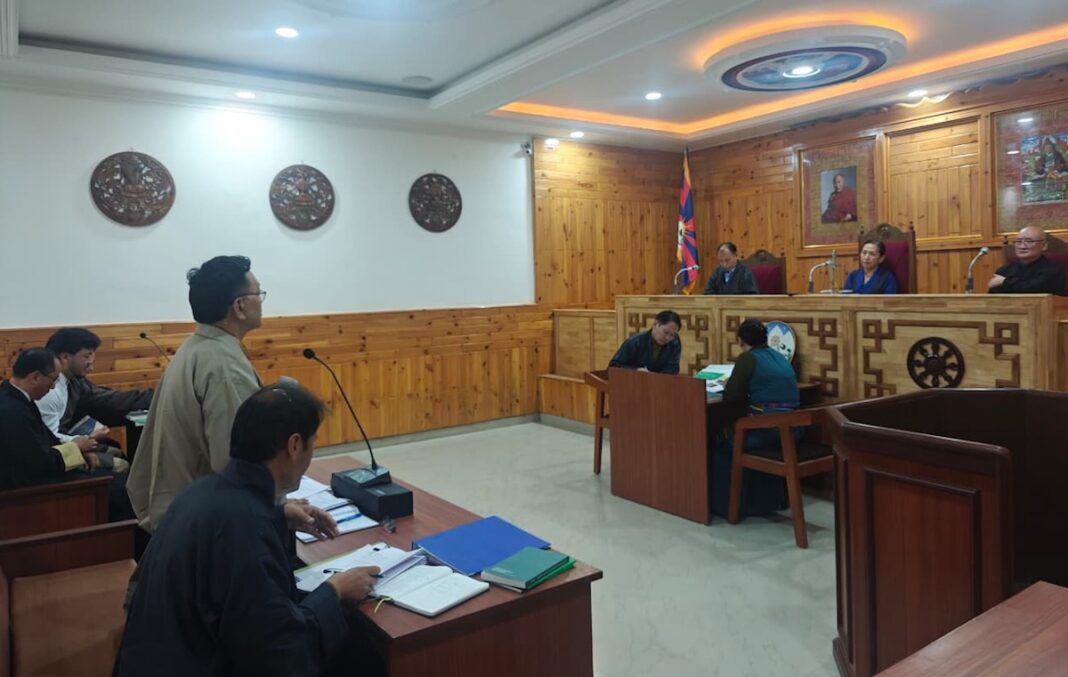
DHARAMSHALA, Aug. 5: The Tibetan Supreme Justice Commission (TSJC), the apex judicial body of the Central Tibetan Administration (CTA), on Wednesday conducted the first hearing on Case No. 23, filed by plaintiff Tenzin Khedup against the Central Election Commission (CEC), to seek clarification on legal questions and factual issues surrounding his exclusion from contesting the 2026 Tibetan General Election.
The case concerns the plaintiff’s eligibility to stand for election from the Dotoe constituency. Although Khedup holds Canadian citizenship, he possesses an Overseas Citizenship of India (OCI) card, which allows him to reside in India indefinitely. He has been living at Lugsam Tibetan Settlement in Bylakuppe, Karnataka, for approximately three years, during which he has paid his Green Book contributions in Indian rupees and completed his voter registration for the 2025-26 Tibetan General Election from Bylakuppe, South India.
Representing the plaintiff, legal counsel Mr. Rigchen Wangyal of the Dharamshala-based Tibetan Legal Association (TLA) put forth that the plaintiff’s residency status and argued that he should have been allowed equal participation in the electoral process.
Mr. Rigchen clarified that despite holding Canadian citizenship, the plaintiff has been residing in Bylakuppe Tibetan Settlement with valid legal permission and has fulfilled his responsibilities under Article 6 of the Charter of the Tibetans in Exile, including adherence to local laws and payment of Green Book contributions.
He argued that the plaintiff does not fall under the restrictions outlined in Section 37 of the Election Rules and Regulations governing eligibility for members of the Tibetan Parliament-in-Exile. The plaint, he said, was filed on the grounds that denying the plaintiff the right to vote and contest elections deprived him of the same electoral rights enjoyed by other Tibetans under Article 11 of the Charter, which guarantees participation in the democratic process.
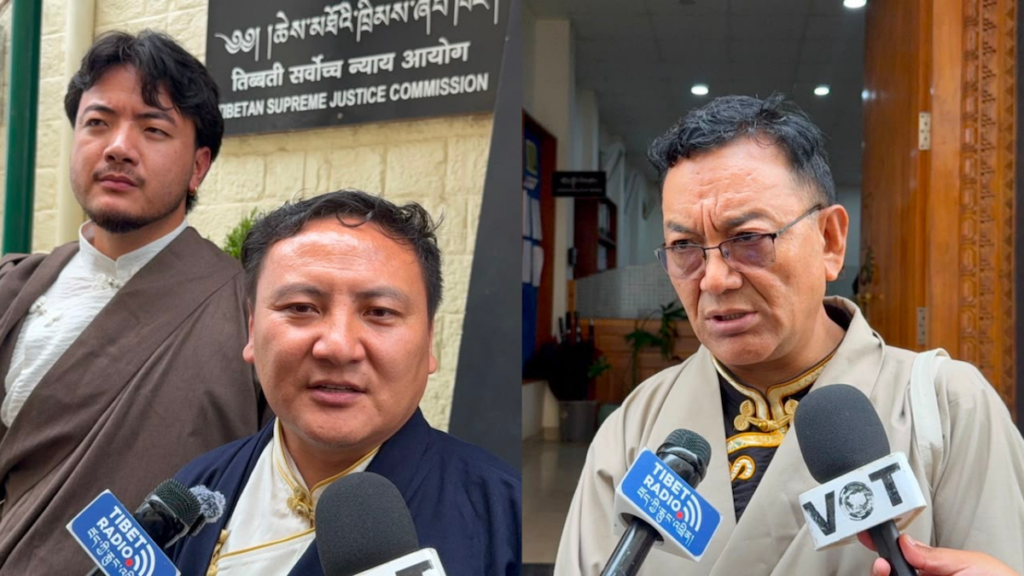
However, acknowledging that the 2025-26 CTA general elections have already concluded, Mr. Dawa Phunkyi, one of the TSJC Commissioners, implied that the TSJC cannot authoritatively grant a right retrospectively, as is the case. To that point, Mr. Rigchen agreed and withdrew one of the prayers that talks about his right to stand as a candidate in the election. Nevertheless, he urged the Commission to provide a clear legal interpretation of the term “residing” and establish criteria for determining residency in future cases.
He further recommended that the Charter of the Tibetans in Exile and the Election Rules and Regulations be reviewed and amended in the future, particularly in light of the increasing number of Tibetans returning to India after years of living abroad, to ensure their continued participation in the Tibetan democratic system.
Responding on behalf of the Central Election Commission, Chief Election Commissioner Mr. Lobsang Yeshi argued that the plaintiff does not currently meet the eligibility requirements prescribed under Section 22 of the Election Rules and Regulations.
The Chief Election Commissioner presented an interpretation of Section 22 of the election rules: an individual who transfers residence from another settlement can only be recognised as a resident of a new settlement after fulfilling certain conditions, including continuous residence in that settlement for at least five full years and relinquishing the rights and entitlements associated with their previous settlement. The provision also recognises individuals who lawfully transfer residence through marriage as local residents.
He stated that although the plaintiff currently resides in Bylakuppe Tibetan Settlement with OCI, he has lived there for only slightly over three years and therefore does not satisfy the five-year residency requirement under Section 22 of the election rules.
He further noted that the plaintiff had made several travels outside India since 2022 but had not taken steps to relinquish his Canadian citizenship during his stay in India. After considering all relevant circumstances and existing legal provisions, the Central Election Commission proceeded with its decision to disallow his candidacy.
The Chief Election Commissioner also maintained that permitting foreign citizens residing in India to contest elections for seats in the Tibetan Parliament-in-Exile through constituency would require amendments to the existing legal framework. Referring to the eligibility provisions under the Election Rules for Tibetans in Exile, he noted that no Tibetan holding foreign citizenship while residing in India has previously contested for a seat in the Tibetan Parliament-in-Exile.
He concluded that the plaintiff’s demands cannot be accommodated under the current legal structure, as implementing such changes would require revisions to both the Charter of the Tibetans in Exile and the Election Rules and Regulations.
The TSJC hearing highlighted broader questions regarding the evolving nature of Tibetan exile civic status, residency, and political participation, particularly as an increasing number of Tibetans with foreign citizenship consider returning to India and re-engaging with the Tibetan community’s democratic institutions.

