

Tenzin Nyidon
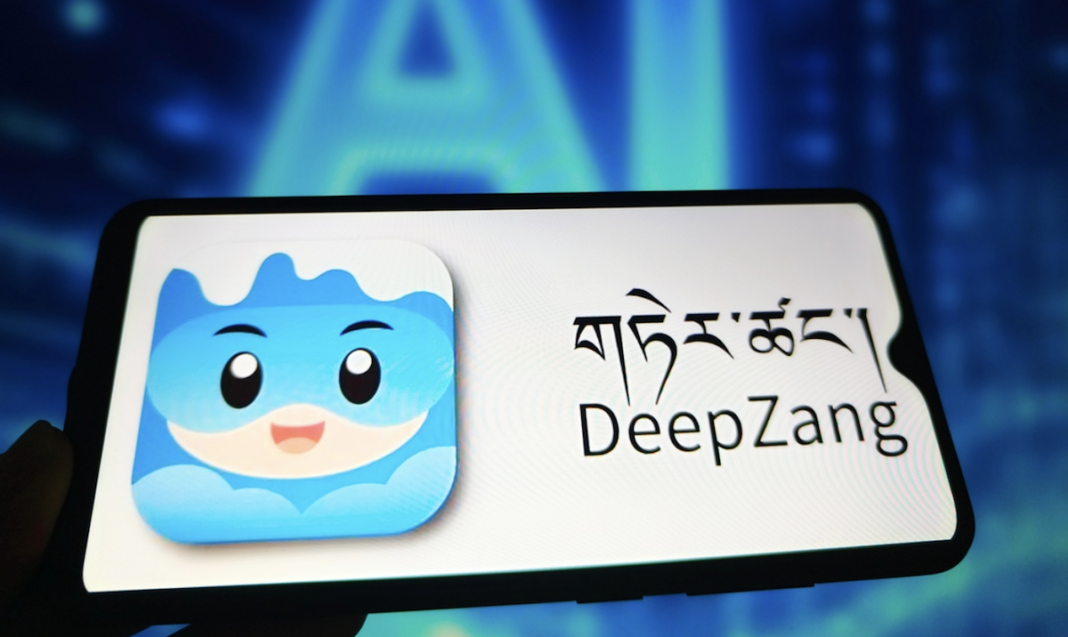
DHARAMSHALA, Oct. 9: China is accelerating upgrades to DeepZang, its Tibetan-language large language model (LLM), with plans to expand its use in public services, education, healthcare and local governance as developers seek to promote what Beijing calls “ethnic interaction and integration.”
The proposed upgrades were discussed at a seminar on October 5 in Hohhot, the capital of China’s so-called Inner Mongolia Autonomous Region, which brought together representatives from research institutions, universities, and enterprises to discuss advances in Tibetan-language AI and multilingual interpretation, according to Chinese state media.
Tenzin Norbu, founder of Choknor, the company behind DeepZang, said the team would continue developing Tibetan-language AI technologies and expanding their practical applications, using “technological innovation to support exchanges and integration among China’s ethnic groups.”
Launched in Lhasa in March 2026, DeepZang offers AI conversations, translation and speech-to-text functions in Tibetan, Mandarin Chinese and English. Its developers say the model has been trained on nearly 70 million standardised parallel-text entries and more than 30,500 hours of Tibetan-language audio covering the three major dialect groups of U-Tsang, Kham and Amdo.
The planned upgrades include improved adaptation to Tibetan dialects, real-time Tibetan–Mandarin translation and offline language functions. Developers are also preparing to expand the model’s application across public services, cultural heritage, education, medical services and tourism in regions occupied by China.
According to China Daily, DeepZang has attracted nearly 400,000 users and recorded more than 350 million visits since its launch. Its reported applications include helping medical personnel communicate with Tibetan-speaking patients, translating documents and assisting with Tibetan-language administrative work.
The expansion of Tibetan-language AI comes amid concerns over how Chinese technology platforms represent Tibet’s history, political status and religious identity. In a report published on March 19, the Washington-based right group International Campaign for Tibet (ICT) examined DeepZang’s responses to questions concerning Tibet’s historical status, the Tibetan spiritual leader His Holiness the Dalai Lama, and Tibetan independence. The organisation said the model reproduced official Chinese government narratives on politically sensitive subjects and restricted responses to certain questions, including those concerning Tibetan political history and self-immolation protests.
The findings raise questions about whether the development of Tibetan-language AI will primarily improve access to digital services in Tibetan or also reinforce the Chinese government’s preferred interpretation of Tibetan history and identity.
China’s push to expand DeepZang also comes amid wider government efforts to promote a unified national identity among the country’s ethnic groups. The “Law on Promoting Ethnic Unity and Progress”, which took effect on July 1, 2026, has drawn criticism from rights advocates and exile leadership who warn that its provisions could intensify pressure on Tibetans and other minority communities to assimilate into the dominant national culture. Beijing, meanwhile, presents the law as a means of strengthening “national unity and promoting development” across ethnic groups.
The DeepZang initiative therefore sits at the intersection of two competing concerns: the potential benefits of developing AI tools for a language with substantial dialectal variation, and questions over how such technology may be used within the state’s broader ethnic-integration agenda.

