

Tenzin Nyidon
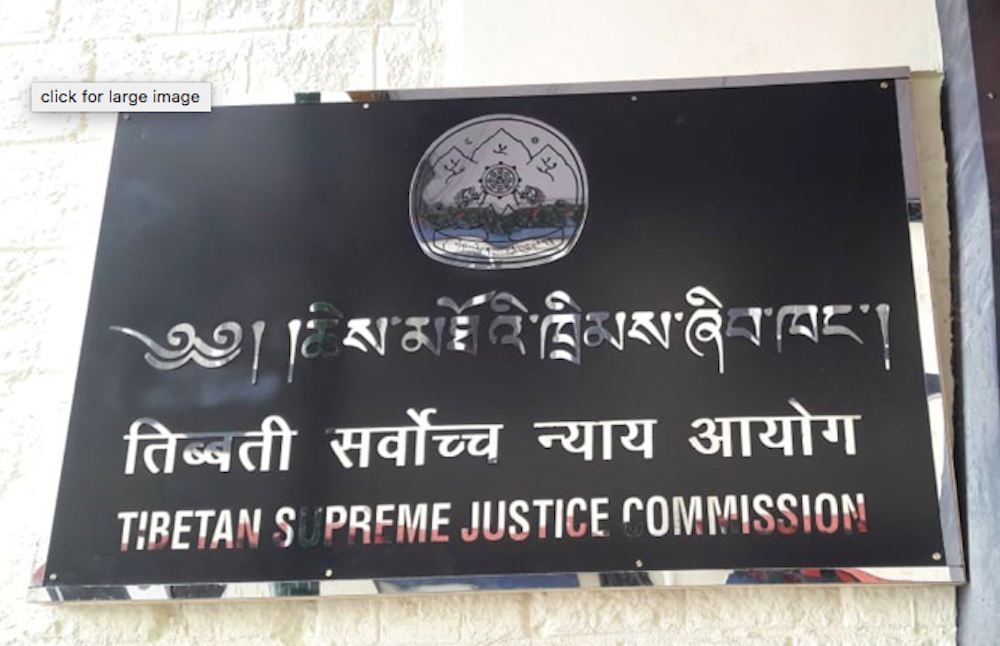
DHARAMSHALA, JUNE 28: The Tibetan Supreme Justice Commission (TSJC), the apex judicial body of the Central Tibetan Administration (CTA), on Saturday issued a ruling dismissing Case No. 22, related to the collective disenfranchisement dispute of Nepal’s Choejor Tibetan settlement, stating that the matter can no longer be maintained under its jurisdiction.
The court noted that the dispute, which formed the basis of the counterclaim, had already been filed before a competent court under the jurisdiction of the host country, India. It observed that once a matter is actively litigated in a competent domestic court, it falls outside the jurisdictional scope of the TSJC, resulting in an automatic exclusion of jurisdiction.
The counterclaim was filed by the Central Election Commission on June 12, with the Tibetan Legal Association (TLA) receiving formal notice on June 16. It levelled six allegations against the petitioner’s legal counsel including claims that he had contacted a section of the newly elected members of the 18th Tibetan Parliament in Exile with the intention of obstructing their oath-taking ceremony and annihilating the Central Tibetan Administration. The filing also alleged that a protest involving around 350 people outside the Office of Tibet in Nepal against the Central Election Commission during the pendency of the case had brought the CTA disrepute.
According to the ruling, the counterclaim respondent, Lobsang Tsering, acknowledged during the proceedings held on Friday that the subject matter of the counterclaim related to Case No. 22 had already been brought before the host country’s judicial system. The court further held that there was no legal basis to separate or distinguish the issues under the present proceedings, as they were already subsumed within the ongoing external litigation.
The TSJC also cited Article 13 of the Civil Procedure Code, which requires that cases seeking judicial review must satisfy fundamental admissibility criteria. It stated that a legal notice dated June 19, 2026, and the hearing on June 26, 2026, confirmed the respondent’s decision to pursue litigation in the host country’s court system, thereby reinforcing the jurisdictional transfer.
In addition, the court observed that the legal representative of the counterclaim respondent had independently declared both the Mutual Settlement Agreement and the Implementation Agreement between the parties as null and void. This further contributed to the finding that the dispute no longer met the minimum legal threshold required for adjudication before the TSJC.
Based on these findings, the TSJC concluded that Case No. 22 is not legally sustainable under its jurisdiction and therefore cannot be maintained.

