

Tenzin Nyidon
DHARAMSHALA, May 11: The Supreme Justice Commission (SJC), the apex court of the Central Tibetan Administration (CTA), has rejected an application seeking an ex parte ad interim injunction in a high-profile legal challenge concerning the revocation of voting rights of voters from Nepal’s Choejor Tibetan settlement.
The petition, registered as Case No. 22 on May 7, was filed by Lobsang Tsering on behalf of the six monasteries of Choejor settlement along with more than 300 Tibetan residents on May 5. The case directly challenges the Central Election Commission’s (CEC) decision to revoke the settlement’s voting rights amid allegations of multiple electoral irregularities during the preliminary elections for the 2026 Tibetan General Election.
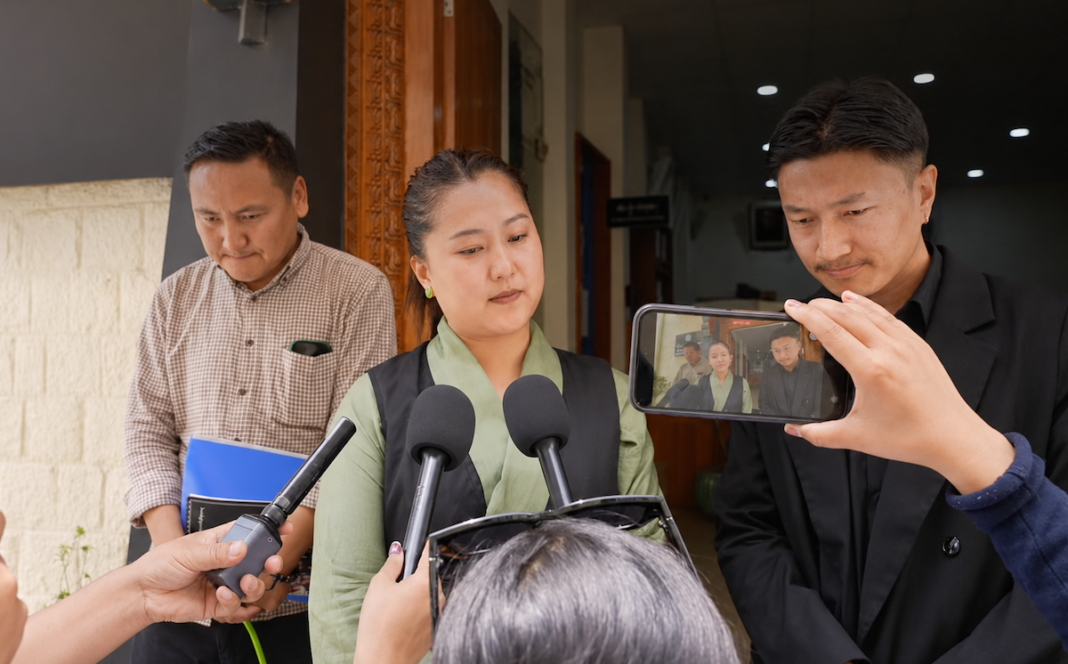
Speaking to the media on Monday, the Tibetan Legal Association (TLA), which represents the petitioner, confirmed that the court has rejected their earlier application seeking interim relief.
“The main reason we are addressing this matter today is that, on May 7, we had submitted an interim order request. However, later that same day, we received a response informing us that the interim order request had not been accepted. So today, we have once again submitted another application seeking to challenge or stop that interim order,” the legal team stated.
The rejected application had sought an ex parte ad interim injunction, requesting the court to restrain the Central Election Commission from announcing the final election results until the matter is adjudicated.
Despite the pending litigation, it appears that the Election Commission is proceeding with preparations for the formal declaration of the final election results of the 18th Tibetan Parliament-in-Exile election. Media organisations have received invitations for a press conference scheduled for May 13, indicating that the Commission intends to move forward with the announcement on Wednesday.
The legal dispute marks the latest escalation in an ongoing controversy surrounding the Choejor polling station, including areas such as Boudha and Jorpati in Nepal. The row stems from alleged electoral malpractice during the preliminary elections for the 2026 Tibetan General Election, followed by a series of conflicting directives issued by the Central Election Commission regarding Choejor’s participation in the final round of voting.
On April 23, the Commission initially issued a directive revoking the voting rights of the Choejor settlement. Days later, on May 1, it partially reversed its decision and announced that the settlement would be allowed to participate in the final election process. However, on May 5, the Commission once again altered its position, ultimately declaring that holding the election in Choejor would not be possible despite earlier assurances that the final poll would proceed.
Chief Election Commissioner Lobsang Yeshi, speaking to media representatives at the time, acknowledged the sequence of reversals. He stated that the Commission had initially decided to continue with the final election after internal deliberations, but subsequent communication with the Local Election Officer in Nepal significantly influenced the outcome.
According to him, the Local Election Officer cited “prevailing circumstances and logistical difficulties” as the primary obstacles to conducting the election in Choejor. The assessment ultimately prompted the Commission to suspend the voting process, overturning its earlier directive to proceed with the polls.
The repeated reversals have sparked a widespread debate within the Tibetan exile community and led to legal action by affected residents and representatives of the monastic community. With the final election results expected to be announced in the coming days, the case is likely to remain under intense public and political scrutiny, as concerns persist over electoral procedures, voting rights, and the scope of authority exercised by the Election Commission.

