

Tenzin Nyidon
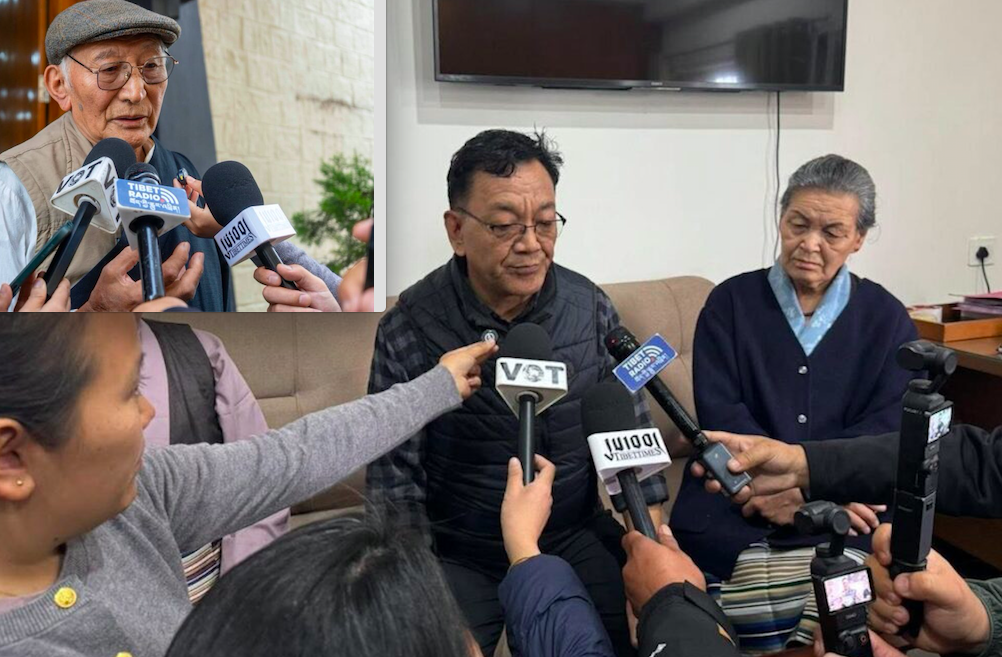
DHARAMSHALA, May 8: The Supreme Justice Commission (SJC), the apex court of the Central Tibetan Administration (CTA), on Thursday registered Case No. 22, a legal petition filed by Lobsang Tsering, representing the six monasteries of Nepal’s Choejor Tibetan settlement, along with more than 300 Tibetan residents, directly challenging the Central Election Commission’s decision to revoke the settlement’s voting rights.
Speaking to Voice of Tibet, Tenzin Dolkar, legal counsel at the Tibetan Legal Association (TLA), which represents the petitioner, stated that the legal team has also filed an application seeking an ex parte ad interim injunction under Article 76 of the Rules of Procedure for Public Interest Litigation. The petition requests that the court restrain the Central Election Commission (CEC) from announcing the final election results, scheduled for May 13, until the case is adjudicated.
The case marks the latest escalation in an ongoing dispute surrounding alleged electoral irregularities in Choejor, including areas such as Boudha and Jorpati, during the preliminary elections for the 2026 Tibetan General Election. The legal challenge follows a series of reversals and conflicting directives issued by the Commission over the status of the Choejor polling station.
On April 23, the apex electoral body of the Tibetan government-in-exile announced that it had uncovered multiple “serious violations” during the conduct of preliminary elections in the Choejor Tibetan settlement. The Commission subsequently withdrew the final election rights for the Choejor polling station.
Among the most serious findings cited by the Commission were allegations that individual voters cast multiple ballots, with some reportedly filling out 10, 20, 40, 70, or even up to 100 ballot papers. Investigators also found that a large number of ballots appeared to be written in identical handwriting, raising concerns over coordinated manipulation. The Commission further alleged that ballots had been distributed to households and community groups and collected days later, in direct violation of the one-day voting requirement stipulated under election rules.
Additional irregularities cited in the investigation included instances in which a single committee member handled both the distribution and collection of ballots, thereby undermining procedural safeguards. Ballots lacking proper candidate identification or containing inconsistent information were reportedly counted, while some ballots appeared to contain multiple handwriting styles. In another instance, a voter residing in the United States was allegedly permitted to vote under multiple constituencies.
Despite these allegations, the local election commissioner in Choejor denied any wrongdoing during three separate inquiries, maintaining that the elections were conducted fairly and in accordance with established procedures. The official attributed similarities in handwriting to the demographic composition of the settlement, stating that nearly 60 percent of residents are monks or former monks educated under the same teacher.
The Election Commission also expressed concern over what it described as repeated attempts by the local official to contact central authorities during the investigation, characterizing such efforts as undue pressure. While acknowledging the challenging political environment faced by Tibetans in Nepal and recognizing the efforts of local officials, the Commission concluded that deliberate misuse of ballots by certain individuals had likely influenced the outcome of the preliminary polls.
However, on May 1, the Commission issued a fresh directive effectively reversing its earlier decision by announcing that the final election in Choejor would proceed as scheduled.
Days later, the Commission, on May 5, once again altered its position and ultimately revoked the voting rights of Choejor voters, despite earlier assurances that polling would continue. According to Chief Election Commissioner Lobsang Yeshi, the Local Election Officer had cited “prevailing circumstances and logistical difficulties” as major obstacles to conducting the election in Choejor. The Commission said this assessment ultimately led to the suspension of voting in the settlement.
Responding to the legal challenge, the Chief Election Commissioner defended the Commission’s actions, asserting that its decisions were based on established electoral laws and constitutional provisions. “There are provisions within the election rules and the Charter that guide such matters. If there is any dispute, it is not for us to act arbitrarily — the Supreme Justice Commission is there to adjudicate,” he told media representatives.


Sadly, the Central Election Commission (CEC) has made several embarrassing blunders in Choejor Tibetan Settlement in Kathmandu A) foremost, almost two months of delaid response on the election violation issues. B) only deciding on April 23rd the eve of the final elections day. C) CEC instead of punitive actions on the purported voting violators CEC deprived the entire polling station population the constitutional right to vote D) then on May 1st flip flopped and announced the that voters can now vote E) but on May 5th flip flopped again and deprived voters the right to vote.
All these disappointing shameful decisions and actions by the CEC demonstrates incompetence and amature behaviors, causing major lack of confidence by the public at large. Choejor Settlement votes should be allowed and counted before May 13th.