

Tenzin Nyidon
DHARAMSHALA, Oct. 2: Tibetan activist Lhodrak Tharchin on Thursday concluded his more than 600-kilometre “Rangzen March” or “Azad Yatra”, a solo march from Dharamshala to New Delhi advocating Tibetan independence.
Lhodrak began the peaceful march on August 20 and completed the journey in 40 days, travelling across three states and two Union Territories. His route passed through towns and cities including Kangra, Amb, Una, Mohali, Chandigarh, Panchkula, Ambala, Karnal, Panipat, and Sonipat.
During the journey, Lhodrak said he met with civil society organisations, media outlets, and political figures to discuss developments in occupied Tibet, regional geopolitical dynamics and the broader implications of China’s policies in occupied Tibet.
After entering New Delhi on September 22, he continued the march through the capital, meeting representatives of media organisations, educational institutions, political parties, and other groups. He also visited areas around the diplomatic district to raise awareness about occupied Tibet and discuss developments inside occupied Tibet and their wider regional implications.
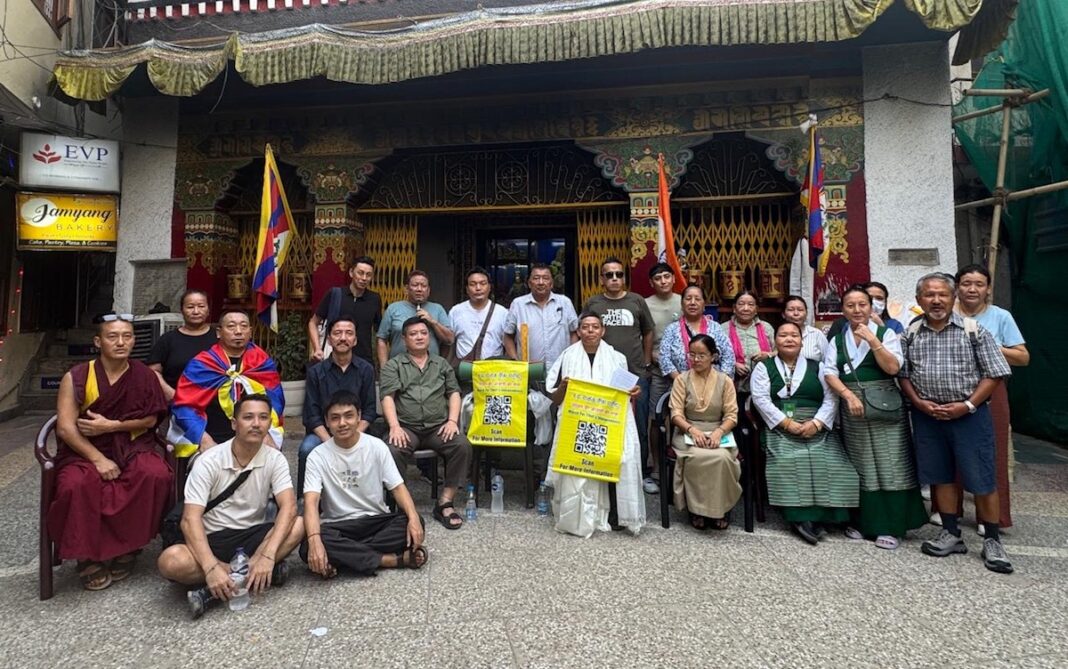
The march concluded on October 1 at the Samyelling Tibetan Settlement in Majnu Ka Tilla, north Delhi, after passing through the University of Delhi’s North Campus. Lhodrak said he deliberately chose October 1—the 77th anniversary of the founding of the People’s Republic of China—for the conclusion of the march, describing the final leg as a protest against what he characterised as China’s occupation and colonial rule in Tibet.
According to Lhodrak, the march sought to raise international awareness about what he described as the Chinese government’s “genocidal policies” in occupied Tibet and to garner support for Tibetan independence. He said the journey was undertaken on behalf of his family members inside occupied Tibet, whom he said are unable to express their views under Chinese rule freely.
Lhodrak also dedicated the march to late Tibetan independence activist Lobga Rangzen, who self-immolated outside the United Nations headquarters in New York on July 2 in protest against Chinese policies in occupied Tibet. He said the journey was also a tribute to other Tibetans who have sacrificed their lives for what he described as the cause of Tibetan freedom and dignity.
The completion of the Rangzen Yatra marks the end of Lhodrak’s 40-day overland journey to the Indian capital, during which he sought to bring discussions on occupied Tibet to Indian civil society, political and media platforms.

