

Tenzin Nyidon
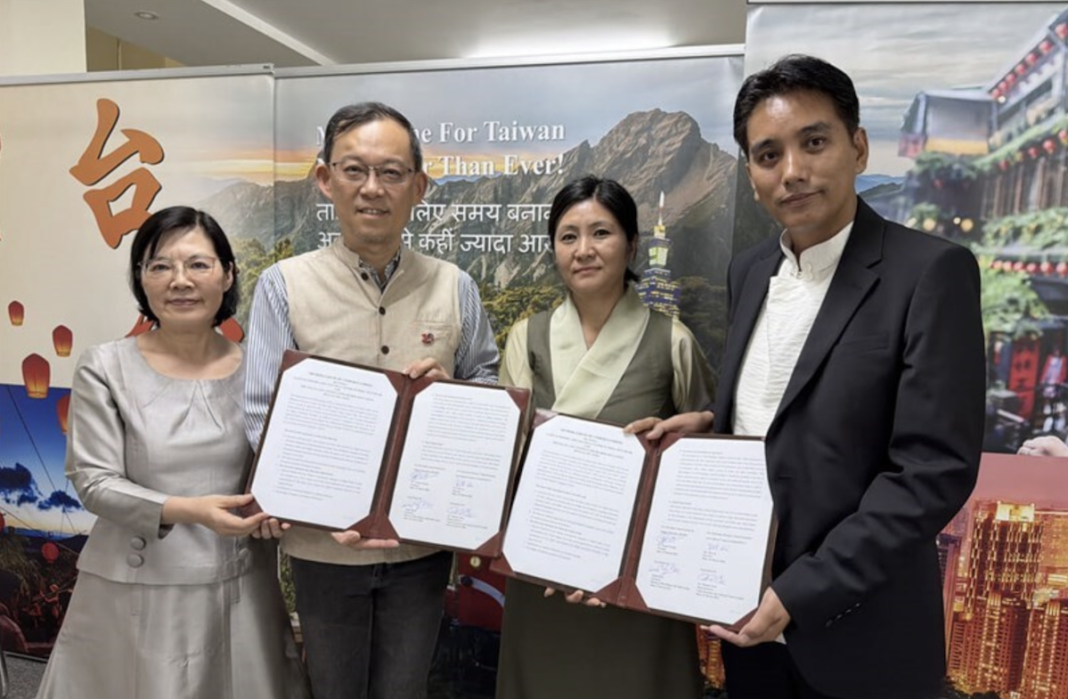
DHARAMSHALA, March 26: In a significant step toward strengthening educational and cultural ties, Taiwan and a Tibetan higher education institute in India signed a memorandum of understanding (MOU) on Wednesday to facilitate the placement of Mandarin teachers in Tibetan schools.
The agreement was formalized between the education division of the Taipei Economic and Cultural Center (TECC) in New Delhi and the Dalai Lama Institute for Higher Education (DLIHE) in Bengaluru.
Under the terms of the MOU, Taiwanese educators will be deployed to Tibetan schools to teach Mandarin Chinese, aiming to enhance language proficiency while fostering cultural exchange and mutual understanding.
Speaking on the development, Chen Mu-min, head of TECC in New Delhi, stated that the program will create meaningful opportunities for both Taiwanese teachers and Tibetan students to engage across cultures. He emphasized that the partnership represents a milestone in Taiwan-Tibet educational cooperation.
Dr. Tenzin Pasang,principal of the Dalai Lama Institute for Higher Education, noted that the institute has offered Mandarin language courses since its establishment in 2008, primarily taught by Tibetan instructors. With the new collaboration, TECC will assist in recruiting native Mandarin-speaking teachers, thereby improving the quality and authenticity of language instruction.
Jigmey Tsultrim, Chief Representative of the Central Tibetan Administration (CTA) in southern India, highlighted that the agreement reflects shared democratic values and educational aspirations between the Tibetan and Taiwanese sides. He added that such initiatives could inspire Tibetan youth and deepen bilateral engagement.
Echoing similar sentiments, Tashi Dickey, Secretary at the Bureau of His Holiness the Dalai Lama in New Delhi, described the MOU as a milestone for the Tibetan community in exile. She emphasised that Mandarin proficiency can broaden employment prospects for Tibetan students and empower them to communicate more effectively with Chinese-speaking audiences. She added that strengthening Mandarin skills can enable Tibetans to better articulate their perspectives internationally, particularly in the context of advocating for Tibet.

