

Tsering Dhundup
DHARAMSHALA, Aug 7: The Supreme Court of India has agreed to examine a long-standing plea filed by a section of the country’s Buddhist community seeking complete Buddhist control over the management and administration of the Mahabodhi Mahavihara, the revered UNESCO World Heritage site in Bodh Gaya, Bihar according to Hindustan Times.
The apex court issued notice to the Centre and relevant authorities on Monday, seeking their response to the petition challenging the constitutional validity of the Bodh Gaya Temple Act, 1949.
A bench of Justices M.M. Sundresh and N. Kotiswar Singh admitted the plea and tagged it with a similar case pending before the apex court. The petitioners are calling for the repeal of the 1949 Act—state legislation currently governing the Mahabodhi Temple—and the introduction of a new central law that would grant exclusive administrative control to the Buddhist community.
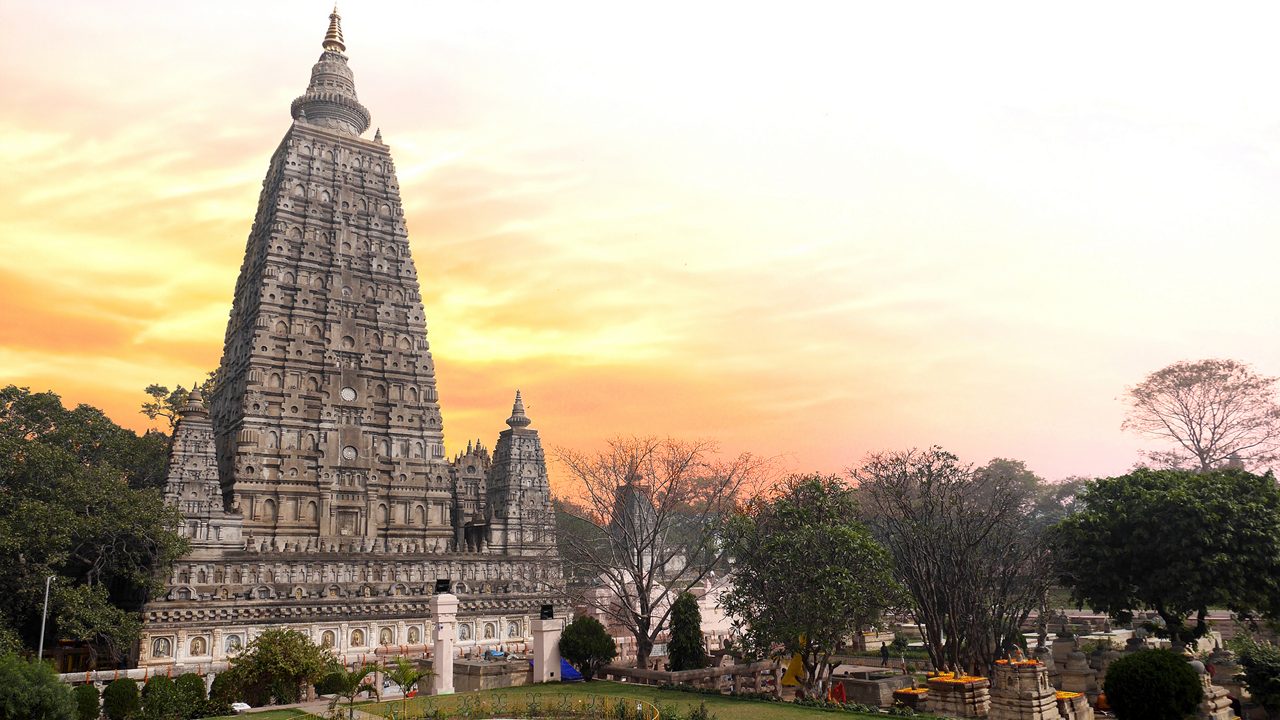
The Mahabodhi Temple is among the most sacred sites for Buddhists worldwide. It marks the location where Prince Siddhartha attained enlightenment under the Bodhi Tree and became the Buddha nearly 2,600 years ago. The sprawling temple complex includes the sacred Bodhi tree, the 50-metre-high temple tower, the Vajrasana (Diamond Throne), ancient stupas, and the Muchlind (Lotus) Pond.
Under the present legal framework, the Bodh Gaya Temple is managed by an eight-member committee as mandated by the Bodh Gaya Temple Act, 1949. The committee comprises four Hindus and four Buddhists, with the District Magistrate of Gaya serving as the ex-officio chairman. The Act also recognises the influential role of the Hindu Mahanth, which has been a key point of contention for Buddhist petitioners over the years.
The current plea argues that the Act is “inconsistent” with Article 13 of the Indian Constitution, which invalidates laws infringing upon fundamental rights. The petitioners are demanding the restructuring of the temple management body to ensure that all members belong to the Buddhist community. They have also requested judicial directions for the removal of encroachments around the temple complex to preserve its sanctity for exclusive Buddhist worship.
On June 30, the Supreme Court had previously declined to hear a separate but similar plea, directing the petitioner to approach the High Court. However, with the latest petition raising identical concerns now accepted, the issue has formally returned to the apex court’s docket.
The Mahabodhi Temple, situated about 115 km from Patna and 16 km from Gaya, is not only a sacred pilgrimage site but also a monument of great historical and architectural value. First built by Emperor Ashoka in the 3rd century BCE and reconstructed in the 5th–6th centuries CE, the temple is one of the earliest examples of brick-built Buddhist temples in India. The temple complex, encompassing over 4.8 hectares, represents a significant era of architectural and spiritual development in South Asian history.
For decades, Buddhist groups in India and abroad have raised concerns about what they view as inadequate representation in the management of their most sacred site. Earlier this year, Buddhist monks and activists held hunger strikes and public demonstrations demanding exclusive Buddhist control over the temple.

