

By Tsering Dhundup
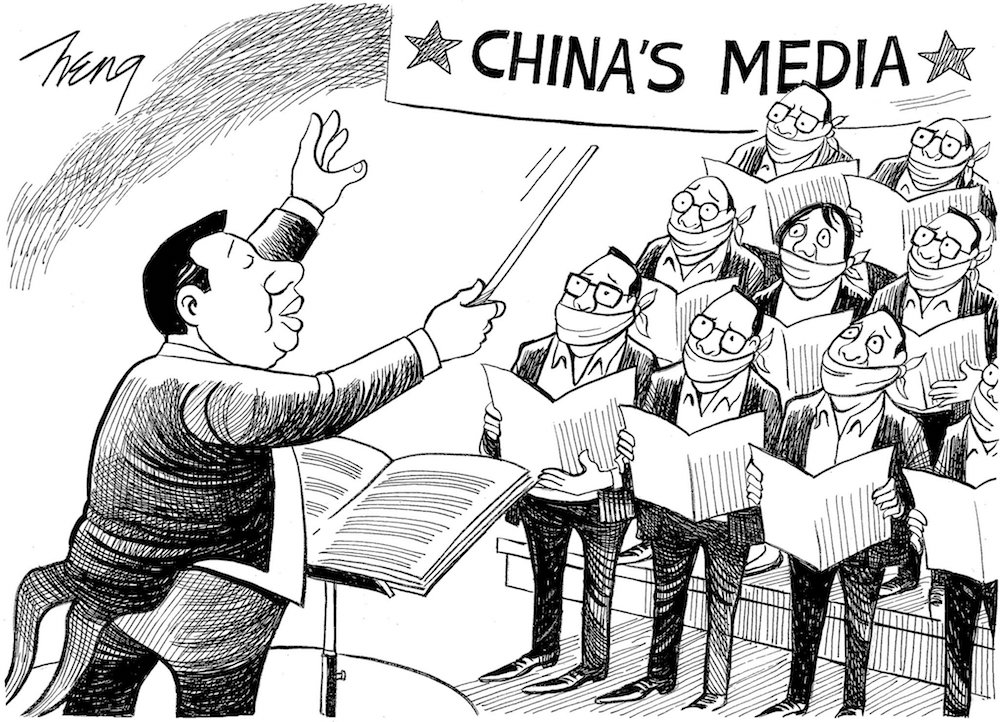
DHARAMSHALA, July 20: Reporters Without Borders (RSF) has issued a concerning alert on a new threat to press freedom in China. The All-China Journalists Association (ACJA), an organization under the Chinese Communist Party’s (CCP) oversight, recently launched a smartphone service on the WeChat platform. The service is designed to “train” and even evaluate journalists on the regime’s propaganda, as well as to ensure their loyalty to Chinese leader Xi Jinping.
The smartphone service, introduced on June 30, offers over 220 courses with the aim of indoctrinating media professionals in the “Marxist vision of journalism.” This concept aligns with the CCP doctrine on media and is part of the regime’s efforts to control the narrative disseminated by the press.
One of the significant aspects of this service is its focus on helping journalists pass the loyalty exam to Chinese leader Xi Jinping. Since 2019, passing this loyalty exam has become mandatory for obtaining or renewing press credentials. The new smartphone service is equipped to monitor users’ progress and can issue training certifications, which could also be used by media outlets to conduct journalists’ annual reviews.
RSF’s East Asia Bureau Director, Cédric Alviani, expressed deep concern about this development. He stated, “Over the past decade, the Chinese regime has been conducting a true crusade against press freedom and the right to information, and this new smartphone service is yet another tool to brainwash and compel journalists to conform with state narratives.” He called on the international community to exert pressure on the Chinese regime to halt its repressive policies and restore press freedom, as enshrined in the country’s constitution.
This is not the first instance of the Chinese regime employing technology to control media and journalists. In 2019, the government launched a propaganda app called “Study Xi, strengthen the Country,” which was initially available to the general public. However, it was later utilized to test journalists’ loyalty to the regime and their knowledge of its narrative.
Since Xi Jinping assumed power in 2012, the control over Chinese state media has been significantly tightened, with the expectation that media should “reflect the Party’s will.” Additionally, independent journalists have faced severe clampdowns, and there has been an unprecedented increase in online censorship and surveillance, as highlighted in RSF’s report titled “The Great Leap Backwards of Journalism in China.”
To support journalists working on China-related issues, RSF launched the training.rsf.org website in 2021. The platform covers various topics such as physical safety, digital security, mental health, and reporting best practices. RSF’s capacity-building and assistance program has already benefited more than 500 journalists covering China.
China’s press freedom situation remains dire, and the country currently ranks 179th out of 180 countries in the 2023 RSF World Press Freedom Index. It has also been labelled as the world’s largest captor of journalists and press freedom defenders, further raising concerns about the safety and freedom of journalists operating within the country.
The launch of this new smartphone service further exacerbates the already critical state of press freedom in China, and it calls for urgent action by the international community to safeguard the right to information and uphold journalistic independence.

