

Tenzin Nyidon
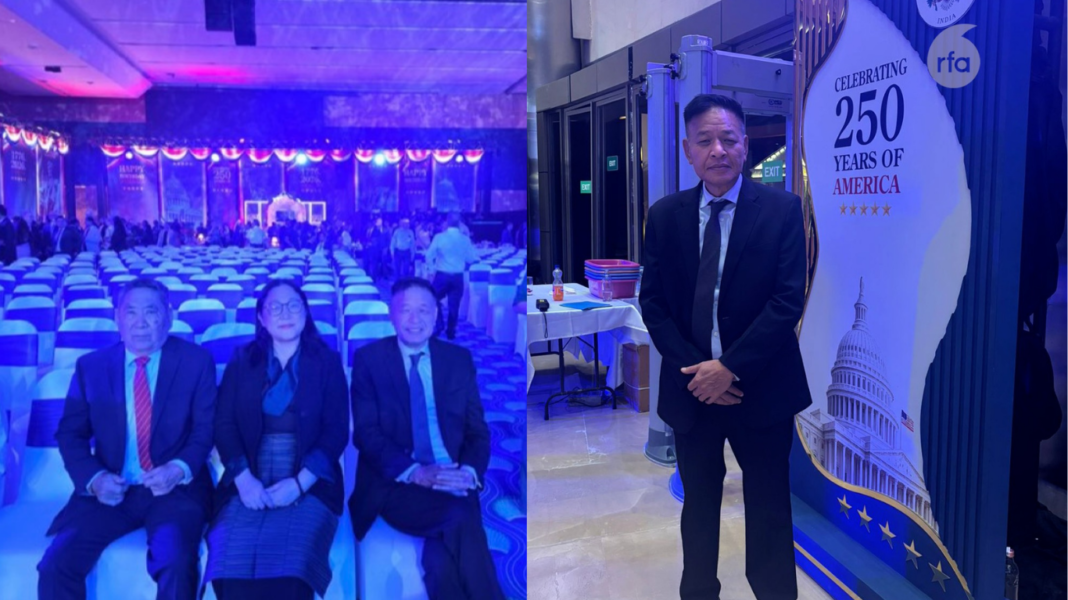
DHARAMSHALA, May 25: The President of the exile Tibetan government, officially known as the Central Tibetan Administration (CTA), Penpa Tsering, attended “Freedom 250,” a high-profile diplomatic reception held at Bharat Mandapam in New Delhi on Saturday, commemorating the 250th anniversary of American Independence, following an invitation extended by U.S. Secretary of State Marco Rubio.
The event, hosted by the U.S. Embassy in Delhi, brought together diplomats, senior government officials, and distinguished guests, including U.S. Ambassador to India Sergio Gor and Indian External Affairs Minister S. Jaishankar, to mark the upcoming semiquincentennial anniversary of the United States’ independence.
Accompanying the Tibetan political leader at the event were Minister Norzin Dolma of the Department of Information and International Relations (DIIR), Representative Jigme Jungney of the Bureau Office of His Holiness the Dalai Lama in Delhi, and Bureau Secretary Tashi Dekyi.
According to reports, the invitation was extended directly by Secretary Rubio, reflecting continued engagement between American officials and the Tibetan leadership in exile. The reception is being viewed by observers as diplomatically significant given Beijing’s longstanding opposition to official interactions between foreign governments and the CTA, headquartered in Dharamshala.
The participation of the Tibetan delegation at the prominent diplomatic gathering is being viewed by many as a reaffirmation of Washington’s enduring support for the Tibetan cause, despite the evolving dynamics of U.S.-China relations. The gesture comes at a sensitive juncture in global diplomacy, shortly after U.S. President Donald Trump’s recent visit to China.
The United States has historically voiced support and advocated for the preservation of Tibetan religious, cultural, and linguistic identity, while successive American administrations and lawmakers have maintained engagements with Tibetan exile leaders on issues concerning human rights and the peaceful resolution of the Tibet-China conflict.
In recent years, Washington has further reinforced its legislative and diplomatic support for Tibet through initiatives such as the Resolve Tibet Act, which calls on China to resume dialogue with Tibetan representatives and challenges Beijing’s assertions regarding Tibet’s historical status.

