

Tenzin Nyidon
DHARAMSHALA, Aug. 20: The morning air at the entrance to Tsuglakhang temple here in Dharamshala carried a mixture of mourning and charged momentum. Tibetans in dark clothes, many draped in the colours of the Tibetan national flag, hurried through the temple gates. Some walked quietly, while others moved with an unmistakable sense of urgency. The murmur of prayers can be heard along with the shuffle of hundreds of footsteps.
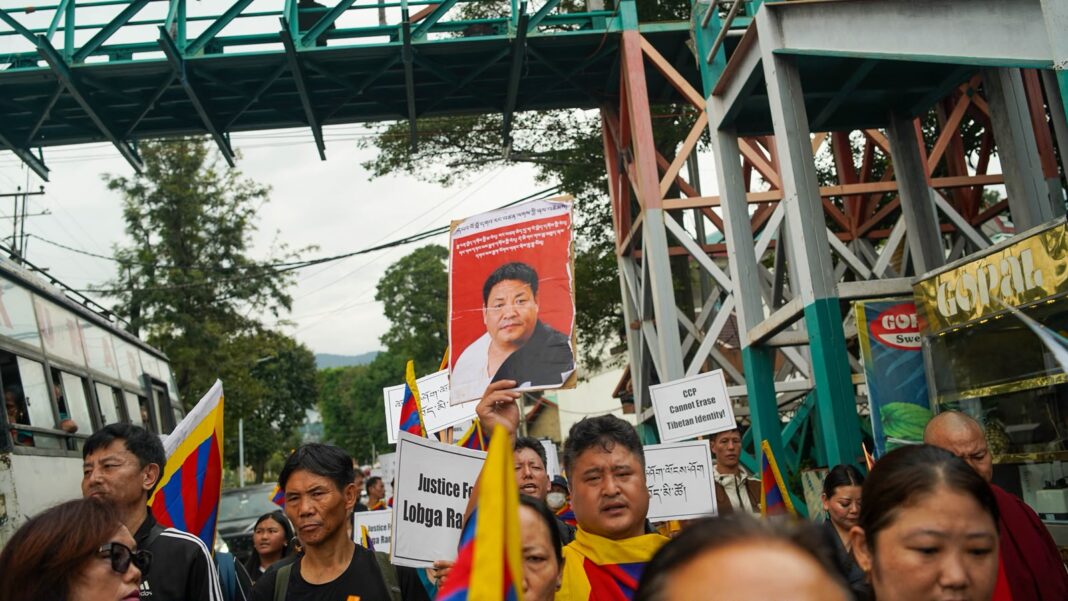
Hundreds had come to attend a prayer service marking the 49th day since the passing of Lobga Rangzen, the Tibetan independence activist who fatally self-immolated in front of the United Nations headquarters in New York on July 2, 2026. The service was organised by the Central Tibetan Administration (CTA) in collaboration with the Tibetan Youth Congress (TYC).
But what followed the prayers was something few had expected. As people emerged from the temple, Dharamshala witnessed a gathering of Tibetans on a scale rarely seen in recent memory. Even the crowds traditionally seen on March 10, Tibetan National Uprising Day, seemed eclipsed by the extraordinary number of people who came together that day. Such a visible and expansive representation of Tibetans had not been seen for a very long time.
At around 11:40 a.m., the procession began from the temple gates, moving through the streets of Dharamshala before culminating at the Police Ground. In an unprecedented display of institutional unity in exile, the march was led by the three pillars of the Tibetan administration: the CTA President Penpa Tsering and members of his Cabinet, Tibetan Parliamentarians, and judges of the apex Tibetan court.
Behind them walked Tibetans from every generation and every walk of life. Elders, a few leaning on canes, walked alongside younger demonstrators. Parents carried children as young as four or five on their shoulders. Schoolchildren from Tibetan Children’s Village in Upper Dharamshala and Gopalpur joined the procession. Families, students, monks, nuns, and ordinary residents all became part of the same moving tide—they shared one voice.
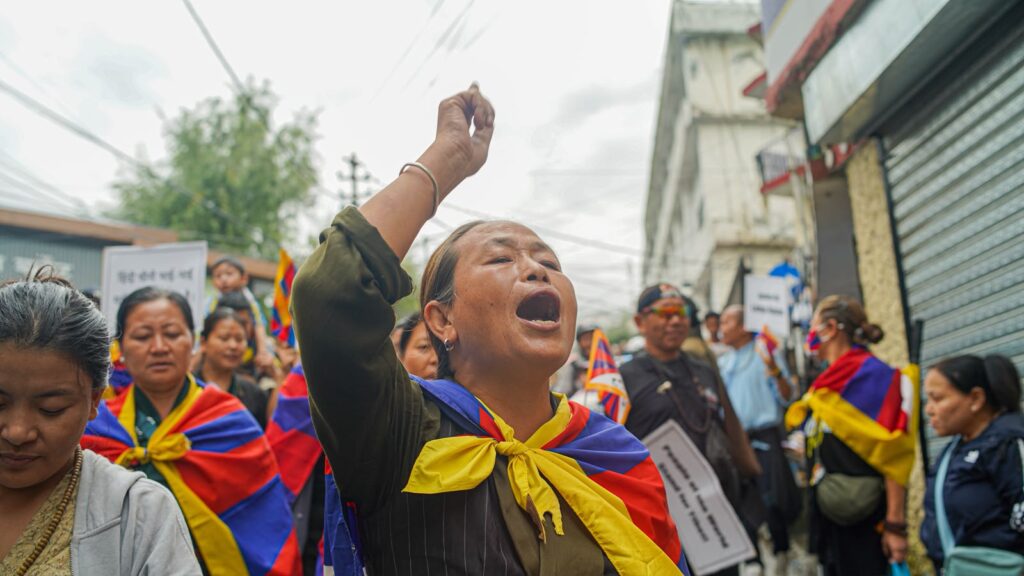
Slogans calling for Tibet’s independence, voicing strong opposition to China’s so-called “Ethnic Unity and Progress Law,” among other of China’s repressive policies in occupied Tibet rang through the streets, along with demands for justice for the late martyr.
In his final appeal, late Lobga Rangzen had linked the absence of fundamental freedoms in Tibet to the loss of Tibetan independence, arguing that restrictions on human rights, freedom of speech, and even the display of the Dalai Lama’s portrait could ultimately be traced to that loss. His words now travelled with the procession.
As the march descended into Lower Dharamshala, Indian shopkeepers and residents stepped outside their establishments, watching as the enormous procession passed before them. Former Tibetan Parliamentarian Youdon Aukatsang then urged demonstrators to raise some of their slogans in Hindi so that local residents could understand the message being carried through their streets. The chants became a bridge between the demonstrators and those watching from the roadside.
Some slogans spoke directly of the universal desire for freedom and independence, while others warned against trusting China’s assurances of fraternity. Other chants accused Chinese authorities of wrongdoing. The words echoed through the lanes as the procession continued toward the Police Ground. By the time the march reached its final destination, the gathering had become more than a memorial procession. It had become a public expression of grief, political conviction, and collective identity.
Speaking at the culmination of the march, Tashi Targyal, Vice President of the TYC, reiterated the message attributed to Lobga Rangzen and called on Tibetans to overcome internal divisions while remaining united in the cause of Tibetan independence.
He argued that Tibetans who genuinely believe in independence should not be made to feel that their position contradicts the guidance of His Holiness the Dalai Lama. He also cautioned against portraying every political proposal or suggestion from the Dalai Lama as an instruction that all Tibetans are obliged to follow one single political path. Such interpretations, he stressed, risk creating unnecessary divisions within Tibetan society.
He emphasised that the TYC regards protecting and upholding the guidance of His Holiness as a central responsibility, while also insisting that Tibetan institutions must be respected and that those entrusted with responsibilities toward the Tibetan government in exile must fulfil them with dignity.
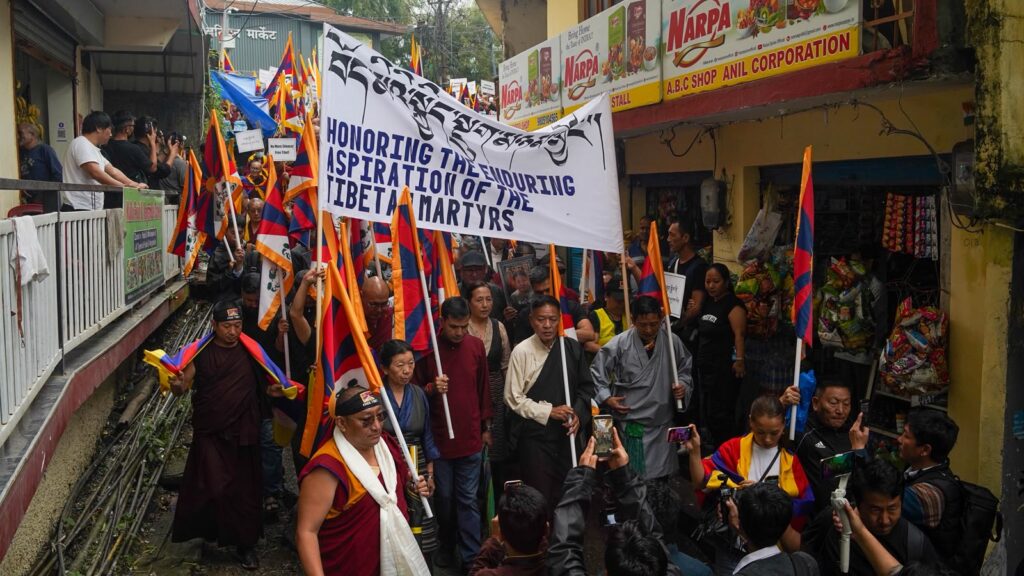
The CTA President Penpa Tsering acknowledged Lobga Rangzen’s final testament calling all Tibetans to unite and campaign for Tibet’s independence, in which the late martyr stated that his action was a protest against policies of the Chinese Communist Party and what he described as the systematic eradication of Tibetan identity in Tibet.
The Tibetan political leader also highlighted the history of self-immolations by Tibetans. According to figures cited by the CTA, 157 Tibetans inside Tibet have been known to have self-immolated since 2009. Of these, 136 died, nine survived and the status of 12 remains unknown. In exile, including Lobga Rangzen, 11 Tibetans have self-immolated, nine of whom died, and two of whom survived.
The CTA President’s address also turned toward what he described as the policies threatening Tibetan identity today. He highlighted concerns surrounding China’s so-called “Law on Promoting Ethnic Unity and Progress,” pointing to what the CTA describes as efforts to erode the Tibetan language, distort Tibetan history and identity, impose cultural assimilation at the grassroots level, Sinicise Tibetan Buddhism, intensify ethnic integration, expand technological surveillance, politically vet Tibetan cadres, undermine autonomy rights, and establish forms of extraterritorial jurisdiction.
Despite the intensity of the day’s demonstrations, the CTA President reiterated that the Tibetan administration remains committed to resolving the Sino-Tibetan conflict through the Middle-Way Approach, the policy adopted by the Tibetan Parliament-in-Exile. He also invoked the sacrifices of Tibetans who had died for the cause, pledging that their deaths would not be allowed to become forgotten chapters in history.
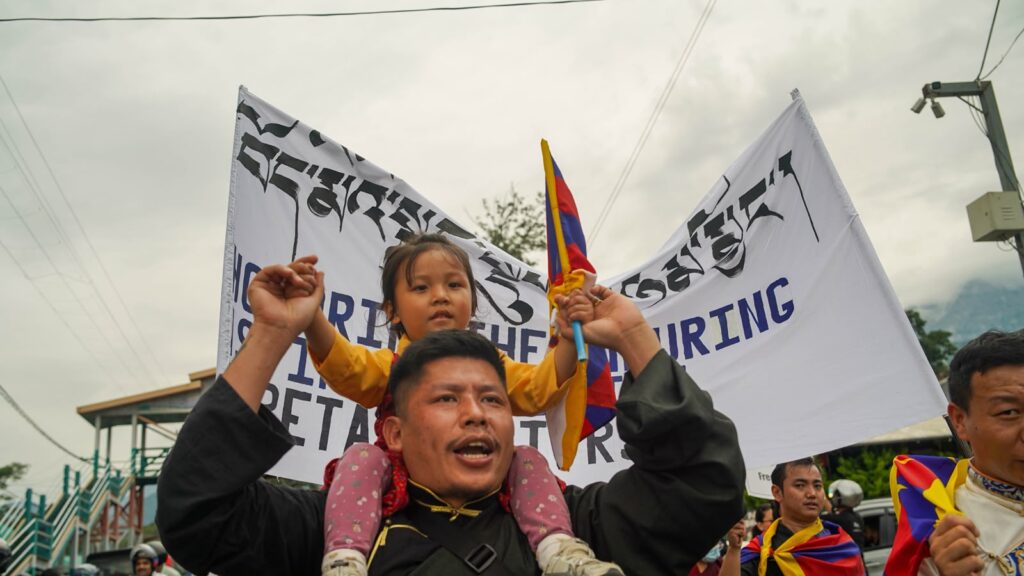
For the past seven weeks since Lobga Rangzen’s death, Tibetans and supporters in different parts of the world have organised demonstrations, solidarity campaigns, prayer gatherings, and candlelight vigils to honour his ultimate sacrifice for the Tibetan cause. His death has continued to reverberate throughout Tibetan diaspora communities.
The challenge now, a protester said, is whether the extraordinary fervour visible on the streets of Dharamshala can be sustained. The speeches of the leaders from across the aisle suggested that it should be. The leader of the Exile Tibetan government and that of the non -governmental organisations all echoed a common line- to ride the momentum of the global attention and churn out a sustained effort to rally support for the Tibetan cause that has received a much needed push from the sacrifice of Lobga Rangzen.

