

Tenzin Nyidon
DHARAMSHALA, Oct. 22: In a sharp escalation of Beijing’s forced assimilation policies, Chinese authorities in Machen (Chinese: Maqen) County, Golog Tibetan Autonomous Prefecture, have forcibly shut down three renowned private and community-run Tibetan educational institutions. According to a report by the research organization Tibet Watch, the administrative closures were carried out between late August and early September 2026.
Gangjong Grassland Girls’ School in Ragya, founded in 2005 by the renowned educator Jigme Gyaltsen (also known as the Prairie Talent Girls’ School) educated approximately 448 primary and middle school students and employed 107 teachers and support staff. State authorities forcibly closed the campus in late August 2026.
Jasag Village Boarding School in Ragya, established in 1995 by local Tibetan herders to serve remote nomadic communities, this primary institution accommodated roughly 300 students and 20 faculty members using community-built infrastructure. Re-designated as the Ragya Township Second Boarding School in 2008, it was ordered to close on or around September 2, 2026. Officials cited a lack of required administrative permits—a bureaucratic rationale invoked despite the government’s prior rejections of community petitions to transition the school into a official state-affiliated institution.
Golog Tadra Orphan School in Dawu, established in 2005 by the late Dr. Tawo Lobsang Palden—a physician raised in exile who viewed education as an essential instrument of empowerment for vulnerable youth—the school provided free academic, traditional, and vocational instruction. Serving hundreds of orphaned and underprivileged children, its curriculum combined standard science, Tibetan, and Chinese instruction with traditional Tibetan medicine, thangka painting, astrology, and Buddhist philosophy.
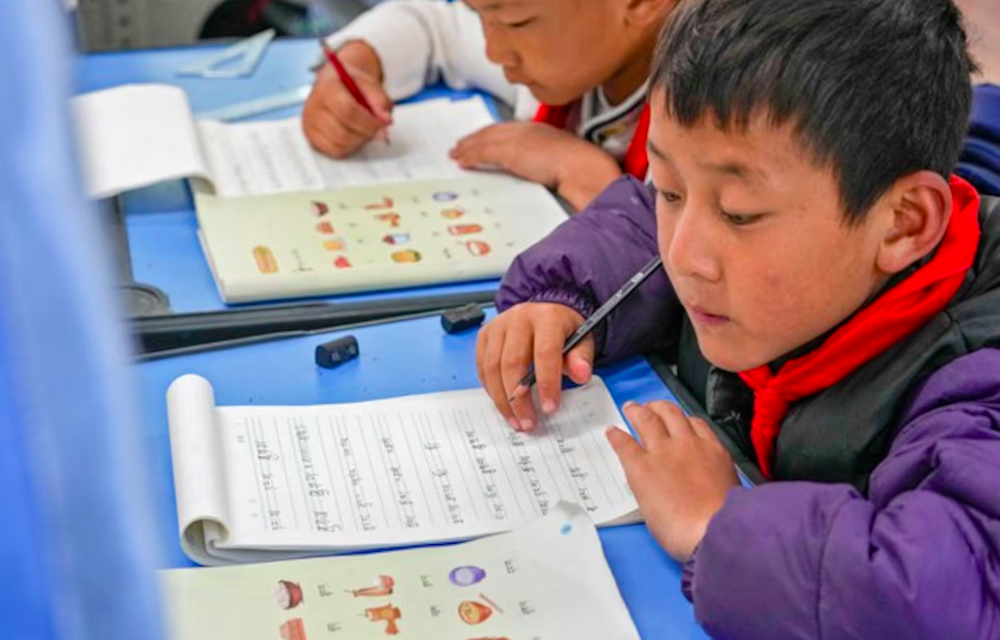
Though all three institutions strictly adhered to China’s mandatory nine-year compulsory curriculum—including compulsory Mandarin Chinese instruction—they were distinguished by their holistic integration of Tibetan language, regional cultural heritage, and Buddhist ethics into daily learning. Local sources confirm that the decisive factor behind their termination was their unwavering commitment to high-caliber Tibetan-language instruction, which state officials perceive as fundamentally incompatible with the central government’s aggressive assimilation directives.
The abrupt closures were accompanied by immediate police oversight and widespread intimidation. Briefly circulated social media footage showed uniformed police officers occupying student dormitories, while pupils posted poignant messages lamenting the loss of their primary sanctuary.
Jigme Gyaltsen remains under heavy state surveillance and is barred from leaving the Golog region. Concurrently, former teaching staff from previously dismantled institutions across the area have been summoned for police interrogations and issued strict warnings against publishing reflective or critical posts on platforms such as WeChat.
These shutdowns represent the local application of China’s broader “Ethnic Unity” Law, which came into force on July 1, 2026. Under the direction of President Xi Jinping, the Party-state has systematically intensified its “Sinicization” strategy, aiming to dissolve distinct ethnic traditions into a single, state-curated national identity (Zhonghua minzu).
The termination of the Gangjong, Jasag, and Tadra schools continues a multi-year campaign targeting independent Tibetan educational centers across Golog. Following the forced closure of the Sengdruk Taktse school in 2021, authorities shuttered seven additional community learning centers across Darlag, Machen, Gade, and Chikdril counties. This trajectory accelerated with the 2024 closure of Jigme Gyaltsen’s flagship vocational institute—the Snowland Cultural Gems Institute—and the June 2026 closure of the Hungkar Dorje Vocational High School following its founder’s death in state custody. By dismantling the last remaining non-governmental Tibetan-language institutions, state authorities are systematically severing youth from their linguistic, cultural, and spiritual heritage in favour of centralized state conformity.

