

Tenzin Nyidon
DHARAMSHALA, July 19: Chinese authorities have banned the photographs of a well-known exile-based Tibetan religious leader, the 11th Kirti Rinpoche, Lobsang Tenzin Jigme Yeshe Gyamtso Rinpoche, at Kirti Monastery in Ngaba, in the eastern Tibetan region of Amdo, Phayul has learned.
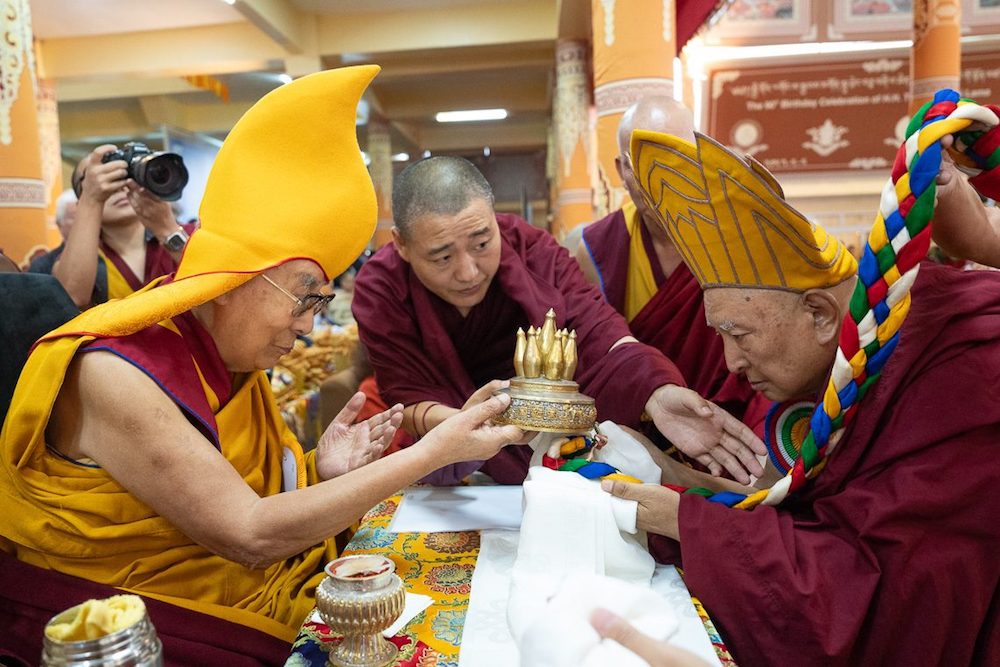
A credible source in exile, speaking to Phayul on the condition of anonymity confirmed that local authorities forcefully removed the portraits of Kirti Rinpoche from various affiliated institutions of the monastery, including Gyupa Monastery, Dukhor Monastery, Manpa (Medicine) Monastery, Chorten, Dolma Temple, and Sengdong Temple. The source added that the removal of the photographs and the prohibition coincided with the 90th birthday celebration of the exiled Tibetan spiritual leader His Holiness the Dalai Lama. The celebrations included a Tenshug ceremony or long-life prayer held in Dharamshala on June 30, organized by Dhomey Cholkha, representing the Amdo region of Tibet, where the monastery is located.
According to the source, one possible trigger for the ban was Kirti Rinpoche’s public honouring of His Holiness the Dalai Lama during the celebration, where he awarded the Dalai Lama with the title “Peerless Spiritual Teacher of the Twenty-first Century” on behalf of Tibetans from the three traditional provinces. The source added that this tribute to the Dalai Lama, whose image and mention remain strictly prohibited in Tibet, may have further provoked Chinese authorities to impose the ban on Kirti Rinpoche’s own portrait.
The same source further informed Phayul that the annual summer religious gathering, traditionally held in July, was also banned this year by Chinese authorities. The gathering, which brings together monks from several branch monasteries of Kirti, including Ngaba Kirti Monastery in Ngaba (Sichuan province), Taktsang Lhamo Kirti Monastery in Zorge (Sichuan province), Hortsang Kirti Monastery in Sangchu county (Gansu province), and Tsodhun Kirti Monastery in Barkham (Sichuan province), did not take place due to official restrictions.
Another exiled Tibetan, speaking to Phayul on condition of anonymity, opined that the ban on Kirti Rinpoche’s photograph is not an isolated move, but a culmination of years of growing hostility from Chinese authorities toward the revered spiritual leader. The source noted that Kirti Rinpoche’s multiple international testimonies, including before the U.S. Congress in 2011, the UN Human Rights Council side events in Geneva, and at various advocacy platforms like the International Campaign for Tibet, have likely contributed to his increasing censorship within Tibet.
Kirti Rinpoche, the Chief Abbot of Kirti Monastery, has long been a prominent voice in exile, drawing global attention to the dire human rights situation in Tibet, particularly in his native region of Amdo, which has witnessed some of the harshest Chinese crackdowns. After escaping into exile following the Chinese occupation of Tibet, he was elected in 1997as the Minister of the Department of Religion and Culture in the Central Tibetan Administration (CTA), where he worked to preserve Tibetan religious and cultural identity while advocating for those still under repression.
In November 2011, Kirti Rinpoche testified before the Tom Lantos Human Rights Commission of the U.S. Congress, offering a detailed account of ongoing rights violations by Chinese authorities in Ngaba. He spoke of the suppression of religious freedom, widespread surveillance, arbitrary arrests, and the torture of monks. Central to his testimony was the wave of self-immolations that began in 2009 with Tapey, a young monk from Kirti Monastery, whose act sparked a movement of protest across Tibet.
Rinpoche emphasized that these self-immolations, many carried out by monks and former monks from Kirti, were not suicides, but desperate political acts protesting China’s oppressive policies and the suffocating restrictions on religious life. He also detailed how Chinese authorities responded to the protests with intensified repression, effectively turning Kirti Monastery into a prison-like compound, cutting off food and water supplies, detaining hundreds of monks, and stationing armed forces within monastery grounds.
Revered by Tibetans in both Tibet and exile, Kirti Rinpoche has remained steadfast in his efforts to expose China’s repressive rule and call for international action. However, in recent years and especially amid intensified crackdowns, he has maintained a lower profile in publicly addressing the situation inside Tibet.

