

By Tenzin Dharpo
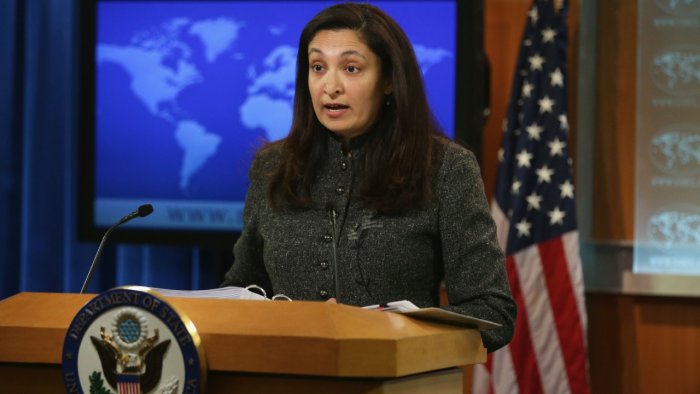
DHARAMSHALA, Dec. 20: The US Secretary of State Antony Blinken on Monday announced that Under Secretary for Civilian Security, Democracy and Human Rights Uzra Zeya will serve concurrently as the U.S Special Coordinator for Tibetan Issues effective immediately. Under Secretary Zeya has become the seventh official to hold the position of Special Coordinator for Tibetan Issues.
“@UnderSecStateJ will serve as the Special Coordinator for Tibetan Issues. She will lead U.S. efforts to preserve the religious, cultural, and linguistic heritage of Tibetans who are facing human rights abuses and challenges to their livelihoods and environment,” Secretary of State Antony Blinken tweeted. In response Under Secretary Zeya tweeted, “Thank you @SecBlinken for entrusting me to be the U.S. Special Coordinator for Tibetan Issues. I look forward to helping preserve the rich culture and traditions of Tibetans worldwide.”
The President of the Central Tibetan Administration welcomed the appointment and said that he looks forward to work with Under Secretary Uzra Zeya to bring tangible progress in human rights situation in Tibet and resolve Sino-Tibet conflict through Middle Way Approach.
The position mandated by the Tibetan Policy Act of 2002, is primarily tasked to promote meaningful dialogue on Tibetan autonomy between the People’s Republic of China and the Dalai Lama or his representatives, protect the unique religious, cultural and linguistic identity of Tibetans and press China to respect the human rights of the Tibetan people.
The Indian-American official in 2013, during her tenure as acting assistant secretary of state for democracy, human rights and labor, led a US delegation that met with Chinese counterparts as part of the 18th US-China Human Rights Dialogue in Kunming, China. Zeya later told the press that the delegation “expressed deep concern about China’s stepped-up attempts to silence dissent and tighten controls over Tibetans and Uighurs, emphasizing that policies ostensibly designed to maintain stability are counterproductive when they deny Chinese citizens their universal human rights and fundamental freedoms.”
She further added, “We also urged the Chinese government to engage in substantive dialogue with the Dalai Lama or his representatives, without preconditions.”

