

Tenzin Nyidon
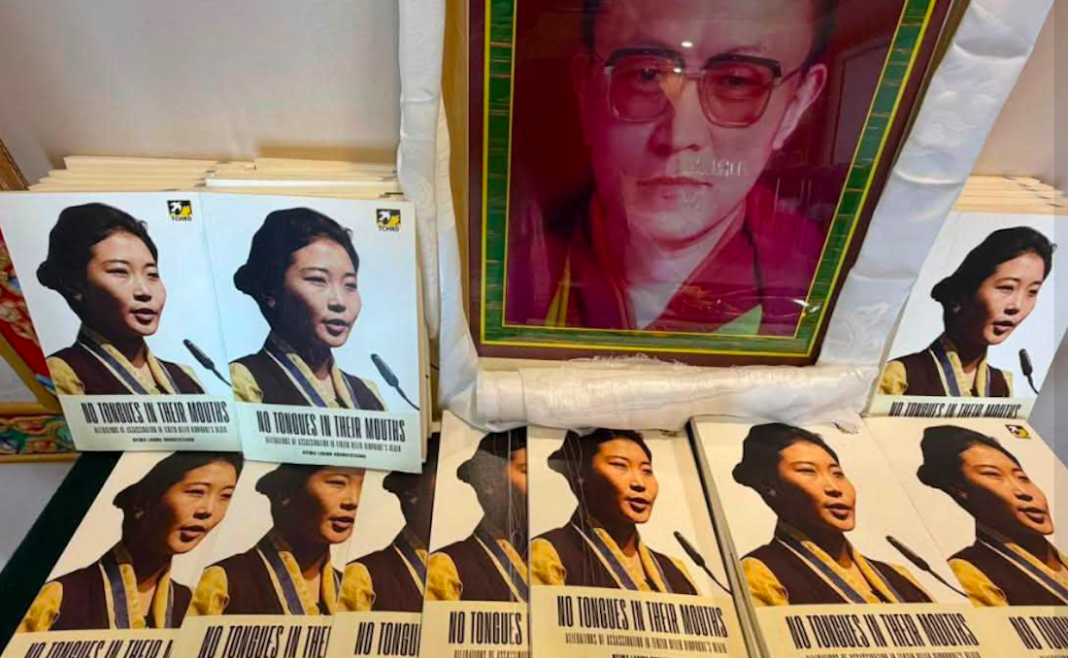
DHARAMSHALA, July 13: The Dharamshala-based research organisation, the Tibetan Centre for Human Rights and Democracy (TCHRD), on Monday launched the English translation of No Tongues in Their Mouths: Allegations of Assassination in Tenzin Delek Rinpoche’s Death by Nyima Lhamo Drongtatsang at Norbu House in Dharamshala.
The book, originally written in Tibetan by Nyima Lhamo, the niece of the late Tulku Tenzin Delek Rinpoche and translated into English by Tibetan writer and translator Bhuchung D. Sonam, presents the author’s first-hand account of her uncle’s persecution. It chronicles how Tenzin Delek Rinpoche was subjected to a sustained campaign of defamation, politically motivated charges, and ultimately died after enduring 13 years of torture and ill-treatment in a Chinese prison. The book also recounts Nyima Lhamo’s own journey into exile on 24 July 2016 and documents her international advocacy campaign seeking justice for the wrongful death of her uncle.
Joining the launch via a pre-recorded video message, Nyima Lhamo noted that the publication coincides with the 11th anniversary of Tenzin Delek Rinpoche’s death. She said the book, first published in Tibetan before being translated into Chinese and now English, was written to share Rinpoche’s story and shed light on Tibet’s political situation for younger generations of Tibetans, while preserving his legacy for future generations
Speaking at the launch, Tenzin Dawa, Executive Director of TCHRD, said the English translation of the book would introduce an important chapter of Tibet’s recent history to readers around the world. While acknowledging the extensive accounts already shared about Tenzin Delek Rinpoche’s life and legacy, she said the publication was equally significant for bringing wider attention to the remarkable journey of its author, Nyima Lhamo.
Dawa said that beyond documenting the life and persecution of Tenzin Delek Rinpoche, the book also tells the story of a young Tibetan woman who became a witness to one of contemporary Tibet’s most significant human rights cases. She said what he found most compelling was Nyima Lhamo’s decision to transform personal tragedy into a lifelong pursuit of truth and justice. Rather than being overwhelmed by the loss of her uncle, Dawa said, she chose to dedicate herself to ensuring that the circumstances surrounding his death would neither be forgotten nor fade into silence, sacrificing her own security and comfort to seek accountability and preserve his legacy.
Reflecting on his final meeting with Tulku Tenzin Delek Rinpoche before leaving Tibet for India in 1998, Geshe Tsering Dorjee recalled that one of Rinpoche’s parting exhortations was a heartfelt appeal to safeguard the unity of the Tibetan people.
Recounting the exchange, Geshe Tsering Dorjee said Rinpoche urged him never to engage in or encourage anything that could sow division among Tibetans from the three traditional provinces of U-Tsang, Kham, and Amdo, or among the five major schools of Tibetan Buddhism. Looking at the state of the Tibetan exile community today, Geshe Tsering Dorjee observed that Rinpoche’s words now seem “almost prophetic,”
Addressing the gathering as the chief guest, Speaker of the Tibetan Parliament-in-Exile, Dolma Tsering Teykhang, said that Tulku Tenzin Delek Rinpoche’s unwavering devotion to the Tibetan cause, his extraordinary sacrifices, and his death in a Chinese prison in 2015 epitomise the suffering and indomitable spirit of Tibetans living under Chinese rule.
She recounted how Rinpoche secretly met with the first fact-finding delegation sent by the Tibetan government-in-exile, during which he provided firsthand testimony on the destruction of Lithang Monastery and the sweeping restrictions imposed by the People’s Republic of China (PRC) on religious freedom in the region.
Highlighting Rinpoche’s enduring contributions to education, environmental stewardship, and community welfare, she said his steadfast efforts to revive, preserve, and promote Tibetan religion and culture increasingly drew the scrutiny of the Chinese authorities. She said his growing influence within Tibetan society ultimately made him a target of sustained persecution aimed at silencing his voice and extinguishing his legacy. According to her, the campaign against him intensified after his visit to India, where he received an audience with His Holiness the Dalai Lama and was formally recognised as a tulku before returning to Tibet to continue serving his people.
Drawing inspiration from Tenzin Delek Rinpoche’s courage, moral conviction, and unwavering dedication, she urged Tibetans to remain united in the broader struggle for Tibet. She called on the community to rise above internal differences and resist allowing minor disagreements to erode their collective resolve in pursuing justice and safeguarding the shared aspirations of the Tibetan people.


This is a great article on the late Tulku Delek and his neice who’s still spreading the truth behind her uncle’s unjustly demise by the ccp. Great reporting as expected from Phayul reporter!!!