

Tenzin Nyidon
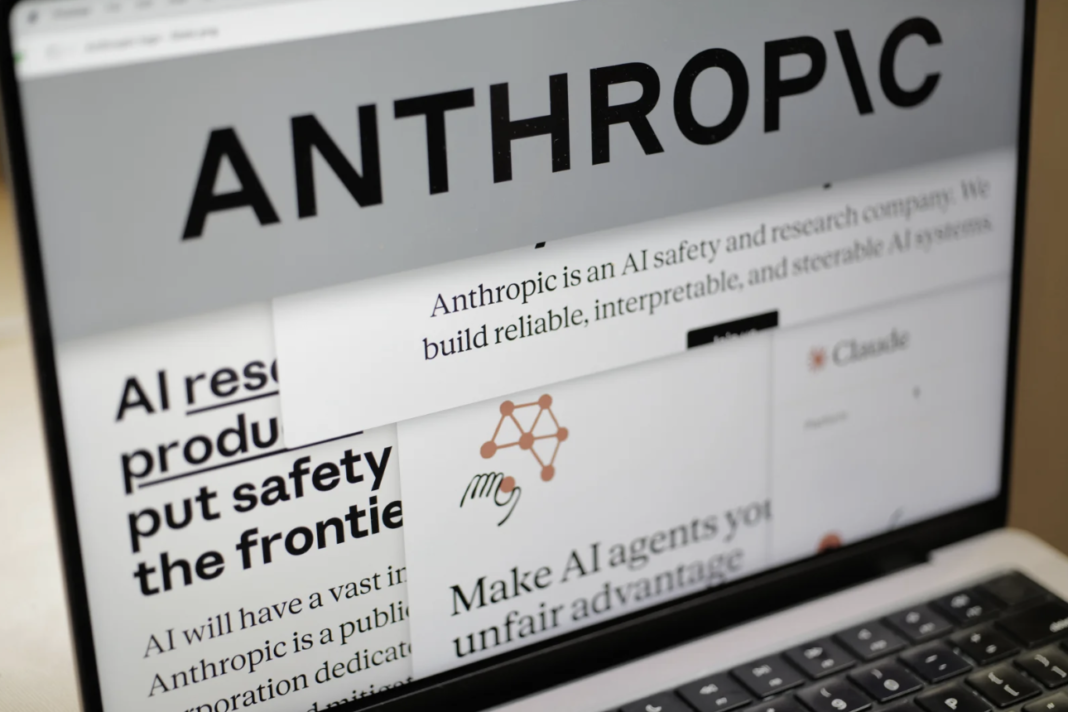
DHARAMSHALA, Sept. 19: A new threat intelligence report from Anthropic has revealed how China-based, government-aligned actors used artificial intelligence to conduct surveillance and intelligence gathering targeting Tibetan Buddhist civil society, the exile Tibetan government officially known as the Central Tibetan Administration (CTA), and Tibetan advocacy organisations, including the International Campaign for Tibet (ICT), and Students for a Free Tibet (SFT).
Anthropic’s report, “Detecting and countering misuse of AI: September 2026,” covered malicious activity identified and disrupted between December 2025 and August 2026 involving its Claude Haiku, Sonnet, and Opus models. Anthropic said the cases represent some of the most notable and novel misuse of its AI systems that it has identified.
Among the cases documented is an operation identified as GTG-14020, which Anthropic described as a China-based, PRC government-aligned intelligence operation targeting Catholic, Tibetan Buddhist, Falun Gong and Taiwanese Christian communities. The operation used Claude as a substitute for a team of human analysts, generating Chinese-language intelligence dossiers, investigative reports and daily “situational awareness” briefings on individuals and organisations.
According to Anthropic, the operation specifically targeted members of Tibetan Buddhist civil society and the administration in exile, with its target list explicitly including the CTA, ICT, and SFT.
The operators gathered personal information including individuals’ birth dates, birthplaces, immigration dates, and social-media accounts. They also conducted reconnaissance of religious venues, collecting information such as floor plans, building facades, and structural diagrams. Their monitoring extended across both Chinese and international social-media platforms, including WeChat, Xiaohongshu, Douyin and Weibo, as well as LinkedIn, Instagram, Threads, X, and Facebook.
Anthropic said the Tibetan-focused work stream produced daily and batch situational-awareness reports and an organisation dataset. Claude was used to ingest information in multiple languages and convert it into structured Chinese-language dossiers based on templates resembling internal security documents.
One of the most significant findings concerned the use of AI not only for surveillance and information processing, but also for political narrative framing. Anthropic said operators explicitly instructed Claude to adopt “China’s standpoint” and to describe the Tibetan administration in exile as an “illegal separatist administration.” The report identified this terminology as part of a broader state-security lexicon observed in the operation.
The finding indicated that the AI system was being incorporated into an intelligence workflow in which information about Tibetans and Tibetan organisations was not simply collected, translated and summarised, but processed according to terminology and framing preferred by the operators.
Anthropic said the operation’s targeting priorities aligned with China’s United Front and religious-affairs apparatus, identifying the United Front Work Department, the Ministry of State Security and the former State Administration for Religious Affairs among the relevant state bodies. In one instance, a user reportedly identified themselves as an information-security officer for the Chinese state.
The findings also form part of a wider case study in Anthropic’s report concerning China-based “stability maintenance” operations. Anthropic said actors linked to municipal public- and state-security organs used Claude to support surveillance and transnational repression, including monitoring overseas dissidents, advocacy organisations and civil-society groups.
In a separate operation, Anthropic found AI being used to process open-source reporting, assess political sensitivity, standardise terminology and reframe foreign media coverage into government-style public-opinion briefings. The monitored targets included Tibetan and Uyghur communities, overseas dissidents, activists and international human-rights organisations.
Anthropic said it banned the accounts associated with the Tibetan and religious-affairs intelligence operation and enhanced its detection systems to reduce the possibility of similar misuse in the future.
The report therefore raised a broader question about the use of increasingly capable AI systems in surveillance: whether technologies designed to process information at unprecedented speed can also be turned into tools for profiling diaspora communities, monitoring religious institutions and amplifying state-preferred political narratives.


We must use our minds and take those new implements of anti human rights against Tibetan people. Im sure if successful they will target Uighyur and other Ethnic minorities indiscriminately. I have a plan of action. You do not meet force with force.if the obstacle creates the illusion of greater numbers. The Ultimate Solution is the dissolution of that implement.the cost to me is not important but the cost to my faith is more than just one Monastery or one Teacher. What Ukraine had learned is capture this technology and use it monitor those who are monitoring. I can set up a remote NSA device that sends from 8 Satelite Remote signals.I will use the State Security Bureau wifi to shut them down. I am the Karmic Debt Collector and Yamantaka Xi Jinping will be purged from his own party.He is not Communist enough. Xi Jinping is merely a Puppet of Kim Jong Un and Vladimir Putin.