

Tenzin Nyidon
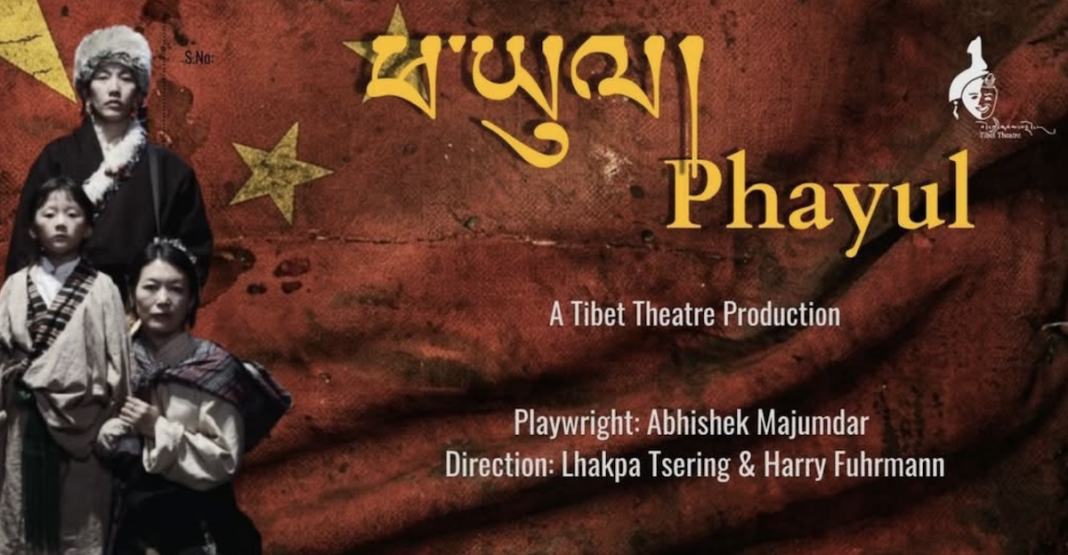
DHARAMSHALA, Oct. 7: Tibetan theatrical production ‘Phayul’ (Homeland), the prequel to the acclaimed play ‘Pah-Lak’ (Father), is set for world premiere on October 10, Saturday, at the Tibetan Institute of Performing Arts (TIPA) Hall in Dharamshala. The play revisits one of the most turbulent chapters in Tibet’s modern history—the emergence of resistance to Chinese rule in eastern Tibet during the 1950s.
The two-hour production will officially premiere on Friday, October 9, at 6:30 p.m. at the TIPA Hall in Dharamshala, followed by a public performance on October 10 at the same time and venue. A special pre-premiere for schoolchildren is scheduled for October 8.
Written by acclaimed Indian playwright Abhishek Majumdar and co-directed by Lhakpa Tsering and Harald (Harry) Fuhrmann, the play has been developed by Tibet Theatre in collaboration with local artists over more than three years. The production team said rehearsals for the production began on August 31, 2026.
Set in Tibet’s Kham region in 1956, the play traces the formative stages of the Tibetan resistance to the People’s Liberation Army (PLA). Rather than focusing solely on political leaders or military figures, the production turns the spotlight on ordinary Tibetans—including monks, nomadic families, women and relatives of resistance fighters—whose lives were profoundly altered by the conflict.
At the heart of the play is the question of how scattered, largely regional resistance gradually evolved into a broader national struggle. The production explores the difficult choices confronting Tibetans at the time: whether to resist, whether resistance could succeed against a militarily superior force, and how different communities could overcome internal divisions to forge a collective movement.
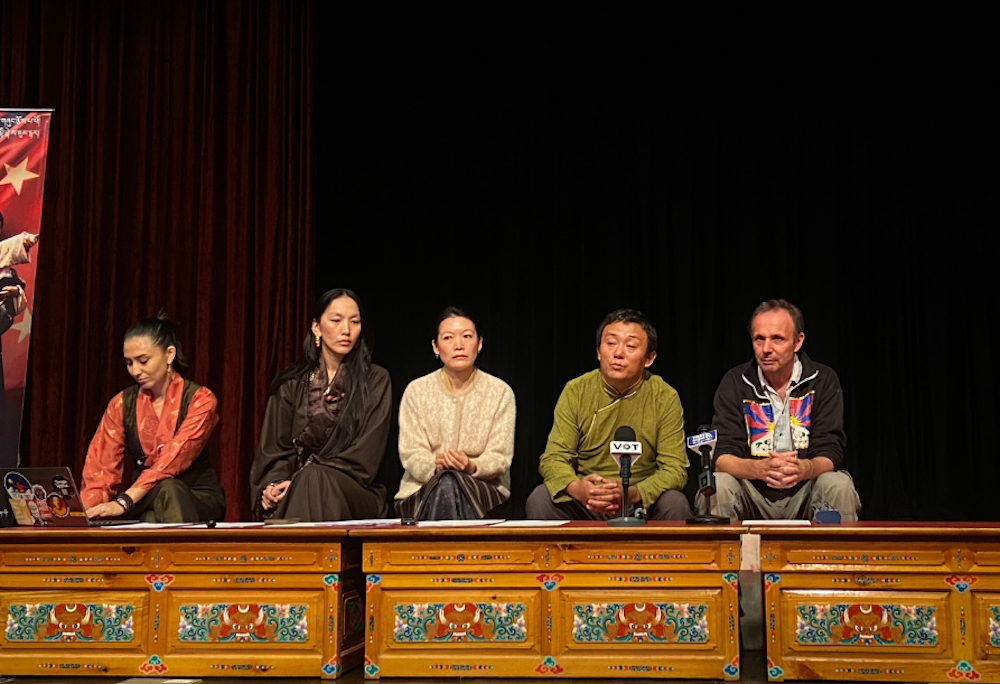
Speaking about the production to Phayul, co-director Harry said the play seeks to communicate a historical narrative in which Tibetans resisted what they regarded as an invasion, while also examining the human and social consequences of that resistance.
A distinctive feature of the play is its exclusive use of the Tibetan language, accompanied by multilingual subtitles. Harry told Phayul that retaining Tibetan is both an artistic and cultural decision. The use of Tibetan, he said, allows performers to connect more intimately with their emotions while simultaneously presenting the richness of the language to international audiences. He also views the stage as a platform to highlight the growing concerns over the preservation of Tibetan language and culture, describing Tibetan as a language that the Chinese government is “trying to extinguish.”
The emphasis on Tibetan women is another defining element of the production. Their experiences and contributions during the early years of the conflict have, according to the theatre group, received comparatively little attention in mainstream historical narratives. The play attempts to bring these overlooked voices to the foreground, portraying women not merely as witnesses to history but as individuals confronting displacement, uncertainty, courage and survival.
The production follows Tibet Theatre’s acclaimed play ‘Pah-Lak’ (Father), also written by Majumdar and staged in 2022 and 2023. ‘Pah-Lak’ received considerable attention in India and internationally for bringing aspects of the Tibetan experience to wider audiences. ‘Phayul’ serves as a prequel, expanding the historical narrative and tracing the circumstances that preceded the events depicted in the earlier production.
Harry said the play is intended not only for Tibetan audiences but also for Indian and international spectators. Following its Dharamshala performances, the play is expected to tour Tibetan settlements and schools across India before travelling to international theatre festivals in 2027.
The production has already attracted invitations from prominent theatre platforms, including the Ruhrfestspiele Recklinghausen in Germany and the Theatre Winterthur Festival in Switzerland. The teams said further performances are planned in Germany, Switzerland, France and potentially Belgium.

