

Tenzin Nyidon
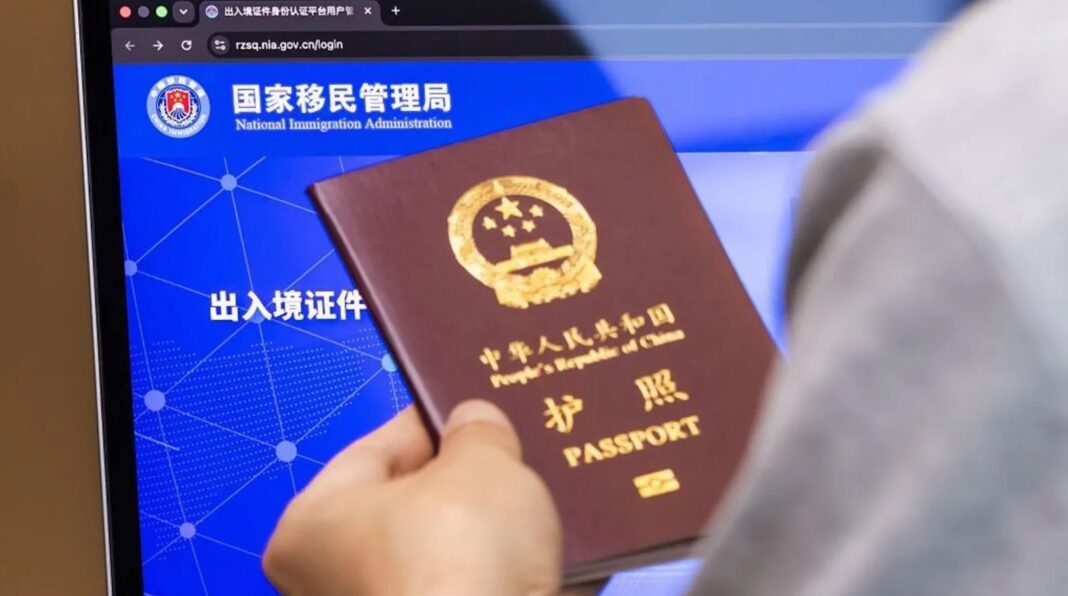
DHARAMSHALA, Sept. 16: China on Tuesday brought into force a new set of regulations on Exit and Entry Administration, giving authorities broader powers to scrutinise and restrict the overseas travel of Chinese citizens while tightening requirements for foreign nationals entering the country.
The regulations, issued as State Council Order No. 841, were approved by the State Council on June 29 and signed by Premier Li Qiang on July 22. Beijing says the framework is intended to standardize exit-and-entry administration, protect travelers lawful rights, and safeguard China’s sovereignty, national security, and development interests.
Under the new rules, Chinese citizens subjected to administrative detention for fraudulently obtaining exit-entry documents or for illegally crossing borders can be prohibited from leaving China for six months to three years after completing their punishment. Similar restrictions can apply to citizens who engage in criminal activities overseas that are deemed to endanger China’s national security or interests.
One of the most consequential changes concerns technology and industrial security. Article 4 gives authorities a basis to prohibit Chinese citizens from leaving the country when violations of export-control or technology import-and-export regulations are considered capable of endangering national industrial or technological security. Reports say the provision has drawn particular attention because it creates a clearer legal route for export-control violations to result in travel restrictions.
The regulations also place greater scrutiny on people involved in sensitive sectors and on immigration intermediaries. Immigration-service providers are required to operate under a new regulatory framework, while authorities can require travellers to provide relevant documents and information during the application and verification process.
For foreign nationals, the regulations introduce corresponding restrictions. Foreigners who submit false information or documents when applying for Chinese visas or seeking entry can face entry bans of one to five years, depending on the circumstances.
According to reports, the new framework has prompted concern among Han Chinese citizens and communities abroad over the expanded discretion it gives authorities to regulate international travel. Reuters reported that the regulations formalise and broaden existing restrictions, including potential exit bans lasting between six months and three years in certain national-security cases.
For Tibetans, Uyghurs, and residents of some Hui-populated areas, however, the September 15 regulations come more than a decade after Beijing imposed a particularly stringent passport regime that severely curtailed access to international travel. The roots of the policy can be traced to late 2011 and early 2012, when approximately 7,000 Tibetans from the so-called Tibet Autonomous Region (TAR) travelled to India to attend the Kalachakra teachings. According to a report by Human Rights Watch (HRW), hundreds were detained upon their return and subjected to interrogation and political indoctrination. Some Tibetans who attempted to return through Nepal were also prevented from re-entering.
In April 2012, authorities in the TAR ordered residents to surrender their valid ordinary passports, officially describing the measure as part of a transition to new electronic passports. Authorities subsequently imposed stringent procedures for obtaining replacements. HRW found no evidence that the confiscated passports were returned or replaced on a meaningful scale, effectively curtailing ordinary international travel for large numbers of Tibetans in the region.
The policy established a pattern that human rights groups have characterised as a highly restrictive system of cross-border mobility, in which passports, border crossings and even family reunification can become subject to political and security considerations. Against this backdrop, observers say, the September 15 regulations do not mark the beginning of restrictions on Tibetan mobility. Rather, they represent the latest legal development in a much longer trajectory of increasingly securitised passport, exit and border controls.

