

Tenzin Nyidon
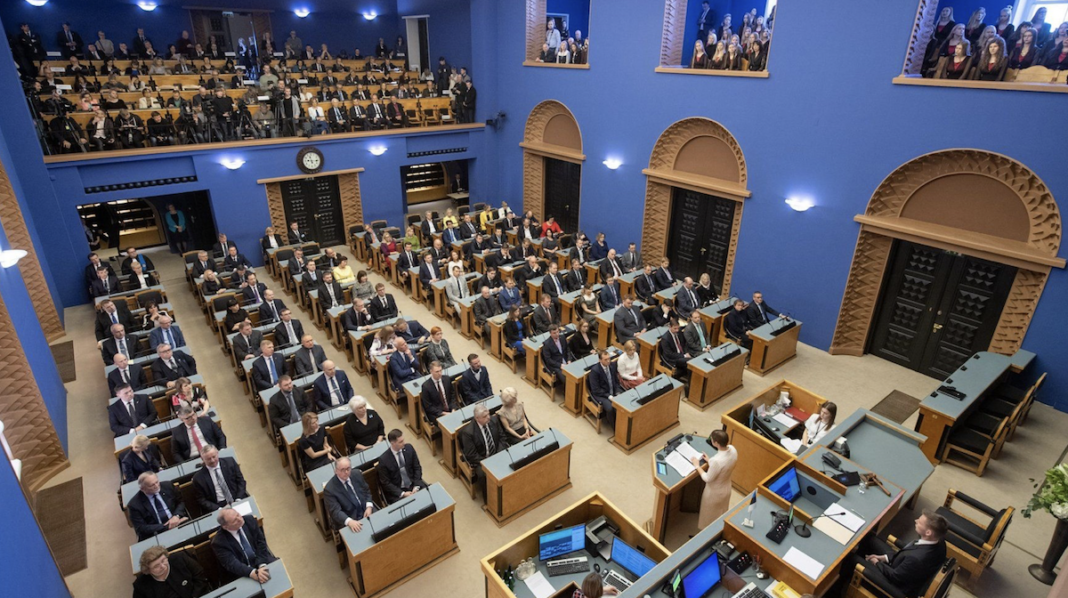
DHARAMSHALA, July 9: 51 members of Estonia’s Parliament (Riigikogu) have issued a joint statement condemning the People’s Republic of China’s newly enacted Ethnic Unity and Progress Law, describing it as a measure that threatens Tibetan identity and calling for its immediate repeal.
The statement, led by Juku-Kalle Raid, head of the Tibet Support Group in the Estonian Parliament, was released on the occasion of the 91st birthday of His Holiness the Dalai Lama. Carrying the signatures of 51 of the Riigikogu’s 101 members, the declaration represents a parliamentary majority expressing solidarity with Tibet and concern over China’s assimilation policies.
The lawmakers stated that the law, adopted by the PRC on March 12, 2026, and entering into force at the beginning of July, would further erode Tibetan cultural, linguistic, and religious identity.
According to the statement, one of the law’s central provisions mandates Mandarin Chinese as the primary language of instruction from pre-kindergarten through high school, a policy the signatories argue will gradually diminish the practical use and relevance of the Tibetan language among younger generations.
The statement raised concerns over provisions promoting what the law describes as “mutually embedded community environments,” which it says encourage mixed-ethnic neighbourhoods at the expense of traditional Tibetan communities. The lawmakers further warned that expanded state surveillance under the banner of “social governance” would strengthen Communist Party control over Tibetan society through increased technological monitoring.
The Estonian parliamentarians expressed alarm over Article 63 of the legislation, which they say grants the PRC extraterritorial jurisdiction over individuals accused of undermining ethnic unity. They warned that the provision could be used to target critics of Chinese government policies, supporters of Tibet, and members of the Tibetan diaspora abroad, including in Estonia.
Describing Tibet as “historically independent and forcefully occupied” by the PRC, the statement argues that the legislation undermines the constitutional promise of meaningful regional autonomy. It further alleges that the law facilitates population displacement, marginalises the Tibetan language, and weakens Tibet’s historical, cultural and spiritual traditions by promoting allegiance to the state-defined concept of the “Chinese Nation” (Zhonghua Minzu).
The lawmakers contended that the legislation creates a legal framework under which expressions of Tibetan identity, language, religion, and cultural practices could be construed as acts of separatism.
The signatories said the law “possesses no moral legitimacy in the eyes of the Tibetan people” and noted that both the European Parliament and United Nations bodies have previously raised concerns over China’s policies in Tibet, while calling for stronger international action.
Among their recommendations, the lawmakers urged governments to formally communicate their opposition to the PRC and call for the repeal of the law. They also called on United Nations mechanisms to undertake an urgent review of China’s assimilation policies and utilise available international instruments to safeguard the cultural, linguistic, and religious rights of Tibetans.
The statement further appealed to the international community to intensify coordinated diplomatic efforts aimed at resolving the China-Tibet conflict through genuine and mutually respectful dialogue and expressed support for the Central Tibetan Administration’s efforts to preserve and promote Tibetan culture and identity in exile.

