

Tenzin Nyidon
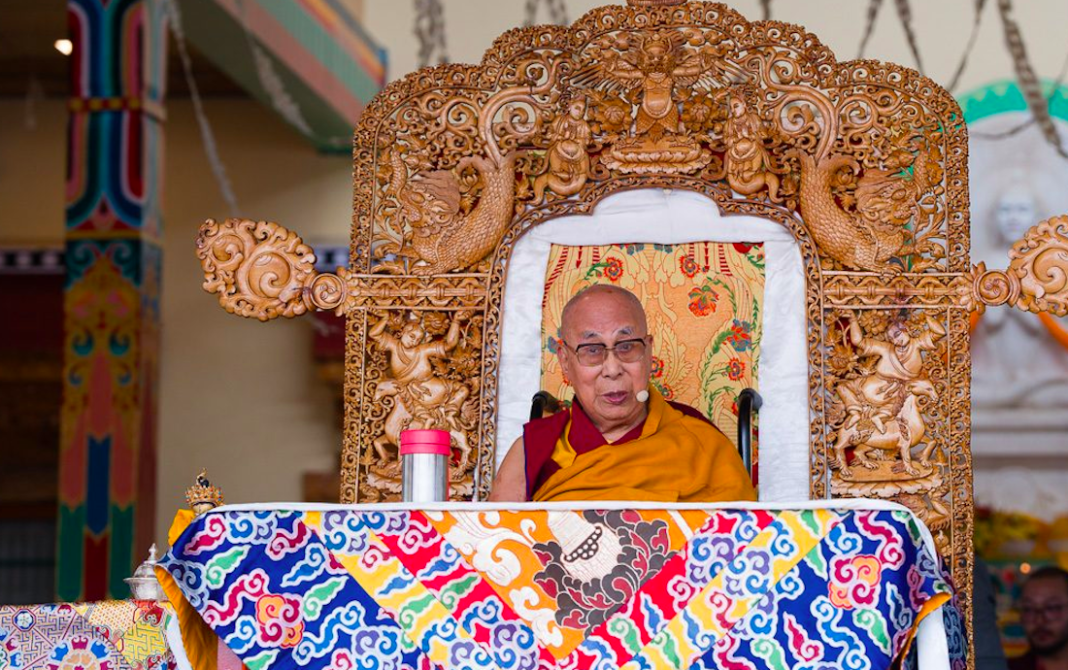
DHARAMSHALA, July 6: The Tibetan spiritual leader His Holiness the Dalai Lama on Monday said he believes he may live beyond 100 years of age, possibly reaching around 130, citing dreams and various auspicious signs, as he celebrated his 91st birthday at the Shewatsel Teaching Ground in Leh, in the Union Territory of Ladakh.
“Judging from my dreams and various signs, I may live beyond one hundred years, perhaps to around one hundred and thirty,” the Nobel Laureate told thousands of devotees gathered for the occasion.
He said that during the years ahead, he hoped Buddhism would continue to flourish in China, with which he said he shares a direct connection, while people across the world increasingly embrace compassion and altruism as guiding principles for humanity. “I pray that such noble aspirations will spread throughout the entire world and become a guiding ideal for humanity,” he said.
Reflecting on his life at the age of ninety-one, the nonagenarian leader said the cultivation of an altruistic mind dedicated to the welfare of others has remained the defining purpose of his life. The Dalai Lama said the affection and respect he has received from people around the world stem not from his position, but from his lifelong effort to cultivate a good heart and promote compassion. Expressing gratitude to the people of Ladakh, he thanked those gathered for offering prayers for his long life and praised the region’s steadfast devotion to Buddhist values. “This place has genuinely remained steadfast in its commitments and devotion.” he said. “You have all come together to offer prayers for my long life, and I deeply appreciate this.”
The Tibetan spiritual leader also reflected on his meeting with former Chinese leader Mao Zedong during a visit to China many years ago, recalling that Mao had remarked that “religion is poison.” Rejecting that assertion, he said religion is not simply about worship or ritual but about transforming one’s own mind through the practice of the Dharma.
He also expressed optimism about what he described as a growing interest in Buddhism in China, saying that despite decades of restrictions, many people are increasingly drawn to the Buddha’s teachings. He added that around the world, even in societies where religion plays a limited role, people continue to value the universal principles of loving-kindness, compassion and concern for the welfare of others.
Speaking about the Tibetan exile community, the Dalai Lama said Tibetans have rebuilt their lives in India while preserving their faith and traditions, supported by the Indian people and friends around the world. He urged everyone, regardless of their educational or cultural background, to cultivate a peaceful and disciplined mind and dedicate themselves to benefiting others.
The celebration was attended by Central Tibetan Administration President Penpa Tsering, Tibetan Parliament-in-Exile Speaker Dolma Tsering Teykhang, Thiksey Rinpoche, Drupe Thuksey Ripoche, and Ladakh Buddhist Association President Chering Dorjay Lakrook, alongside senior monks, local leaders and thousands of devotees.
Tibetans here in Dharamshala also marked the 91st birthday of His Holiness the Dalai Lama with a solemn official celebration organised by the exile Tibetan government, officially known as the Central Tibetan Administration (CTA), where the Cabinet issued a strong statement condemning China’s newly enacted Promoting Ethnic Unity and Progress Law as a threat to the identity and existence of Tibetans and other non-Chinese peoples under Chinese rule.
The Cabinet also drew attention to the self-immolation protest carried out by Tibetan activist Lobga Rangzen, also known as Lobsang Palden, outside the United Nations Headquarters in New York City on July 2, 2026. It described the act as a form of non-violent protest intended to draw international attention to China’s newly enacted law and to appeal for greater international engagement on the situation in Tibet.
The statement noted that Lobga Rangzen’s sacrifice followed the 157 self-immolation protests that have taken place inside Tibet since 2009, emphasising the continuing desperation among Tibetans living under Chinese rule.
Responding to the new legislation, the Cabinet said it has already begun formulating a comprehensive strategy to address the law’s implications and that specific measures would be implemented in a phased and systematic manner once the plans are finalised.
The Cabinet warned that the law targets not only public institutions but also individual Tibetans and their families by seeking to transform the very foundations of their national identity. It said the legislation aims to assimilate non-Chinese peoples through the systematic reshaping of history, ideology, religion, language, customs, public institutions, cultural symbols, the civil service, the education system, and the teaching profession.
According to the statement, these objectives are intended to be enforced through the combined machinery of the Chinese state, including administrative structures, social governance mechanisms and economic development policies, backed by coercive measures, legal sanctions, and accountability mechanisms.
The Cabinet called upon Tibetans, both inside Tibet and in exile, to recognise the seriousness of the new policy and respond with unity, resilience, and determination. “At this critical juncture, it is essential to strengthen efforts to preserve and protect Tibet’s distinct national identity, religion, language, culture, and historical heritage,” the statement said.

