

Tenzin Nyidon
DHARAMSHALA, June 25: China has defended a controversial provision in its newly enacted “Law on Promoting Ethnic Unity and Progress” that allows authorities to hold individuals and organizations outside the country legally accountable for actions deemed to undermine ethnic unity or incite ethnic division within China.
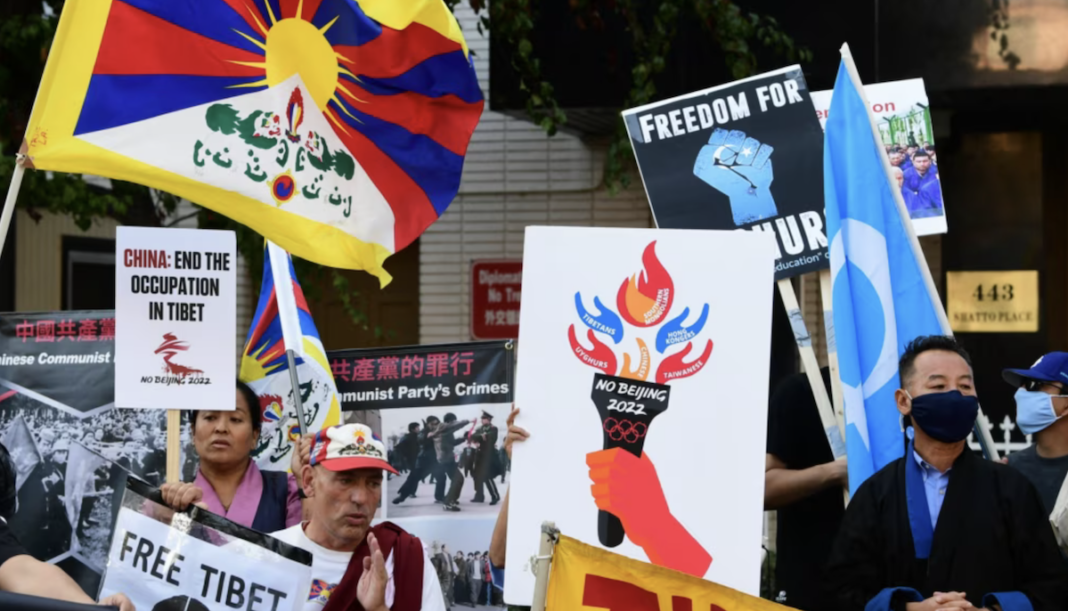
The law, which is set to take effect on July 1, has sparked concern among human rights advocates and exile communities, who argue that it entrenches Beijing’s assimilationist policies in Tibet, East Turkistan, and other minority regions while extending China’s legal reach beyond its borders.
Under Article 63 of the legislation, organizations and individuals outside China who engage in activities that “undermine ethnic unity and progress” or “create ethnic division” within the country may be held legally responsible.
Responding to criticism from foreign media, Vice Minister of Justice Hu Weilie on Wednesday dismissed claims that the provision amounts to an assertion of extraterritorial or “long-arm” jurisdiction. Speaking at a press conference in Beijing, Hu said some unnamed Western media outlets had “distorted and misinterpreted” the overseas provision.
“This provision is based on China’s national conditions, conforms to legal principles, and is consistent with international practice. It is a legitimate, lawful, necessary, and feasible legal provision,” Hu said.
He argued that countries around the world have the right to safeguard national unity and social order through domestic legislation, adding that the overseas provision is aimed at preventing and punishing unlawful activities related to ethnic affairs originating from abroad.
According to Hu, enforcement of the provision will help protect China’s sovereignty, security, and development interests, while safeguarding the lawful rights and interests of all ethnic groups within the country.
The legislation was adopted in March as part of Beijing’s broader efforts to forge a unified national identity among China’s 55 officially recognized ethnic groups. Critics, however, contend that the law codifies longstanding policies aimed at assimilating Tibetans, Uyghurs, and other minority communities into a state-defined Chinese national identity.
Rights organizations have raised particular concern over the law’s extraterritorial implications, warning that it could be used to target activists, advocacy groups, academics, journalists, and diaspora communities abroad who speak out on issues related to Tibet, East Turkestan, religious freedom, and minority rights.
Observers say the provision provides Beijing with an expanded legal framework to justify action against overseas critics and individuals it accuses of promoting separatism. For Tibetan and Uyghur exile communities, the law is widely viewed as a significant escalation in China’s efforts to project authority beyond its borders, heightening concerns over transnational repression and the shrinking space for dissent on issues the Chinese government considers politically sensitive.
The law has already drawn criticism from lawmakers and rights advocates across Europe. On April 30, the European Parliament adopted a resolution on China’s new “Ethnic Unity Law,” expressing grave concern over its implications for the rights of ethnic groups, including Tibetans, Uyghurs, and Mongolians. European lawmakers strongly condemned the legislation, describing it as a significant escalation in Beijing’s policies of forced assimilation. They argued that the law represents a systematic effort to erode the cultural, religious, and linguistic identities of minority peoples by promoting state ideology and prioritising Mandarin Chinese in public life, including education and governance.
Opposition to the law has also emerged from civil society groups. On June 9, a coalition of Tibetan, Uyghur, Hong Kong, Southern Mongolian, and other human rights organisations formally submitted a petition to the Foreign Affairs Committee of the Dutch House of Representatives, urging lawmakers in the Netherlands to address concerns surrounding the People’s Republic of China’s newly adopted Law on the Promotion of Ethnic Unity and Progress.
The petition warned that the legislation institutionalises coercive assimilation policies and could further restrict the cultural, linguistic, and religious freedoms of non-Han communities within China. The coalition also raised concerns about the law’s extraterritorial provisions, arguing that they could be used to intimidate and silence diaspora communities and activists living abroad.

