

Tsering Dhundup
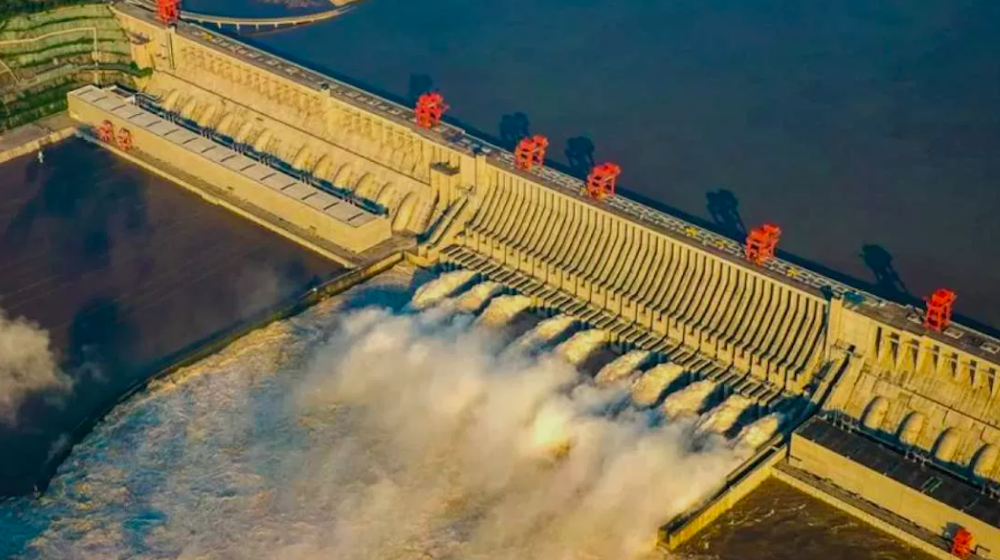
DHARAMSHALA, Aug 8: The government of India has taken note of reports that China has commenced construction of a mega dam project on the lower reaches of the Yarlung Tsangpo in Tibet, which forms the upper course of the Brahmaputra.
The minister of state for external affairs Kirti Vardhan Singh informed the Rajya Sabha on Thursday that the project could have far-reaching consequences for water security, ecology, and geopolitics in South Asia.
In a written reply, Singh stated that the project was first made public as far back as 1986 and that preparations for its execution have been underway in China for decades. He emphasised that the government “carefully monitors all developments” concerning the Brahmaputra, including China’s hydropower plans, and “takes necessary measures to protect our interests, including preventive and corrective measures to safeguard the life and livelihood of Indian citizens residing in the downstream areas.”
The Yarlung Tsangpo, the longest river in Tibet, originates in the Jiema Yangzong Glacier (also known as the Jemayangdrung Glacier) near Mount Kailash in the western Himalayas, specifically in the Ngari Prefecture of Tibet, flows into India as the Siang in Arunachal Pradesh, becomes the Brahmaputra in Assam, and eventually merges with the Ganges in Bangladesh as the Padma before emptying into the Bay of Bengal.
Singh noted that issues relating to trans-border rivers are discussed with China under an institutionalised Expert Level Mechanism established in 2006, as well as through diplomatic channels.
“As a lower riparian state with considerable established user rights to the waters of the trans-border rivers, the government has consistently conveyed its views and concerns to the Chinese authorities, including on the need for transparency and consultation with downstream countries,” Singh said. “We have urged them to ensure that the interests of downstream states are not harmed by any activities in the upstream areas.”
India has also called for the resumption of hydrological data sharing, suspended in the past by Beijing during critical flood seasons. Singh said the matter was brought up again during External Affairs Minister S. Jaishankar’s July 14–16 visit to China for the Shanghai Cooperation Organisation (SCO) Foreign Ministers’ Meeting.
Environmentalists have warned that the dam, located in a seismically active and ecologically fragile Himalayan region, could disrupt river flows, impact biodiversity, and threaten the livelihoods of millions dependent on the Brahmaputra basin.
The Chinese government has described the mega-dam as part of its renewable energy expansion, but India and other downstream nations fear the project could give Beijing strategic control over water resources in South Asia.

