

By Tsering Dhundup
DHARAMSHALA, July 30: Tibet was jolted by two earthquakes just hours apart on Wednesday, underscoring the region’s extreme vulnerability to seismic activity and intensifying concerns over China’s ambitious and controversial mega-dam project now underway on the Yarlung Tsangpo river.
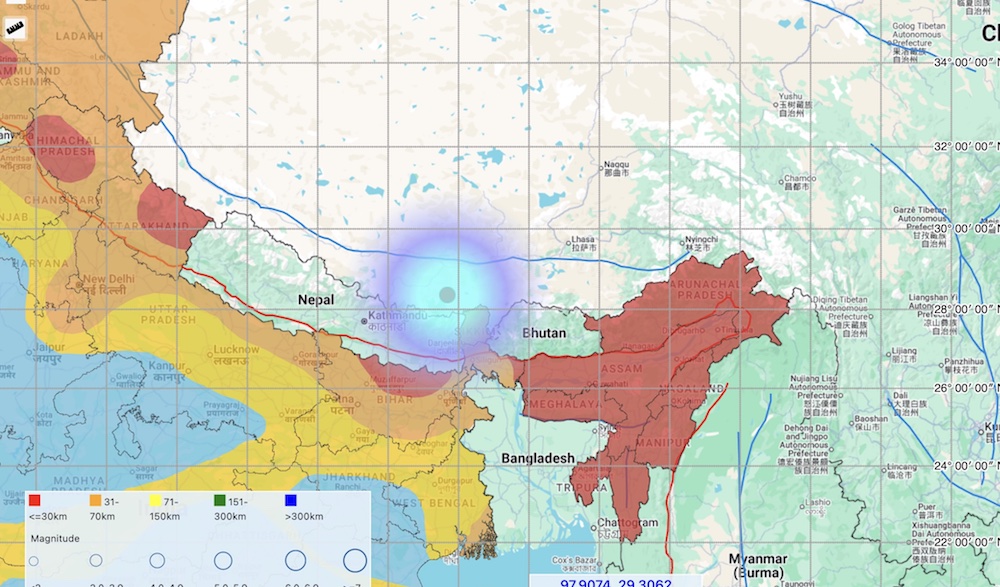
The first quake, measuring 4.3 in magnitude, struck at 6:58 AM IST near the Tibet–Nepal border, followed by a second tremor of magnitude 4.0 at 11:31 AM. Both quakes were shallow, occurring just 10 kilometres below the earth’s surface.
Experts warn that shallow earthquakes, though moderate in strength, can cause disproportionately strong ground shaking and increase the risk of aftershocks. The tremors occurred as heavy monsoon rains battered parts of the Tibetan Plateau, leading to localised flooding and further heightening the risk to infrastructure and residents.
Tibet lies atop one of the world’s most seismically active zones—the result of a continuous and powerful collision between the Indian and Eurasian tectonic plates. This tectonic pressure not only lifted the Himalayas but also created a hotbed for earthquakes. Historically, the region has suffered devastating quakes. On 7 January 2025 at 09:05 local time, an earthquake measuring 7.1 magnitude struck Tingri County, located in Shigatse which claimed hundreds of lives and destruction of properties.
Amid this natural volatility, China’s newly launched Yarlung Tsangpo hydropower project in south-eastern Tibet has come under scrutiny. Dubbed the world’s largest hydropower scheme, the $167 billion project aims to generate over 300 billion kilowatt-hours of electricity annually—more than three times the output of the Three Gorges Dam. But geologists and environmentalists warn that placing such a massive structure in a region prone to earthquakes and landslides could prove catastrophic.
The dam, currently under construction in the Medog County of Nyingchi Prefecture, sits near major fault lines. Experts fear that a strong earthquake could destabilise the structure or cause landslides into its reservoir, triggering dam failure or downstream flooding. The region’s rugged terrain and frequent seismic activity amplify these concerns, as does the lack of independent oversight or transparent risk assessment.
The project also has serious geopolitical and environmental implications. The Yarlung Tsangpo River becomes the Brahmaputra downstream, flowing into India and Bangladesh. Both countries have expressed alarm over Beijing’s control of the river’s flow, warning that unilateral damming could reduce water supply or lead to politically motivated water releases during conflict.
Environmentalists argue that the dam threatens biodiversity hotspots, sacred sites, and the homes of Tibetan and indigenous communities, many of whom face displacement without meaningful consultation.
While China touts the mega dam as a green energy breakthrough and a stimulus for its slowing economy, critics say the project prioritises political control and economic gain over safety, sustainability, and the rights of local populations.

