

Tsering Dhundup
DHARAMSHALA, Nov 17: A joint report by Tibet Watch and Turquoise Roof has revealed concerning details about China’s large-scale hydropower projects in Tibet, ignoring warnings from its own scientists about severe seismic and environmental risks.
The report, titled “The Risks of China’s Dangerous Dam-Building in Tibet: The Impacts of China’s Move Upstream on the Machu/Yellow River”, details extensive damage already caused by infrastructure projects on the Machu (Yellow River) and the Yarlung Tsangpo. It highlights potential severe consequences for local communities and downstream nations.
One significant issue noted is construction on permafrost zones of the Tibetan Plateau, a region second only to the Arctic in permafrost coverage. The thawing permafrost, worsened by heavy infrastructure, releases methane—a potent greenhouse gas—into the atmosphere, with no mitigation policies from China in place.

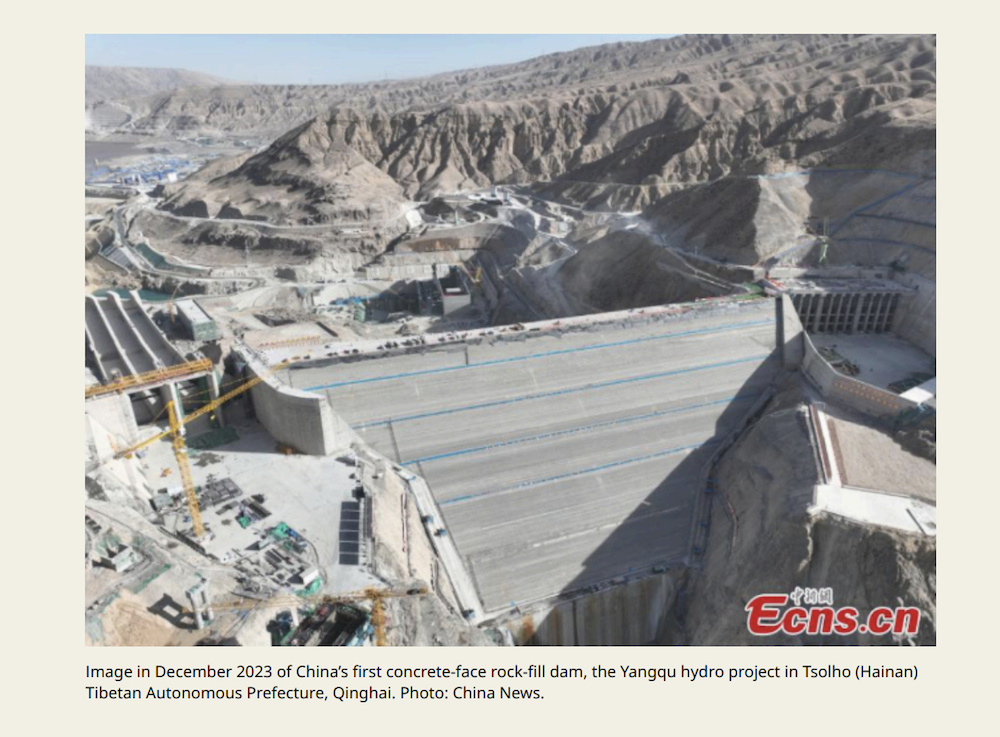
The report provides new evidence of the displacement of entire Tibetan villages and the destruction of ancient monasteries to make way for dam projects. One notable example is the Yangkhil (Yangqu) hydropower station, where local Tibetans were forced to dismantle their own homes. An important monastery, previously designated as a protected heritage site, was removed from the list by Chinese authorities before being demolished. These actions have led to widespread social upheaval, disrupting the cultural and spiritual lives of Tibetan communities.
China has started large-scale fish farming in reservoirs created by the dams. Non-native rainbow trout, marketed as salmon, are bred in huge numbers for Chinese consumers. This practice, already criticized in China, threatens local ecosystems and risks the spread of invasive species, as noted by Chinese scientists.

The report also disputes China’s claims of a green energy transition, showing that many solar and hydropower projects are tied to coal-fired power plants. This reliance on coal undermines the narrative of a shift towards renewable energy, revealing a slower transition than China claims.
China’s dam projects in Tibet also affect downstream nations. The report highlights risks for millions depending on the Yangtze, Mekong, and Yellow Rivers across Southeast Asia. Farmers and fisherfolk in Cambodia, Vietnam, Laos, and Thailand could face disruptions due to changes in water flow and less sediment, which is crucial for agriculture. The report calls for international intervention, urging action to protect both Tibetan communities and millions reliant on these crucial river systems.

